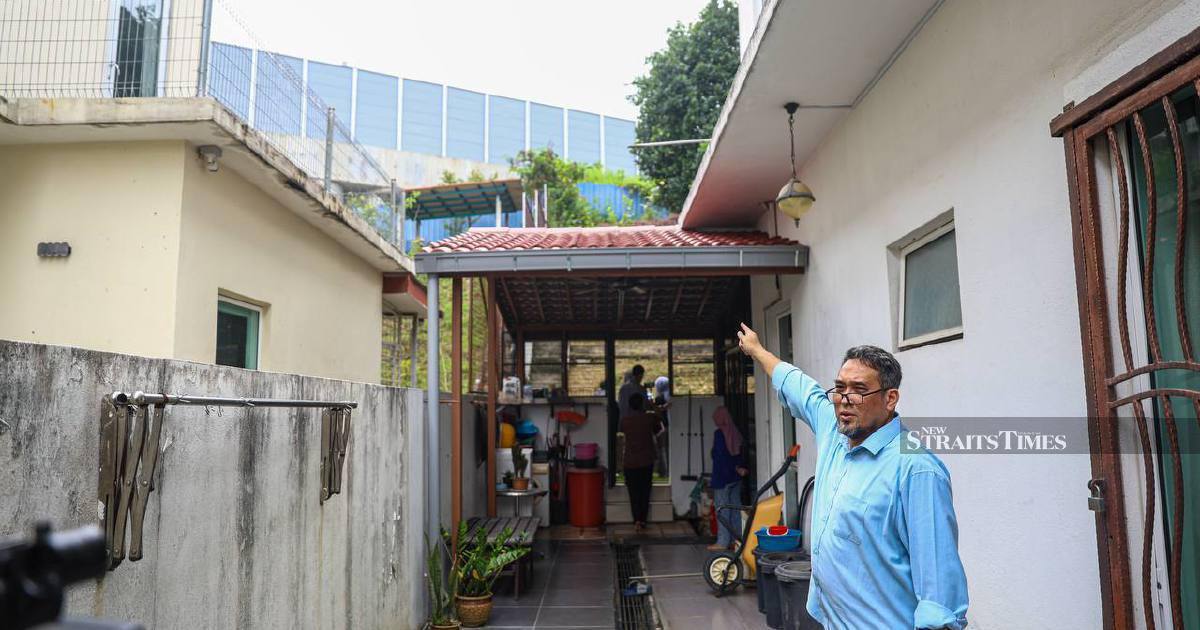
A Kuala Lumpur family has taken legal action against three entities connected to the East Coast Rail Link (ECRL) project, seeking RM1.33 million in damages over alleged construction-related harm to their home. The lawsuit represents growing concerns among residential property owners whose homes lie in proximity to the major rail infrastructure development, which spans multiple states along Malaysia's east coast.
The compensation claim reflects escalating disputes surrounding the ECRL initiative, a transformative infrastructure programme that has drawn both domestic and international investment since its inception. Residents adjacent to construction zones have increasingly voiced concerns about the broader implications of large-scale development projects on property values, structural integrity, and daily livelihood. This particular case may set precedent for how project developers and contractors manage community relations and address residential compensation claims.
Constructions of the magnitude and complexity of the ECRL inherently present challenges for neighbouring properties. Vibration from heavy machinery, excavation work, material transport, and foundational disturbance can compromise building foundations and structural elements. The family's allegations centre on claims that such activities have directly threatened both the physical stability and safe habitation of their dwelling. Similar disputes have emerged in other Southeast Asian countries undertaking comparable infrastructure projects, often resulting in extended litigation and significant financial settlements.
The involvement of three distinct parties in the lawsuit underscores the complex contractual and responsibility chains typical of major development initiatives. The structure of construction projects often distributes liability across multiple entities—including project owners, contractors, and subcontractors—creating uncertainty about which party bears ultimate responsibility when residents suffer damages. This fragmentation can complicate claims resolution and extend the duration of legal proceedings.
For Malaysian property owners residing near infrastructure megaprojects, this case highlights the importance of securing comprehensive documentation before construction begins, including structural surveys and photographic evidence of property conditions. Early intervention through formal complaint mechanisms and engagement with project management teams occasionally resolves disputes more expeditiously than prolonged litigation. However, when property damage accumulates without adequate remedial action, families find themselves with limited recourse beyond the courts.
The ECRL project, spanning from Port Klang through Pahang, Terengganu, and Kelantan to Tumpat, has transformed regional connectivity and economic prospects while simultaneously generating infrastructure-related grievances. The scale of such undertakings means that hundreds of households situated along the corridor may face comparable risks. Systematic assessment of baseline structural conditions across affected properties could mitigate future disputes, though implementing such protocols requires coordination between government agencies, project stakeholders, and community representatives.
From an insurance perspective, this lawsuit raises questions about coverage gaps between standard homeowners' policies and infrastructure-related damage claims. Many residential insurance products explicitly exclude or limit coverage for loss arising from publicly conducted construction activities, leaving families financially exposed. The gap underscores why formal legal remedies become necessary when structural damage occurs.
The court process will require expert structural engineering assessments to establish causation—demonstrating conclusively that ECRL construction activities, rather than normal settlement or weather conditions, caused the alleged damage. This technical evidence gathering phase typically consumes considerable time and expense, further straining the family's resources. Success in such cases often depends on the quality of expert testimony and the court's willingness to attribute injury to specific construction methodologies or omissions in safeguarding measures.
Regulatory frameworks governing infrastructure projects in Malaysia increasingly emphasise community engagement and environmental impact assessment, yet residential property protection mechanisms remain less clearly defined than in some jurisdictions. Stakeholders have suggested that clearer guidelines for baseline documentation, periodic inspections, and prescribed remediation thresholds might reduce litigation frequency and expedite claim resolution. Singapore and other regional economies have implemented frameworks requiring pre-construction structural assessments of nearby properties and mandatory insurance coverage for construction-related damage.
The broader implications extend beyond this single family's circumstances. As Malaysia continues developing ambitious infrastructure programmes—from rail corridors to highway expansions—construction-adjacent residents require reliable mechanisms for documenting, reporting, and resolving damage claims. This case will inform how future disputes are managed and may pressure developers and government agencies to implement more robust protective measures before commencing construction in densely residential areas.
For families contemplating property purchases near future infrastructure projects, this case reinforces the necessity of conducting thorough structural audits and understanding the precise timeline and scope of planned construction activity. While major development initiatives bring long-term benefits to regions through improved connectivity and economic stimulus, the immediate neighbourhood impacts demand serious consideration and protective measures.

