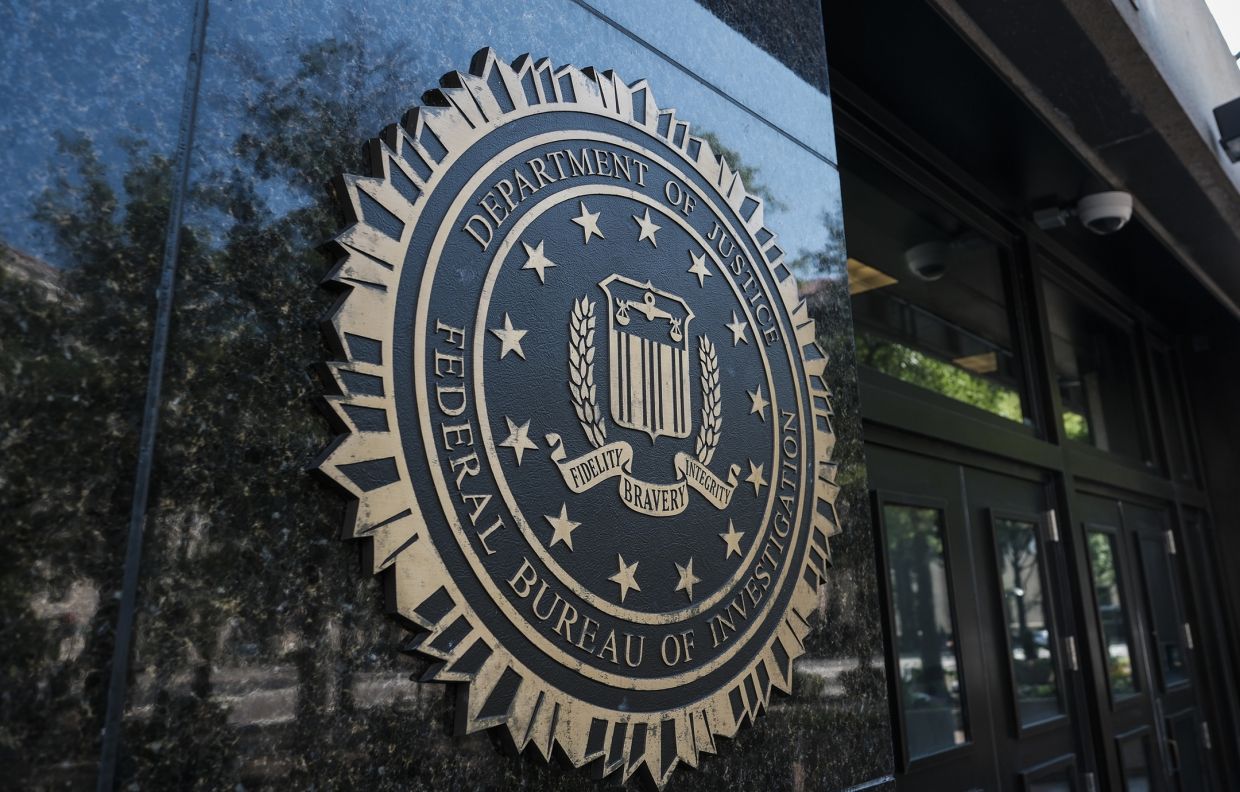
Patrick Yaroch, a supervisory FBI agent stationed in Washington, has been arrested following his confession to stealing cryptocurrency from a suspect's account obtained during an ongoing investigation. According to court documents filed in the case, Yaroch experienced a sudden change of heart about his actions and unburdened himself to a Justice Department colleague, describing how the theft had been weighing heavily on his conscience and he needed to "get it off his chest."
The scale of the alleged theft remains somewhat ambiguous, with Yaroch initially claiming uncertainty about the precise amount taken, estimating it at less than US$1 million (RM4.09 million). However, when federal investigators examined his cryptocurrency wallet where the funds had been deposited, they discovered approximately US$1 million in assets. This discrepancy between his stated recollection and the documented evidence suggests either deliberate understatement or genuine confusion about his own actions during the period in question.
According to the charging papers, Yaroch's criminal activity began in late 2024 or early 2025, with investigators identifying between 10 and 12 separate withdrawal transactions from the suspect's account. To execute these thefts, Yaroch exploited a security credential—a pass phrase providing access to the suspect's account—that the FBI had legitimately obtained as part of its investigative work into the individual. This represents a particularly troubling breach of trust, as Yaroch misused information and access privileges granted to him in his official capacity.
Yaroch's own explanations for his conduct, as recorded in court documents, paint a picture of an agent increasingly frustrated with what he perceived as institutional limitations. He told colleagues that he had been "spinning out of control" and expressed deep frustration that the FBI "could not or would not act against adversarial cryptocurrency accounts." This reasoning provides insight into his potential motive—a sense of institutional powerlessness combined with personal financial ambitions may have driven him toward illegal action.
The timing and circumstances of Yaroch's arrest reveal a rushed law enforcement response. Although Yaroch had begun cooperating with investigators and indicated his willingness to continue discussions after consulting with a lawyer on August 3, FBI leadership decided to conduct a surprise search of his residence and arrest him over the weekend. This accelerated timeline suggests authorities moved swiftly to prevent any further opportunity for the agent to destroy evidence or flee, despite his apparent willingness to engage with the investigation.
Court records indicate that Yaroch has not yet been formally charged with theft of the cryptocurrency itself, a potentially significant legal distinction that may reflect the speed at which authorities proceeded with his apprehension. The charging document instead focuses on possession of stolen property, suggesting prosecutors may still be developing their broader case or considering how best to prosecute an employee of the very institution that is investigating him.
What adds another dimension to this case is Yaroch's apparent financial motivation, revealed through his digital footprint. In May, investigators discovered that Yaroch had used ChatGPT to seek investment advice for approximately US$1 million, expressing a goal of potentially retiring by age 40 and eventually establishing a slower-paced lifestyle centred on vineyard and agricultural pursuits in locations such as Cilento or Portugal's Dao region. This glimpse into his aspirations and planning suggests the theft may have been motivated by concrete lifestyle goals rather than mere impulse or momentary desperation.
For Malaysian and Southeast Asian readers, this case underscores vulnerabilities that exist within law enforcement agencies worldwide when dealing with cryptocurrency and digital assets. The incident highlights how access to digital credentials and accounts—whether obtained during legitimate investigations or through other means—creates opportunities for insider threats. As cryptocurrency becomes increasingly prevalent in cross-border criminal investigations, the potential for abuse by officials with privileged access to suspect accounts represents a growing concern for all enforcement agencies in the region.
The case also reflects broader challenges in cryptocurrency regulation and asset recovery. The nature of digital currencies means that once stolen and moved through various wallets and exchanges, tracing and recovering funds becomes exponentially more difficult. An FBI agent with law enforcement knowledge of investigative techniques would be particularly well-positioned to obscure the trail of stolen digital assets, making detection and recovery substantially harder for fellow investigators.
Moreover, this incident raises questions about internal controls and oversight mechanisms within law enforcement agencies tasked with managing cryptocurrency evidence and suspect account credentials. The fact that a supervisory agent could access and exploit a suspect's account credentials without detection for months suggests potential gaps in monitoring systems, authorization protocols, and accountability procedures—issues that likely extend beyond the FBI and warrant examination by other enforcement bodies internationally.
Yaroch's case also demonstrates how personal financial stress and ambition can overcome professional judgment and ethical commitments, even among those entrusted with significant investigative authority. The contrast between his official role protecting the public interest and his private scheme to steal cryptocurrency speaks to the importance of robust vetting, monitoring, and support systems for law enforcement personnel dealing with high-value digital assets.

