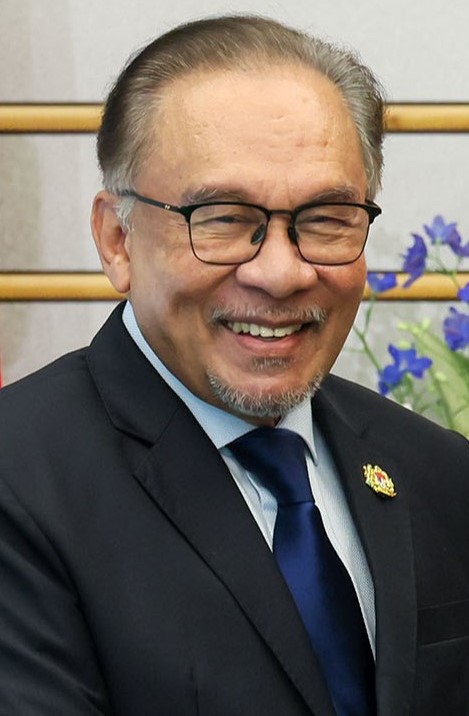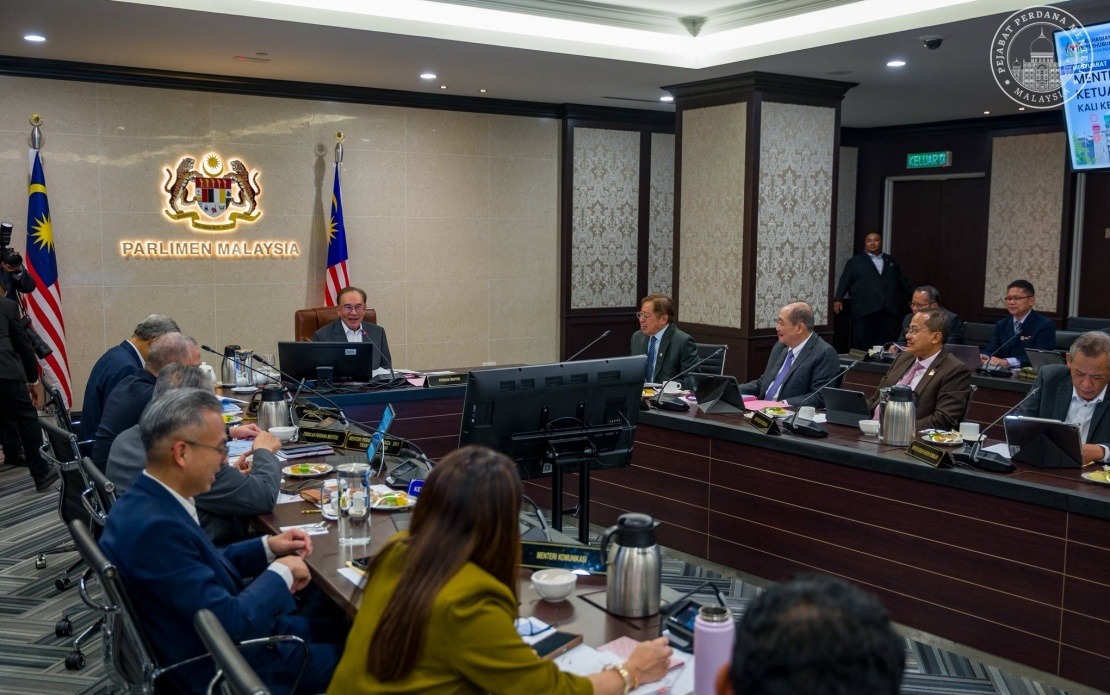
Prime Minister Datuk Seri Anwar Ibrahim brought together the nation's Menteris Besar and Chief Ministers for their 149th collective meeting at Parliament Building in Kuala Lumpur, with economic revitalisation taking centre stage as geopolitical turbulence continues to roil financial markets across the globe. The gathering, held on 23 June, reflected the government's determination to chart a coordinated course through mounting external pressures while simultaneously building domestic economic resilience. By assembling these regional powerbrokers under one roof, the administration signalled that addressing Malaysia's growth challenges requires seamless alignment between federal policymaking and state-level execution.
The discussions centred on navigating the immediate fallout from ongoing conflicts in West Asia, which have introduced significant unpredictability into global supply chains, energy markets, and investment flows. These geopolitical tensions have created a ripple effect touching everything from commodity prices to foreign investor sentiment, forcing policymakers to recalibrate economic projections and contingency planning. Malaysia, as an open economy deeply integrated into regional and global trade networks, faces particular exposure to these shocks. The state leaders' forum provided an opportunity for officials representing diverse economic structures—from resource-dependent regions to manufacturing and services hubs—to share intelligence and coordinate responses tailored to their distinct circumstances.
Beyond the immediate geopolitical context, the meeting placed substantial emphasis on preparing the nation for the El Niño phenomenon, a natural climate pattern carrying serious implications for Malaysia's food security, water availability, and agricultural productivity. The anticipated weather disruption threatens to strain water reservoirs that supply millions of urban and rural residents, poses risks to plantation yields, and could trigger elevated temperatures and reduced air quality across the region. For a country where agriculture remains culturally and economically significant despite economic diversification, and where water security underpins both domestic consumption and industrial operations, proactive preparedness at the state level is essential. State governments control local water authorities, agricultural extension services, and disaster management frameworks, making their participation in contingency planning critical.
Anwar emphasised that every government initiative going forward must embody three interconnected principles: integration across sectoral and jurisdictional boundaries, operational efficiency to maximise resource deployment, and genuine people-centredness ensuring that policies translate into tangible improvements in citizens' daily lives. This framing suggests frustration with siloed approaches where federal initiatives fail to align with state capacities or where bureaucratic inefficiency undermines well-intentioned schemes. The emphasis on integration holds particular relevance for Malaysia's federal structure, where implementation gaps frequently emerge between policy conception at the centre and execution at the periphery. By stressing this dimension during the gathering, the Prime Minister was essentially calling for a reset in inter-governmental coordination.
Attraction of quality foreign investment emerged as another priority area discussed during the meeting. Rather than pursuing quantity-driven approaches that prioritise investment volume regardless of sector or developmental impact, the administration appears intent on competing for high-value capital that brings advanced technology, skills development opportunities, and sustainable employment creation. This strategic positioning reflects awareness that Malaysia faces intensifying competition from neighbouring economies for foreign direct investment, particularly from investors seeking alternatives to China-dependent supply chains. State governments, which control land, infrastructure, and regulatory environments within their jurisdictions, play crucial gatekeeping and facilitation roles in this competition.
The broader economic competitiveness theme underscores Malaysia's recognition that external headwinds are unlikely to dissipate quickly. Rather than waiting for global conditions to improve, the administration is pushing for structural enhancements to Malaysia's competitive positioning. This encompasses everything from human capital development and research-and-development ecosystems to regulatory streamlining and infrastructure modernisation. The collaborative nature of the meeting suggested that solutions are being sought not through top-down directives but through consensual approaches that incorporate state-level insights and buy-in, potentially increasing implementation effectiveness.
Anwar highlighted the atmosphere of unity and consensus pervading the discussions, framing this as essential for strengthening the relationship between the federal administration and state governments. This rhetorical emphasis warrants scrutiny; in Malaysian politics, where state governments frequently belong to different coalitions than the federal ruling bloc, consensus cannot be assumed. By publicly spotlighting agreement during the meeting, the Prime Minister was communicating to domestic and international audiences that political divisions have not prevented functional cooperation on fundamental economic matters. This messaging serves multiple audiences: reassuring investors that policy implementation will proceed smoothly across jurisdictions, signalling to opposition-controlled states that development imperatives transcend partisan boundaries, and reminding citizens that governance continues despite political complexity.
The commitment to ensuring that development benefits reach all Malaysians comprehensively addresses persistent concerns about wealth concentration and regional disparities. For decades, Malaysia's rapid urbanisation and industrial concentration have created pockets of prosperity coexisting with economically marginalised areas, both urban and rural. Development strategies that fail to address these inequalities risk deepening social tensions and limiting the domestic consumption base necessary to sustain growth. By framing equitable distribution as central to the economic recovery agenda, the administration is signalling that inclusive growth is not a peripheral concern but foundational to resilient prosperity.
The forum's focus on synchronized federal-state action reflects accumulated lessons from previous economic challenges. The 1997-1998 Asian financial crisis and the 2008-2009 global recession both revealed the importance of coordinated national responses, yet recovery was frequently hampered by coordination failures and fragmented implementation. By institutionalising collective deliberation through regular Menteris Besar meetings and particularly by using this gathering to crystallise consensus on contemporary challenges, the government is attempting to encode lessons from past crises into governing structures.
Looking forward, the true test of this coordinated approach will lie in execution. Economic revival strategies that remain confined to meeting minutes and ministerial statements generate minimal impact; the challenge lies in translating federal-state cooperation into concrete initiatives reaching households, farmers, small businesses, and industrial enterprises. The 149th meeting represented a necessary first step, establishing a shared understanding of challenges and commitment to collaborative responses. Whether this translates into measurable improvements in employment, income, and living standards across Malaysia's diverse states will determine the political and economic significance of the gathering. For Malaysian citizens and investors monitoring government capacity to navigate current turbulence, the coming months will provide crucial indicators of whether this demonstrated unity translates into effective policy coordination and tangible results.