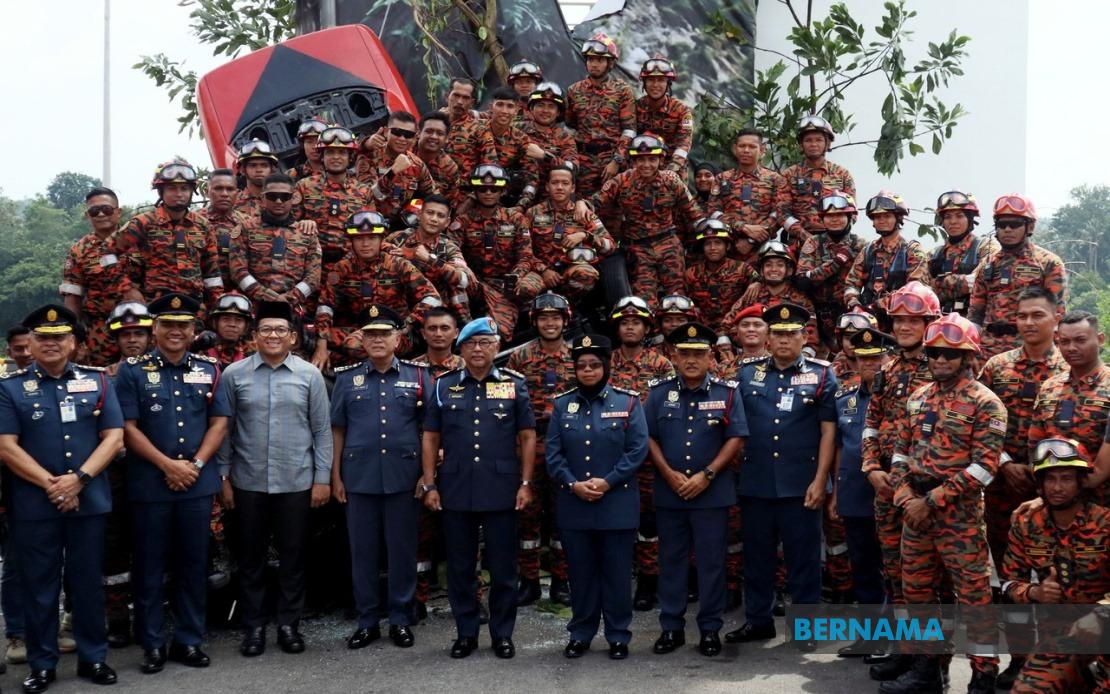
The Malaysian government has greenlit an annual development budget of RM278.9 million for the Malaysian Fire and Rescue Department (JBPM) to carry out 86 projects during the first rolling plan period of the 13th Malaysia Plan (13MP). This substantial investment, comprising 27 newly initiated projects and 59 continuing initiatives spread throughout the country, underscores the administration's commitment to strengthening emergency response infrastructure at a national scale. The allocation was detailed by Datuk Aiman Athirah Sabu, deputy minister at the Housing and Local Government Ministry, during the inauguration of the Sungai Lembing Fire and Rescue Station in Kuantan on July 2.
Pahang state has emerged as a significant beneficiary of this development programme, with seven facility initiatives at various stages of completion. These projects span both the previous 12th Malaysia Plan cycle and the current 13MP framework, reflecting sustained investment in the state's emergency services capacity. Infrastructure work includes procurement and construction of new facilities such as the Gohtong Jaya Fire and Rescue Station building with accompanying residential quarters, as well as the purpose-built Benta station. Beyond these greenfield developments, the authorities are simultaneously executing enhancement initiatives at established stations, with modernisation work underway at the Bentong and Kuantan facilities. The department is also reconstructing the Triang station and preparing the groundwork for a new station at Tanjung Lumpur, demonstrating a comprehensive approach to geographical coverage and operational readiness.
The Sungai Lembing Fire and Rescue Station, which cost RM6 million to construct, represents a tangible outcome of this strategic investment programme. Built across a seven-acre parcel of land, the facility became operational on February 15 and holds the distinction of being Pahang's 29th fire and rescue station. Its location serves approximately 15,000 residents across Sungai Lembing and the immediately surrounding communities, addressing a critical gap in emergency service provision that existed previously in this region. The construction itself reflects careful planning to ensure the facility could accommodate not only immediate operational requirements but also future expansion possibilities as service demands evolve.
Aiman Athirah articulated a broader institutional vision for stations of this type, positioning them as multifunctional community assets rather than purely operational bases. The Sungai Lembing station is intended to function simultaneously as an active fire and rescue operations centre while serving as an educational platform for knowledge dissemination, skills training, and public awareness campaigns. This dual mandate aligns with contemporary approaches to emergency service delivery, which increasingly emphasise prevention and community resilience-building alongside rapid response capabilities. By establishing stations as community focal points for safety education, the JBPM seeks to cultivate a culture of preparedness and personal responsibility among citizens, potentially reducing the frequency and severity of incidents requiring emergency intervention.
The location of this new station within Sungai Lembing carries particular significance given the broader economic and cultural rejuvenation efforts underway in the heritage town. Datuk Mohd Shahar Abdullah, deputy minister of economy and Member of Parliament for Paya Besar, articulated the connection between emergency services infrastructure and sustainable community development. He emphasised that heritage preservation and economic revitalisation initiatives lack coherence and credibility without simultaneous investment in public safety systems. Sungai Lembing's transformation programme encompasses restoration of heritage structures including the PCCL Cinema, development of ecotourism attractions, establishment of a digital museum, tunnel renovation, and a comprehensive push to secure UNESCO World Heritage Site designation. These diverse initiatives collectively aim to position the town as a modern tourist and cultural destination while respecting its historical significance.
Within this context, the fire and rescue station assumes importance as essential infrastructure supporting the town's repositioning. Contemporary heritage tourism and community development cannot proceed without robust emergency services, and conversely, investment in emergency capacity signals to potential investors and residents that local authorities are serious about creating safe, well-managed communities. The station therefore functions symbolically as well as operationally—it represents government commitment to the town's future and validates the broader development strategy by ensuring that growth encompasses security and welfare alongside economic opportunity. This integrated approach reflects evolving governance philosophy in Malaysia, where infrastructure investments across different sectors are increasingly understood as interconnected components of comprehensive regional development.
The Sultan of Pahang, Al-Sultan Abdullah Ri'ayatuddin Al-Mustafa Billah Shah, played a central role in the station's inauguration, lending ceremonial weight and royal patronage to the project. This high-level official participation underscores the importance Malaysian leadership attaches to emergency services modernisation. The presence of Pahang Menteri Besar Datuk Seri Wan Rosdy Wan Ismail and State Legislative Assembly Speaker Datuk Seri Mohd Sharkar Shamsuddin further demonstrated unified government commitment across federal, state, and local administrative levels. Such coordinated presence at project openings reinforces institutional coherence and signals to communities that multiple governance layers are functioning collaboratively on identified priorities.
The RM278.9 million annual allocation for JBPM development projects reflects acknowledgment of critical gaps in Malaysia's emergency services infrastructure. Fire and rescue stations serve populations across diverse geographical contexts—from densely urbanised areas to dispersed rural communities—each presenting distinct logistical and operational challenges. The distribution of the 86 projects across new and ongoing initiatives suggests a strategic approach balancing expansion into underserved regions with upgrading of existing facilities to contemporary operational standards. This balanced approach prevents concentration of resources in already well-served urban centres while avoiding neglect of essential infrastructure maintenance elsewhere.
For Malaysian readers, particularly those in areas targeted for fire and rescue station development, this investment programme carries direct implications for personal safety and emergency response times. Fire and rescue services are often the first responders to medical emergencies, traffic accidents, structural collapses, and environmental disasters. The availability of nearby, well-equipped stations with trained personnel directly affects survival rates and injury severity outcomes across diverse emergencies. The expansion and modernisation programme therefore translates into concrete improvements in public welfare and risk management. Communities gaining new or upgraded stations experience measurable improvements in emergency response capacity and operational effectiveness. The Sungai Lembing precedent suggests that the JBPM is not merely expanding station networks but establishing them as sophisticated community facilities with educational and preventive roles extending beyond traditional emergency response functions.
The 13th Malaysia Plan framework itself prioritises inclusive development and enhanced service delivery across the country. The JBPM allocation demonstrates government translation of these high-level planning principles into concrete capital investment and facility development. Across Southeast Asia, comparable development plans in neighbouring countries similarly emphasise emergency preparedness and disaster risk reduction as components of broader prosperity and resilience objectives. Malaysia's investment in fire and rescue infrastructure thus positions the country competitively within regional development contexts and contributes to institutional capacity building essential for managing complex modern economies and societies.
Looking forward, the continuing implementation of this 86-project programme will generate data regarding investment effectiveness, operational impacts, and community outcomes. Lessons from successful projects like the Sungai Lembing station can inform subsequent phases of development planning and guide resource allocation decisions. The integration of emergency services with heritage conservation and economic development in Sungai Lembing also provides a potential model for other Malaysian communities pursuing similar balanced development objectives. As the 13MP rollout continues, monitoring and evaluation of the JBPM investment programme will yield insights valuable for optimising future emergency services development initiatives and ensuring that infrastructure investments consistently serve both immediate operational requirements and broader community development objectives.

