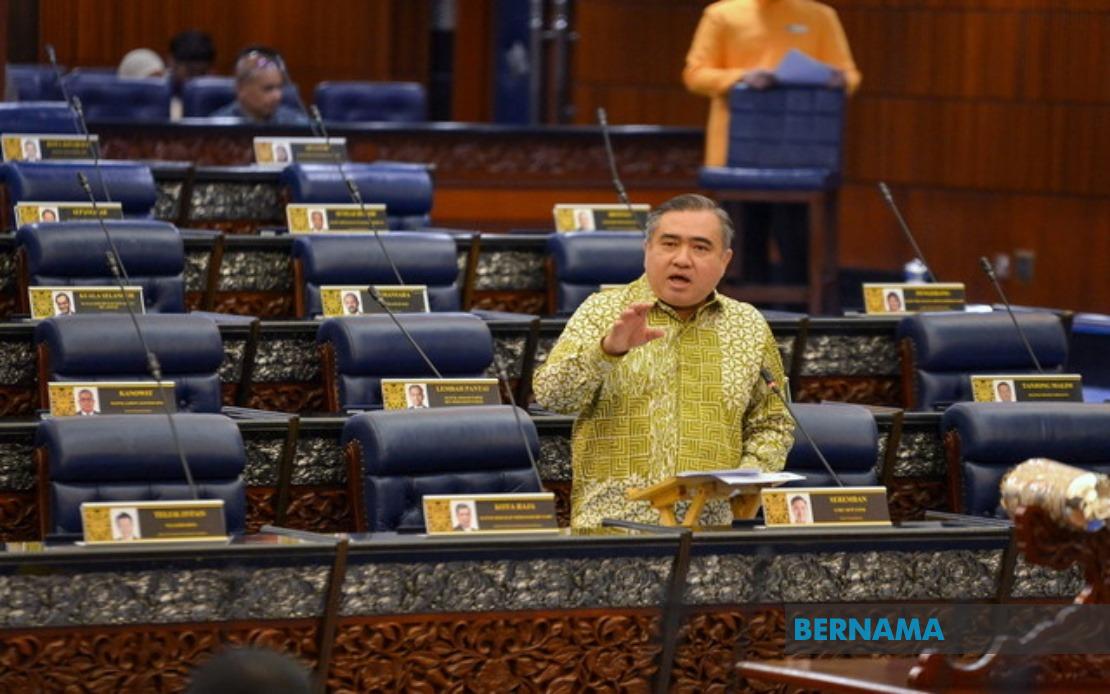
Transport Minister Anthony Loke has confirmed the Federal Government's commitment to financially support Johor's Elevated Autonomous Rapid Transit (E-ART) project, marking a significant shift in the funding approach for this ambitious regional transport initiative. Speaking during parliamentary question-and-answer proceedings in the Dewan Rakyat, Loke revealed that while initial project financing was expected to be managed by the appointed consortium, independent viability assessments have demonstrated that private sector investment alone cannot sustain the scheme's long-term operations.
The minister's statement addresses a critical challenge facing major transport infrastructure projects across Southeast Asia—the increasing recognition that purely commercial models struggle with public transit ventures that prioritize affordability and accessibility over profit margins. The E-ART initiative, designed to transform Johor's regional connectivity, exemplifies this tension between financial sustainability and social service delivery that policy-makers across Malaysia and neighbouring countries continue to navigate.
Loke explained that the detailed mechanics of government financing, including the precise financial commitment and repayment arrangements throughout the concession period, remain subject to ongoing negotiations between relevant stakeholders. This pragmatic approach allows flexibility in structuring terms that balance governmental fiscal responsibility with project implementation requirements. The negotiation phase is critical, as it will determine how risk and reward are distributed among the Federal Government, the Johor administration, and private partners involved in delivering this transformative transport solution.
The announcement came in response to questions from Datuk Seri Dr Wee Ka Siong regarding the government's funding mechanism and the potential traffic implications when the Johor Bahru-Singapore Rapid Transit System Link commences operations in January 2027, well before the E-ART project completion. This timing raises important considerations for cross-border mobility and the integration of complementary transit systems serving the rapidly urbanizing Johor Bahru metropolitan region and its connections to Singapore.
Loke indicated that the agreed terms will be presented to the Cabinet for formal consideration and approval prior to executing the Concession Agreement. The project timeline targets completion within four years following the issuance of the Letter of Acceptance, positioning the E-ART as a rapid-deployment solution to Johor's mounting transport pressures. This compressed construction schedule reflects the urgency of addressing congestion in the state's expanding urban corridors, where population growth and economic development have outpaced existing transport capacity.
To address immediate and medium-term traffic management challenges, the Transport Ministry has collaborated with the Johor government to develop a comprehensive traffic dispersal strategy that strengthens the broader public transport ecosystem. The BAS.MY service network will expand substantially to 28 routes encompassing 254 buses, with electric bus integration reflecting Malaysia's broader transition towards sustainable urban mobility. This expansion demonstrates a layered approach to transport planning, where rapid transit megaprojects work in concert with enhanced bus services and commuter rail systems.
Under the Stage Bus Service Transformation 2.0 programme, Johor will receive 157 dedicated buses serving the Johor Bahru Sentral and Bukit Chagar corridors, with operations commencing in early 2027. Simultaneously, the ministry is pursuing procurement of 12 KTM Komuter Southern train sets to strengthen rail-based connectivity. In the interim, the newly launched Shuttle Selatan service, connecting Kulai-Kempas-Johor Bahru and Kempas-Pasir Gudang routes, provides capacity for 14 daily trips, offering immediate relief to congested corridors while longer-term infrastructure develops.
The funding announcement carries broader implications for Malaysia's transport infrastructure strategy, particularly regarding how the government balances fiscal constraints with the necessity of developing modern public transport networks. Malaysia's urbanization trajectory and regional economic integration require transport systems that are both technologically advanced and financially sustainable, a challenge that E-ART is positioned to address through its elevated autonomous rapid transit design.
When questioned about fare regulation for public transport projects, Loke reiterated that government control over fares across all public transport initiatives remains a cornerstone of policy. This commitment reflects a deliberate choice to prioritize affordability and accessibility, even when it necessitates substantial government subsidy. The minister acknowledged the tension inherent in this approach—price controls reduce commercial competitiveness and demand government financial support—but framed it as an essential mechanism for maintaining public transport as a service accessible to Malaysians across income levels.
The E-ART project's federal funding approval demonstrates recognition that essential transport infrastructure serving growing metropolitan areas cannot be relegated entirely to market forces. This principle has gained prominence across Asia-Pacific transport planning, where governments increasingly recognize that public transit's wider economic and social benefits justify direct public investment even when commercial returns are modest. For Johor specifically, the E-ART represents a transformative opportunity to enhance regional competitiveness and quality of life for residents and cross-border commuters.
The Cabinet approval process for the negotiated terms will be the next critical juncture in the project's development. The terms agreed upon will establish the framework for federal-private collaboration, risk allocation, and performance expectations that will shape the E-ART's operational success. Successful implementation could provide a replicable model for other Southeast Asian jurisdictions grappling with similar transport challenges and financing constraints.
Looking forward, the E-ART project's progression will be closely watched by transport planners throughout the region as a case study in integrating ambitious autonomous rapid transit technology with pragmatic government financing mechanisms. The project's completion timeline and operational performance will inform future decisions regarding technology adoption and public-private partnerships in regional transport development, potentially influencing approaches to infrastructure investment across Malaysia and neighbouring countries.

