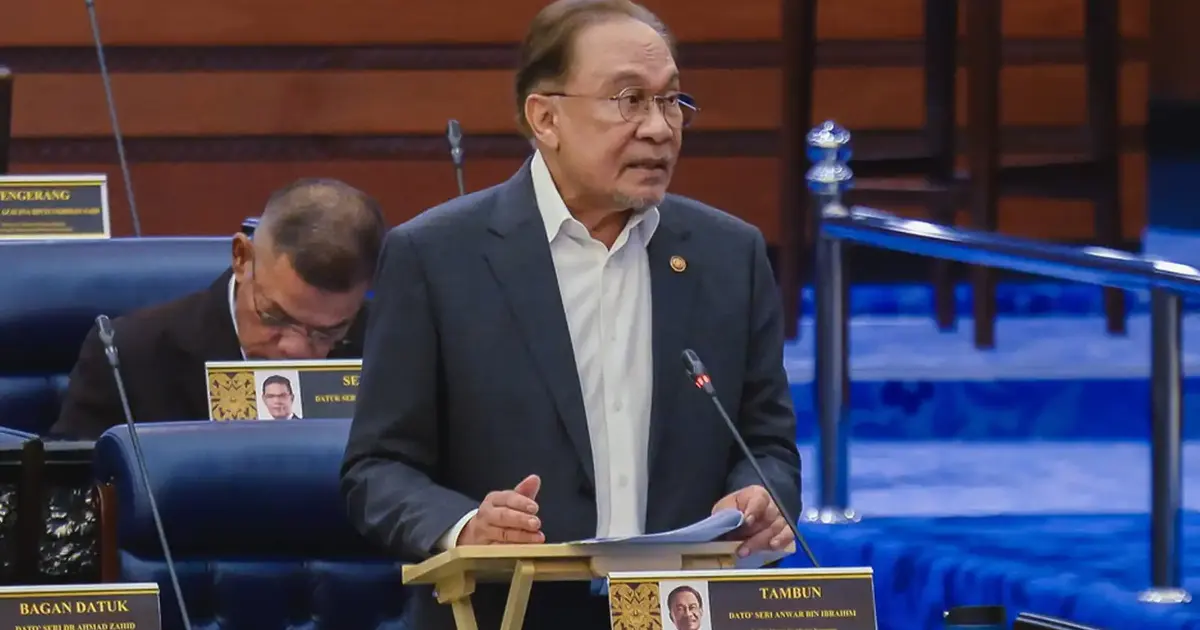
Prime Minister Anwar Ibrahim has drawn a firm line on federal fiscal responsibility, making clear that the central government will not routinely absorb cost overruns arising from state government decisions. The warning represents a significant tightening of how Putrajaya will manage its relationship with state administrations over project funding, signalling that the era of blank cheques for ambitious regional initiatives may be ending.
Anwar's position reflects mounting pressure on federal finances as Malaysia continues its recovery from the pandemic, coupled with persistent concerns about fiscal discipline across various tiers of government. By explicitly stating that any request for additional federal allocations or loans must undergo fresh negotiation, particularly when project costs balloon, the Prime Minister is seeking to impose greater accountability on state leaders and discourage loose project planning.
The implication is stark: state governments cannot simply present Putrajaya with expanded budgets once construction is underway or revised plans have inflated original estimates. Instead, they must justify fresh requests through the proper channels, demonstrating how costs spiralled and why additional federal support is warranted. This approach forces states to bear greater responsibility for their own planning rigour and cost management.
This stance carries particular significance for Malaysian states pursuing large-scale infrastructure, tourism, or development initiatives. Selangor, Johor, and Sabah, among others, have major projects in the pipeline or under construction. Under Anwar's framework, officials overseeing these ventures must ensure meticulous budgeting and realistic cost projections from inception, knowing that federal authorities will scrutinise any requests for supplementary funding.
The policy also addresses a historical pattern where inadequate initial planning and optimistic cost estimates have burdened federal finances. By making renegotiation mandatory rather than automatic, Anwar is attempting to break a cycle where state ambitions consistently exceed available resources, creating pressure on Putrajaya to bail out troubled projects to avoid political embarrassment or infrastructure delays.
For Southeast Asian observers, Malaysia's approach mirrors broader regional trends toward more disciplined fiscal federalism. Countries across the region have grappled with similar challenges: central governments absorbing state-level project overruns, leading to mounting national debt and constrained budgets for other priorities. Anwar's stance suggests Malaysia may be learning from these cautionary examples.
The practical effect will likely reshape state-level project development. Chief ministers and state economic development officers will face greater internal pressure to commission thorough feasibility studies, engage experienced quantity surveyors and project managers, and build realistic contingency buffers into initial budgets. The knowledge that Putrajaya will not automatically cover gaps should encourage more prudent initial planning.
However, the policy raises questions about how Putrajaya will handle situations where cost increases stem from factors beyond state control—unforeseen ground conditions, supply chain disruptions, or currency fluctuations. Anwar's statement suggests all such cases will require renegotiation rather than automatic federal support, which could either incentivise better risk management or create complications if the federal government and states become locked in disputes over responsibility for cost escalation.
The announcement also sends signals to the private sector and international investors involved in joint projects with Malaysian states. Such parties will need assurance that projects remain adequately funded, and may demand clearer guarantees from state governments regarding federal backing. If states cannot guarantee additional support without lengthy renegotiation, project finance structures may become more complex or expensive.
Anwar's emphasis on renegotiation rather than rejection suggests he is not seeking to prevent state development entirely, but rather to ensure federal resources are deployed more strategically. States with sound projects and realistic budgets should still secure federal support, but they cannot expect Putrajaya to rubber-stamp supplementary requests without rigorous examination.
This approach aligns with the Prime Minister's broader agenda of improving governance and fiscal transparency across government institutions. By establishing clearer rules about federal support for state projects, Anwar is attempting to reduce opportunities for political favouritism or wasteful spending to hide behind routine budget adjustments.
Looking ahead, state officials should expect considerably tighter scrutiny of project cost structures and timelines. The days of presenting inflated final bills to Putrajaya and hoping for federal assistance appear to be ending. Instead, states will need to demonstrate genuine planning competence and financial discipline from the outset. For Malaysian taxpayers, this could mean better outcomes and fewer white elephant projects draining federal resources. For states themselves, it demands more sophisticated project management capacity and tighter internal controls.
The message extends beyond infrastructure: it reflects Anwar's determination to establish firmer boundaries between federal and state responsibilities, ensuring each level of government bears appropriate financial consequences for its decisions and planning choices.

