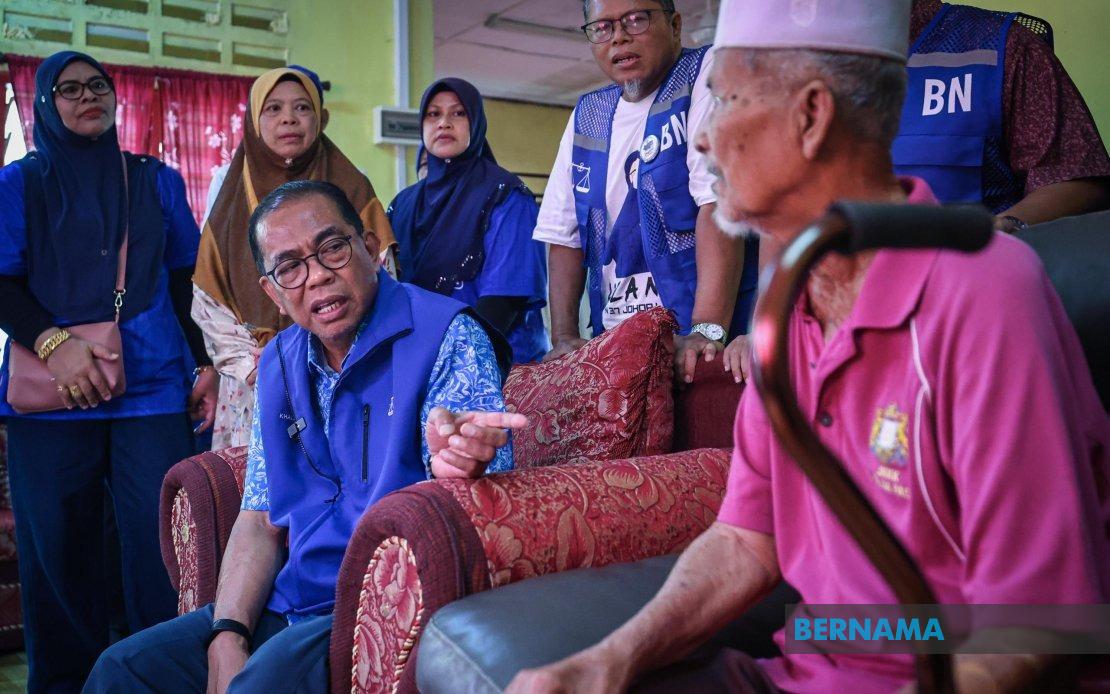
With Johor's state election just days away, Defence Minister Datuk Seri Mohamed Khaled Nordin moved to reassure voters on July 9 that constitutional safeguards ensure cooperation between federal and state governments will continue unimpeded, regardless of which political coalitions hold power at each level. Speaking after attending a community visit in Kota Tinggi, the UMNO vice-president addressed a concern that often weighs on voters in Malaysia's federal system: whether partisan differences between federal and state administrations could translate into administrative friction or resource disputes.
The Federal Constitution, Mohamed Khaled emphasised, explicitly delineates the powers and responsibilities assigned to both federal and state authorities, establishing a legal framework that transcends electoral outcomes. Rather than leaving inter-governmental relations to the goodwill of individual leaders, the constitutional arrangement mandates mutual respect and cooperation as binding obligations. This institutional architecture, he argued, provides the structural guarantee that both tiers of government must fulfil their developmental mandates for the benefit of all Malaysians, regardless of party affiliation.
Mohamed Khaled's remarks carry particular weight given his dual role as Defence Minister and senior UMNO figure. By anchoring his assurance in constitutional law rather than party promises, he sought to elevate the discussion above electoral politics and appeal to voters' fundamental desire for stable governance. The message was carefully calibrated: while UMNO and Barisan Nasional remain optimistic about retaining control of the Johor state government, the minister acknowledged that voters retain the right to choose differently—and that such choices need not trigger administrative chaos or partisan conflict.
The context for these comments is significant. The 16th Johor state election, scheduled for July 11, sees Barisan Nasional defending its substantial majority from the previous 2022 polls, when the coalition secured 40 of 56 seats. That decisive victory gave BN a strong mandate, yet the political landscape at both state and federal levels has remained fluid. By publicly accepting that voters might elect a state government different from the federal government, Mohamed Khaled implicitly acknowledged the possibility that Johor could follow the trajectory of other states where non-BN coalitions govern despite federal-level BN control, or vice versa.
Malaysia's experience with divided government has been mixed. When different coalitions control federal and state administrations, tensions over development projects, resource allocation, and administrative cooperation have occasionally surfaced, particularly during the period of PAS-led state governments and non-BN federal rule. Mohamed Khaled's emphasis on constitutional obligations appeared designed to pre-empt such scenarios in Johor, signalling that institutional constraints would prevent partisan disputes from compromising public services or development initiatives.
The Defence Minister's framing also reflects broader concerns within BN about voter sentiment heading into the election. By acknowledging the constitutional legitimacy of any outcome voters might choose, he repositioned the contest from a simple contest for power into a reassurance about democratic stability. This rhetorical move serves to bolster voter confidence that elected governments will function properly and cooperate with federal authorities regardless of party labels—a concern that can depress turnout if voters fear that voting differently might create governance chaos.
Barisan Nasional's confidence in retaining the Johor mandate appears grounded in tangible factors beyond mere optimism. The coalition's track record in the state, its administrative structures, and the machinery deployed across all 56 contested seats represent substantial resources. Yet the presence of 172 candidates across those seats—an average of just over three per seat—indicates a contested election with multiple parties competing for voter support. The 2.7 million registered voters in Johor represent a substantial electoral force capable of reshaping state politics should sentiment shift significantly.
From a Southeast Asian perspective, Mohamed Khaled's statements underscore how Malaysian federalism differs from more confrontational models where state-federal relations become proxies for national political conflicts. The constitutional framework, while not preventing all disputes, establishes a default position favouring cooperation and shared responsibility for development. This contrasts with some neighbouring federal systems where state governments can more easily obstruct federal initiatives or where federal authorities can more readily override state prerogatives for partisan advantage.
The timing of these remarks is strategically important, coming as the election campaign entered its final stretch. By emphasising constitutional protections before voters cast their ballots, the Defence Minister sought to address a potential voting impediment: anxiety that voting differently from the federal government might create problems. Whether such assurances definitively reshape voter calculations remains uncertain, but they reflect awareness that governance continuity concerns can influence electoral behaviour, particularly among more cautious or swing voters.
The outcome on July 11 will provide clarity on whether voters remain confident in Barisan Nasional's stewardship or whether they wish to experience different leadership in the state capital. What Mohamed Khaled's intervention suggests, however, is that regardless of that outcome, both federal and state authorities will be expected to navigate their relationship through constitutional channels designed precisely to manage political differences. That framework has sustained Malaysia's federal system through numerous transitions and coalition changes, establishing precedent that transcends any single election.

