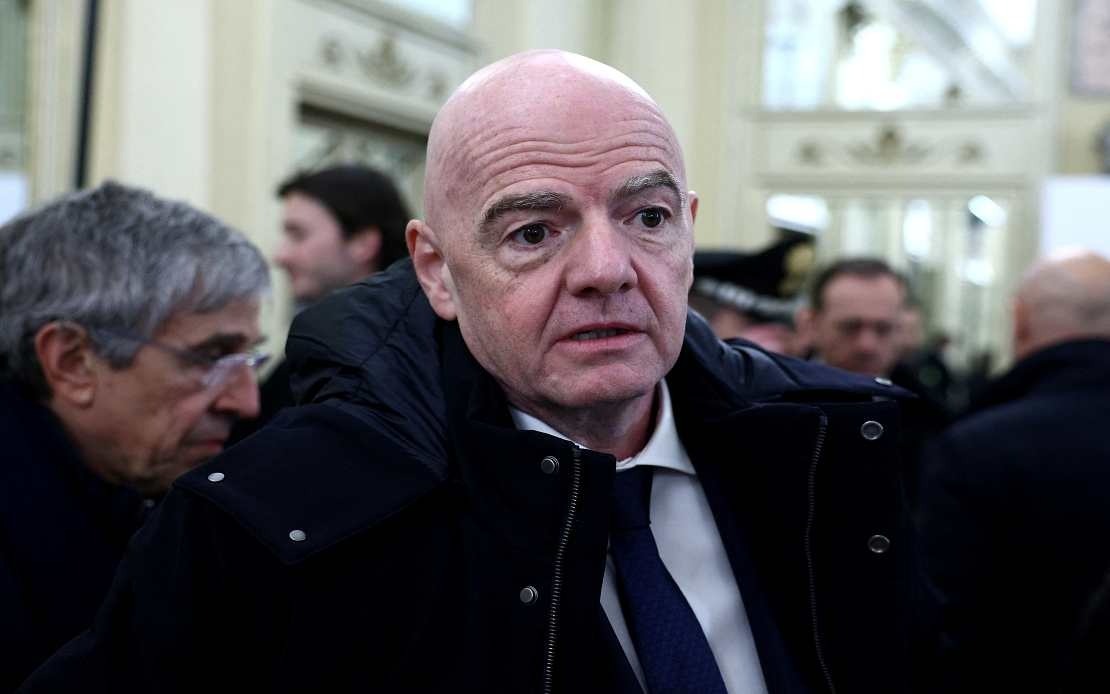
FIFA President Gianni Infantino faces fresh scrutiny after a human rights organisation escalated allegations of political impropriety to the International Olympic Committee, marking an intensification of long-standing concerns about the football chief's adherence to Olympic governance standards. FairSquare, a group focused on defending human rights within sports, has submitted detailed documentation to the IOC citing what it characterises as systematic breaches of political neutrality rules, a foundational principle of Olympic governance that Infantino accepted upon joining the IOC membership in 2020.
The complaint centres on Infantino's handling of controversial decisions during recent World Cup proceedings, with particular focus on the Folarin Balogun disciplinary matter. Balogun, a United States striker, received a one-match suspension that FIFA's disciplinary committee subsequently suspended, clearing him to feature in a crucial World Cup knockout fixture against Belgium. The timing and nature of this reversal drew scrutiny following a reported telephone conversation between United States President Donald Trump and Infantino, though FIFA has steadfastly maintained that its disciplinary apparatus operates with complete autonomy from external influence.
FairSquare's formal submission to the IOC identifies five unambiguous violations of Olympic neutrality protocols, alongside what legal terminology describes as prima facie evidence suggesting two additional serious breaches. The organisation contends that Infantino's conduct demonstrates a troubling pattern rather than isolated incidents, reflecting deeper systemic concerns about the FIFA president's capacity to separate his administrative role from political considerations and external pressure.
For Malaysian and Southeast Asian observers, this development carries significance beyond the immediate governance dispute. The region has grown increasingly conscious of FIFA's regulatory consistency, particularly given the participation of national teams in World Cup competitions and the investment regional footballing bodies place in upholding international standards. Questions about the integrity of FIFA's disciplinary mechanisms have implications for how rules are applied uniformly across all member associations, regardless of political clout or economic influence wielded by particular nations.
FairSquare's escalation to the IOC represents a strategic shift in the campaign to address what the organisation views as systemic governance failures. Having previously filed comparable concerns with FIFA's own ethics committee in December, and having galvanised support from diverse stakeholders including the Norwegian football federation and fifty European Parliament members, the group appears to have concluded that FIFA's internal mechanisms lack sufficient independence to investigate Infantino effectively. The IOC referral thus becomes a mechanism for external accountability when internal oversight has not delivered satisfactory resolution.
Infantino's response has centred on assertions of institutional independence, with FIFA repeatedly insisting that its disciplinary committees operate without external interference. The Swiss football administrator has not provided substantive explanation for the specific decision to suspend Balogun's ban, neither addressing the temporal proximity to Trump's telephone call nor the reversal of an initial disciplinary finding. This silence has fuelled speculation about the genuine basis for the reversal and whether established protocols were properly followed.
The complaint mechanism represents a notable development in the broader governance ecosystem surrounding international sports administration. While IOC membership carries certain prestige and privileges, it simultaneously imposes obligations regarding ethical conduct and political impartiality. Infantino's elevation to IOC member status was itself a gesture toward closer alignment between FIFA and the Olympic movement, yet the current allegations suggest this integration may have created additional accountability channels for scrutinising FIFA leadership conduct.
The Balogun case, though specific in its immediate circumstances, exemplifies broader concerns about how pressure from powerful actors intersects with formal decision-making processes in international football. The United States remains a strategically important market for FIFA, particularly as the nation prepares to host the 2026 World Cup. This context lends credibility to suspicions that political considerations may have influenced sports regulatory determinations, even if proving direct causality remains challenging.
European and Norwegian football institutions have evidently found FairSquare's allegations sufficiently credible to warrant formal intervention, suggesting that governance concerns extend beyond advocacy groups into official sporting structures. The European Parliament's engagement further elevates the matter into political dimensions, signalling that multiple institutional layers now perceive genuine problems warranting investigation.
The IOC's response to FairSquare's submission remains unknown at this juncture, but the organisation typically maintains rigorous standards regarding member conduct and Olympic Charter compliance. Should the IOC open a formal inquiry, it would establish an independent review mechanism operating outside FIFA's control, fundamentally changing the evidentiary and procedural landscape surrounding Infantino's conduct.
For football governance globally, this unfolding situation underscores persistent tensions between institutional autonomy and external accountability. FIFA has historically resisted outside oversight, yet the Olympic platform provides alternative avenues for challenging decisions when internal mechanisms appear compromised. The outcome of this complaint process may therefore establish important precedents for how sporting institutions manage allegations of political interference and ethical misconduct among their leadership.
The implications extend to Southeast Asian football confederations and national associations, who rely on FIFA's consistent application of rules across competitions. Should investigations reveal that World Cup decisions can be influenced by political conversations with powerful nations, it would cast doubt on the fairness of FIFA's regulatory framework—concerns particularly acute for smaller footballing nations whose teams compete without comparable political leverage.

