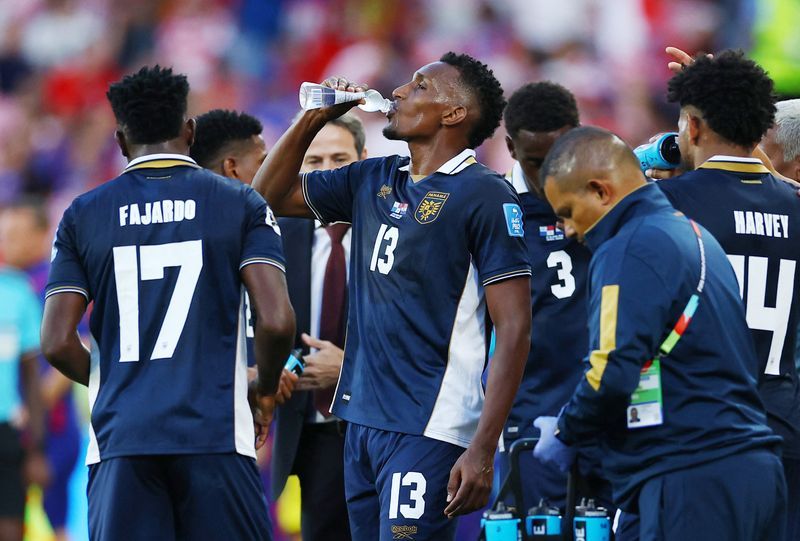
FIFA president Gianni Infantino has moved to quell growing controversy surrounding mandatory hydration breaks introduced at the World Cup, asserting that the stoppages serve purely sporting purposes and deliver no additional revenue to football's governing body. The three-minute breaks, enforced at the 22nd and 67th minutes of every match, have sparked considerable debate among coaches, players and supporters since matches began across North America, with critics questioning whether they represent genuine concern for athlete welfare or a thinly veiled opportunity to expand broadcasting windows.
Infantino's public defence addresses mounting scepticism about FIFA's motivations, particularly given that the interruptions have created additional commercial slots for broadcasters to display advertisements. The FIFA chief stressed in a statement that all broadcast agreements were negotiated months before the tournament commenced, meaning the federation receives no incremental financial benefit from the breaks themselves. This distinction, whilst technically accurate, does little to assuage observers who view the rule change as convenient alignment of sporting rationale with commercial opportunity.
The hydration breaks represent a significant structural modification to how the world's most-watched sport operates at its pinnacle. Football traditionally flows as continuous 45-minute halves with minimal formal interruption, a characteristic that distinguishes it from sports such as American football or basketball. By introducing compulsory stoppages, the breaks fundamentally alter match rhythm and create deliberate moments when coaches can impart tactical adjustments to their teams, transforming what was previously uninterrupted play into segmented blocks.
This tactical dimension has emerged as perhaps the most contentious aspect of the new rule. Managers including England's Thomas Tuchel have publicly criticised how the breaks disrupt the natural momentum of matches and alter the essential character of football itself. Uruguay manager Marcelo Bielsa went further, arguing that subdividing matches into shorter temporal segments strips away what constitutes the game's fundamental essence. These are not casual complaints from peripheral figures but substantive critiques from coaches with decades of experience at the highest levels of competition.
Yet support exists for the underlying principle when applied thoughtfully. Spain coach Luis de la Fuente and Netherlands captain Virgil van Dijk have acknowledged that extreme heat necessitates player welfare measures, though both expressed reservations about applying mandatory breaks in cooler conditions or at climatically controlled venues. This nuanced position reflects the legitimate tension between safeguarding athlete health and maintaining competitive integrity—a tension that Infantino's one-size-fits-all approach arguably fails to resolve satisfactorily.
Infantino's primary justification centres on the demanding tournament schedule and the need for uniform competitive conditions. Playing matches over 39 days with teams potentially competing eight times creates extraordinary physical and mental fatigue that differs markedly from typical league competition. The FIFA president contends that permitting tactical adjustments in hot matches whilst denying them in cooler ones would create an unfair competitive advantage based purely on climatic circumstance rather than sporting merit. This uniformity argument carries weight when examined dispassionately, though it sidesteps whether mandatory breaks represent the optimal mechanism for achieving parity.
The heat rationale itself warrants closer examination for Malaysian and Southeast Asian readers, who live in climates where such conditions represent routine playing circumstances. Many Asian footballers train and compete regularly in temperatures and humidity levels matching or exceeding those encountered during the North American tournament. The decision to introduce breaks specifically for this competition—rather than implementing them permanently in FIFA's regulatory framework for all tournaments in hot climates—suggests the measure was tournament-specific rather than reflecting evolved thinking about player welfare across the sport.
Infantino further argued that the breaks have not diminished match intensity, indicating that players maintain performance levels throughout games despite the interruptions. This claim, however contentious, suggests FIFA's internal analysis suggests the stoppages do not produce the deleterious effects on play quality that some coaches have suggested. Whether independent analysis by sports scientists would reach identical conclusions remains unclear, as does whether players themselves might characterise their experience differently.
The controversy illuminates the broader tension within modern professional sport between evolving player welfare standards, commercial imperatives and competitive tradition. Hydration breaks undoubtedly serve legitimate health purposes during extreme conditions, yet their introduction alongside new advertising opportunities creates justified cynicism about FIFA's institutional priorities. For emerging football nations in Southeast Asia developing domestic professional standards, the debate signals that governing bodies often invoke welfare language whilst simultaneously pursuing commercial expansion—a dynamic worth monitoring as regional competitions increasingly adopt international precedents.
Moving forward, a more credible approach might involve making hydration breaks discretionary rather than mandatory, allowing match officials to implement them based on real-time environmental monitoring rather than fixed scheduling. This would retain player protection whilst eliminating opportunities to cynically dismiss the measure as commercially motivated theatre. Infantino's current framing, whilst technically defensible, fails to address the perception problem that equally matters to competitive football's credibility and public trust.