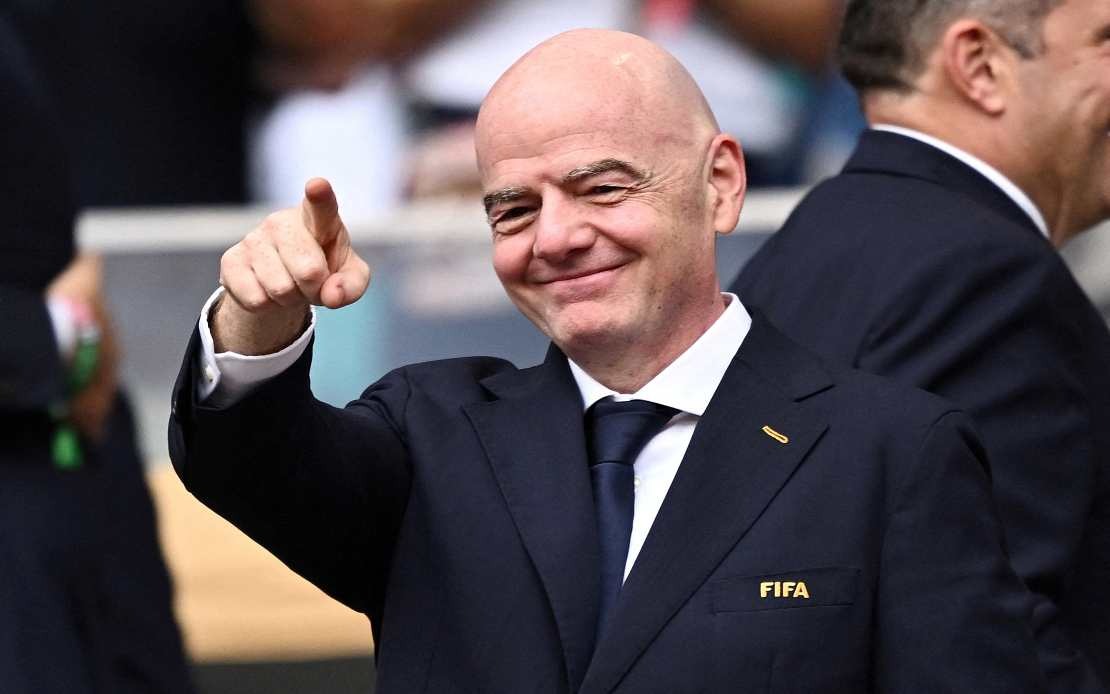
FIFA circulated pre-written letters praising President Gianni Infantino's leadership to national football associations in the months preceding his re-election bid, according to multiple media reports. The correspondence highlighted Infantino's purported contributions to sports infrastructure development and women's football advancement during his tenure, though the practice of distributing pre-authored endorsements raises questions about the legitimacy of grassroots support for his candidacy.
The letters were distributed before the World Cup in the United States, Mexico and Canada, a timing that placed them strategically within the period when football associations would be preparing for the electoral process. Notably, the names and signatures of association presidents were pre-filled into the documents, suggesting that recipients may not have independently composed their endorsements. However, the distribution was not universal, indicating that some national associations either declined to participate or were excluded from the campaign.
This development emerged amid broader financial turbulence at FIFA headquarters. In July, the organisation announced an ambitious plan to generate US$4.2 billion through the sale of approximately a 20 per cent equity stake in a newly created entity designed to manage FIFA's media and commercial rights, including those pertaining to the World Cup. The financing scheme represented a significant departure from traditional FIFA revenue models and suggested urgent capitalisation needs within the institution.
The proposed equity sale attracted substantial investor interest from high-profile financial circles. Media outlets reported that the stake could be acquired by an investment fund managed by Joshua Kushner, brother of Jared Kushner, who serves as son-in-law to United States President Donald Trump. The involvement of figures with direct links to the Trump administration added a geopolitical dimension to FIFA's internal restructuring efforts.
European football leadership responded swiftly and decisively to the media rights proposal. UEFA announced that all member associations under its jurisdiction would boycott FIFA tournaments until the organisation fully withdrew the initiative. This unified opposition from European football bodies—which represent some of the world's most commercially valuable and politically influential national teams—constituted a serious challenge to FIFA's governance and financial direction.
The convergence of these events created mounting pressure on Infantino's position. Media sources suggested that the FIFA president faced escalating resistance from football associations globally, some of whom questioned whether his leadership could survive the combination of governance controversies and the threatened European boycott. Speculation intensified regarding the possibility that Infantino might resign from his position before facing a formal electoral challenge from member associations.
For Malaysian football stakeholders and Southeast Asian football governance more broadly, these developments carry significant implications. FIFA's decision-making processes directly affect domestic leagues, club operations, and national team eligibility through sanctions, suspension, or tournament bans. Should FIFA's organisational credibility deteriorate through governance disputes, the consequences could reverberate through regional football competitions and commercial arrangements that depend on FIFA's institutional stability and rule-making authority.
The pre-written letters episode illustrates a tension within international sports governance between centralised authority and democratic accountability. While FIFA operates as a private association with considerable autonomy in its internal affairs, its monopolistic control over world football tournaments creates expectations among member associations that the organisation will uphold transparent and principled decision-making standards. The distribution of pre-composed endorsements suggests a departure from these norms, potentially weakening Infantino's moral authority even if his re-election ultimately proceeds.
The financial restructuring proposal that triggered European opposition reveals the complexity of modern sports organisations' capital requirements. World Cup broadcast rights and media partnerships generate enormous revenues, yet FIFA's institutional costs and obligations appear to exceed available resources, necessitating external capital injection. The choice of investor—with connections to American political circles—raised additional questions about whether such arrangements might compromise FIFA's independence or create conflicts of interest in tournament hosting decisions and regulatory matters.
The dispute also highlights the fragmentation of global football governance along regional lines. UEFA's willingness to impose a comprehensive boycott demonstrates that European football bodies possess sufficient collective leverage to challenge FIFA decisions, a power dynamic that less economically dominant regions like Southeast Asia cannot easily replicate. Malaysian football associations, while participating in FIFA structures, operate within a system where European and South American federations wield disproportionate influence over organisational policy and resource allocation.
Moving forward, the outcome of Infantino's electoral challenge will shape FIFA's governance trajectory for years to come. If he survives the current controversy through expanded pre-electoral endorsements and subsequent member voting, questions will persist about the legitimacy of his mandate and the feasibility of implementing contentious policies like the media rights restructuring. Conversely, should mounting pressure force his resignation or electoral defeat, FIFA would face substantial transition costs in establishing new leadership while simultaneously addressing institutional credibility deficits among regional associations and commercial partners.
The Malaysian football community should monitor these developments closely, as FIFA's internal stability directly affects tournament schedules, qualification pathways for Malaysian national teams, and commercial opportunities for domestic clubs seeking Asian competition platforms. The principle at stake—whether international sports governance operates through transparent processes or behind-the-scenes coordination—extends beyond FIFA to influence how regional bodies like the Asian Football Confederation exercise authority over Southeast Asian football.

