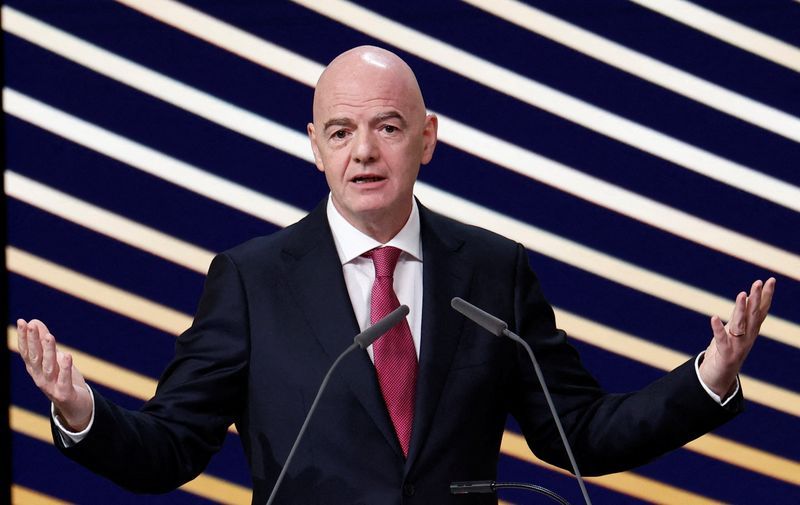
FIFA President Gianni Infantino's grip on power is slipping as the governing body of world football enters a period of unprecedented turbulence. The crisis stems from his proposal to sell a significant stake in the lucrative World Cup tournament to private investors—a scheme that has triggered a backlash from multiple continental confederations and national associations. Serbia, Sweden, and Wales have already withdrawn their endorsement of his re-election, signalling that opposition to his leadership extends beyond isolated voices. The election to determine FIFA's leadership for the 2027-2031 term will be held in Morocco on March 18, giving various camps several months to solidify their backing and articulate alternative visions for football's future.
The private equity proposal has become a lightning rod for broader criticisms of Infantino's governance style. Rather than presenting a unified front, football's continental confederations have split sharply on whether monetizing the World Cup through private investment represents necessary modernization or a dangerous deviation from the tournament's traditional structure. This schism reveals deeper anxieties about decision-making processes within FIFA, with several organisations arguing that crucial strategic decisions are being made without adequate consultation or transparency. The backlash signals a desire among leading football nations to reassert control over the organisation's direction and restore institutional credibility that has been eroded by years of controversy.
Victor Montagliani, president of CONCACAF and a Canadian businessman with extensive experience in North American football, has emerged as one of the most plausible challengers to Infantino. While CONCACAF rejected the private equity proposal, the confederation stopped short of the full boycott that UEFA implemented, suggesting a more pragmatic positioning that could appeal to federations seeking a middle ground. With the 2026 World Cup scheduled to be hosted on CONCACAF soil for the first time since 1994, Montagliani brings direct experience managing one of football's most commercially significant tournaments and understanding of how to balance stakeholder interests across the North American region.
European football's most powerful figure, Aleksander Ceferin of Slovenia, has positioned himself as a potential frontrunner through vocal opposition to Infantino's agenda. As UEFA president, Ceferin demonstrated his willingness to challenge FIFA by boycotting the World Cup final and emerging as one of Infantino's harshest critics during a particularly difficult period. UEFA's emergence as the most forceful opponent of the private equity scheme gives Ceferin considerable leverage, as European nations collectively wield significant voting power within FIFA's electoral process. His candidacy would represent a reassertion of European influence in global football governance, which some members feel has been diminished under Infantino's tenure.
Sheikh Salman bin Ibrahim Al Khalifa, a senior FIFA Council vice president from Bahrain, commands attention through his position within Asian football and his previous opposition to World Cup expansion proposals. The AFC president and his continental confederation have articulated sophisticated critiques of Infantino's decision-making methodology, arguing that the private equity proposal exposed fundamental weaknesses in how FIFA consults with member organisations before implementing transformative policies. This positioning allows Salman to appeal to federations concerned not merely with specific proposals but with restoring institutional accountability and inclusive governance structures to FIFA's operations.
Qatari sports executive Nasser Al-Khelaifi, best known as Paris Saint-Germain's president, has begun attracting support from European football officials who see him as a compromise candidate capable of bridging regional divides. According to recent reports, senior officials across Europe have begun rallying around Al-Khelaifi as a serious alternative to Infantino. His background in elite club football and experience managing major sporting properties provide credentials that appeal to pragmatists seeking someone with both commercial acumen and established relationships across football's power structure. The backing he is receiving from European circles suggests that a non-European candidate with the right profile and connections could unite previously fractious federations.
Norwegian Football Federation President Lise Klaveness rounds out the field of prominent contenders, bringing distinctive perspectives rooted in her role as one of global football's most influential female leaders. Klaveness earned respect and notoriety through her prominent role opposing Infantino's World Cup monetization scheme, demonstrating her willingness to challenge FIFA leadership on matters of principle. Norway's previous consideration of ethics complaints against FIFA regarding the handling of disciplinary matters during the World Cup further establishes her credentials as someone willing to hold the organisation accountable. Her potential candidacy would represent a significant shift toward gender diversity in FIFA's top leadership position and appeal to federations seeking to project a more progressive image for world football.
The fracturing of support for Infantino reflects deeper anxieties about FIFA's strategic direction and decision-making processes that extend well beyond the immediate private equity controversy. Member federations appear increasingly concerned that major initiatives affecting the entire sport are being developed through opaque processes with insufficient consultation or democratic input. The withdrawal of support from Serbia, Sweden, and Wales, combined with UEFA's unprecedented boycott and the AFC's sharp criticism, suggests that Infantino has squandered the political capital necessary to implement transformative policies. His approach to governance, which some characterise as too top-down and insufficiently consultative, has triggered a coalition of traditionally rival confederations to reconsider their support.
For Southeast Asian football administrators and observers, this upheaval at FIFA carries significant implications for the region's development agenda. A new FIFA president with different priorities and governing philosophy could reshape allocation of resources, tournament hosting opportunities, and technical development programmes affecting Southeast Asian nations. The AFC, which encompasses many Southeast Asian federations, will play a meaningful role in determining the next president's election outcome. The leadership battle also reflects broader questions about whether FIFA should remain an exclusive club protecting vested interests or evolve into a more genuinely democratic and accountable institution serving all member federations equitably.
The timing of this leadership crisis could not be more consequential, arriving at a moment when FIFA is simultaneously managing the transition to an expanded World Cup format and grappling with reputational damage from previous scandals. The candidate who ultimately prevails will inherit an organisation requiring not merely administrative competence but the ability to rebuild trust among member federations and restore FIFA's legitimacy as global football's governing authority. Whether the winner comes from Montagliani's pragmatic North American perspective, Ceferin's confrontational European stance, Salman's AFC-based experience, Al-Khelaifi's commercial expertise, or Klaveness' progressive approach, the next FIFA presidency will fundamentally reshape how world football is administered through 2031.

