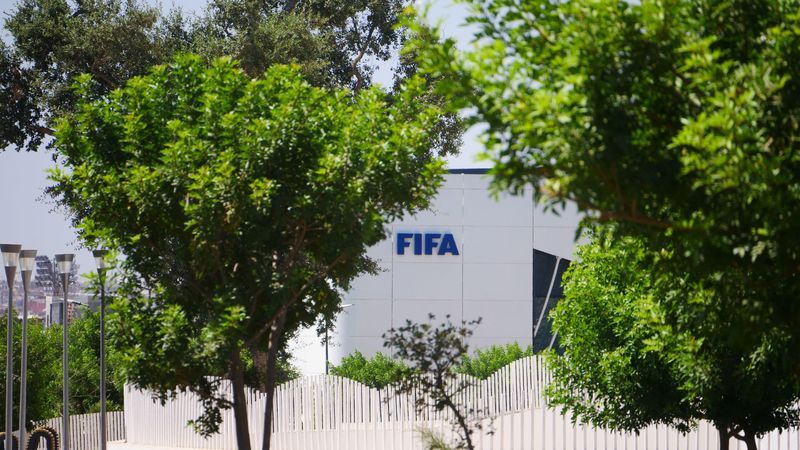
The global football community faces a governance reckoning that transcends any single leader's tenure. David Terrier, president of FIFPRO Europe, delivered a stark assessment this week, declaring that FIFA's credibility crisis demands comprehensive institutional restructuring rather than merely swapping personnel at the top. His comments arrive as the world's soccer governing body reels from a botched attempt to commercialise World Cup rights, a misstep that has fractured relationships between FIFA and powerful regional confederations including UEFA, AFC, and CONCACAF.
The underlying tensions reveal how deeply FIFA's concentration of executive authority has eroded confidence among its membership. Terrier characterised the current atmosphere as a "real war," with federations and confederations losing faith in the institution's decision-making processes. This breakdown of trust extended to FIFA president Gianni Infantino's handling of the commercial rights proposal, which triggered open calls for his resignation from multiple confederations in recent weeks. Yet Terrier's position is more nuanced and potentially more damaging: he argues that whether Infantino remains or departs has become almost irrelevant. The fundamental problem runs deeper than any individual's presence or absence.
Infantino, preparing his campaign for reelection in March, has attempted to stabilise his position following FIFA's crisis meeting in Morocco last week. The organisation issued an apology to its 211 member associations for mishandling the proposal and publicly reaffirmed support for its president. FIFA simultaneously defended its actions as compliant with its regulations, suggesting errors arose from communication and process rather than substantive governance violations. The body also cautioned against circumventing democratic procedures when challenging leadership—a message interpreted as a warning to confederations contemplating Infantino's removal.
Terrier's critique strikes at the heart of FIFA's structural vulnerabilities. He warns that without fundamental reform, the organisation risks repeating the institutional failures that led to Sepp Blatter's downfall in 2015 following the corruption scandal that shook global sports governance. The comparison carries significant weight: if FIFA merely removes Infantino without addressing the systems that enabled the current crisis, the underlying pathologies remain unaddressed. Terrier contends that the concentration of presidential power—allowing a single individual to drive major decisions with insufficient oversight or counterbalancing institutional mechanisms—perpetuates conditions ripe for future scandals and mismanagement.
The players' union chief emphasised that FIFA's administrative structure lacks the institutional independence necessary to constrain executive overreach or enforce accountability. In his view, an institution charged with governing the world's most popular sport must possess internal checks preventing any president from wielding unconstrained authority. This resonates particularly in Southeast Asia and the broader developing world, where regional confederations like AFC feel marginalised in FIFA's decision-making hierarchy. The AFC, comprising 47 Asian nations including powerhouses like China, Japan, and South Korea, has joined UEFA and CONCACAF in questioning Infantino's leadership, signalling unprecedented solidarity across typically divided confederations.
Terrier framed the current moment as potentially "the last opportunity to change the system," suggesting FIFA's credibility window is closing. He advocates for redistributing presidential powers among multiple institutional actors, with the president serving as a guarantor of processes rather than their sole architect. This model reflects international governance trends emphasising distributed authority and institutional transparency. For Malaysian stakeholders—from the Football Association of Malaysia to domestic clubs and players—such structural changes could reshape how AFC interests receive representation in global soccer governance.
The practical implications of FIFA's current trajectory extend beyond boardroom politics. When the governing body's credibility deteriorates, so does confidence in its tournament legitimacy, commercial fairness, and regulatory impartiality. Southeast Asian nations invested in World Cup qualification, AFC tournaments, and commercial partnerships with FIFA all face uncertainty when institutional trust collapses. The botched commercial rights proposal, for instance, potentially affected revenue streams flowing to member confederations and their constituent nations.
Terrier's most pointed observation concerns FIFA's governance style becoming "no longer possible or acceptable"—language echoing activist demands following the Blatter era. He explicitly stated that the current situation represents deterioration rather than improvement from the pre-2015 period, a stunning indictment of whatever reforms FIFA implemented following the corruption scandal. This suggests that previous restructuring efforts proved superficial, addressing symptoms rather than systemic dysfunction.
The players' union chief presented a condition for meaningful change: the FIFA president must personally champion reforms and demonstrate commitment by placing his mandate at risk. Without such willingness to sacrifice power for institutional integrity, Terrier argued, any governance modifications would constitute defeat for football globally. This raises uncomfortable questions about whether Infantino—or any successor—possesses the political capital or inclination to voluntarily diminish presidential authority.
As FIFA navigates reelection processes and confederations weigh leadership options, the underlying debate concerns institutional design. Infantino's March reelection presents a critical juncture: confederations and member associations must decide whether to invest in comprehensive structural reform alongside or instead of leadership change. For Southeast Asian football, an institution with genuine internal accountability and distributed power would provide fairer representation than the current system, where presidential preferences can override regional interests with limited recourse.
Terrier's analysis suggests that merely removing an unpopular president while preserving the structures enabling presidential overreach guarantees future crises. FIFA's crisis of confidence reflects not temporary leadership failures but endemic institutional weaknesses requiring fundamental redesign. Whether global football's governing body possesses the collective will for such transformation remains uncertain, but Terrier has outlined what genuine resolution demands: nothing less than a reimagined system distributing power across multiple independent actors.

