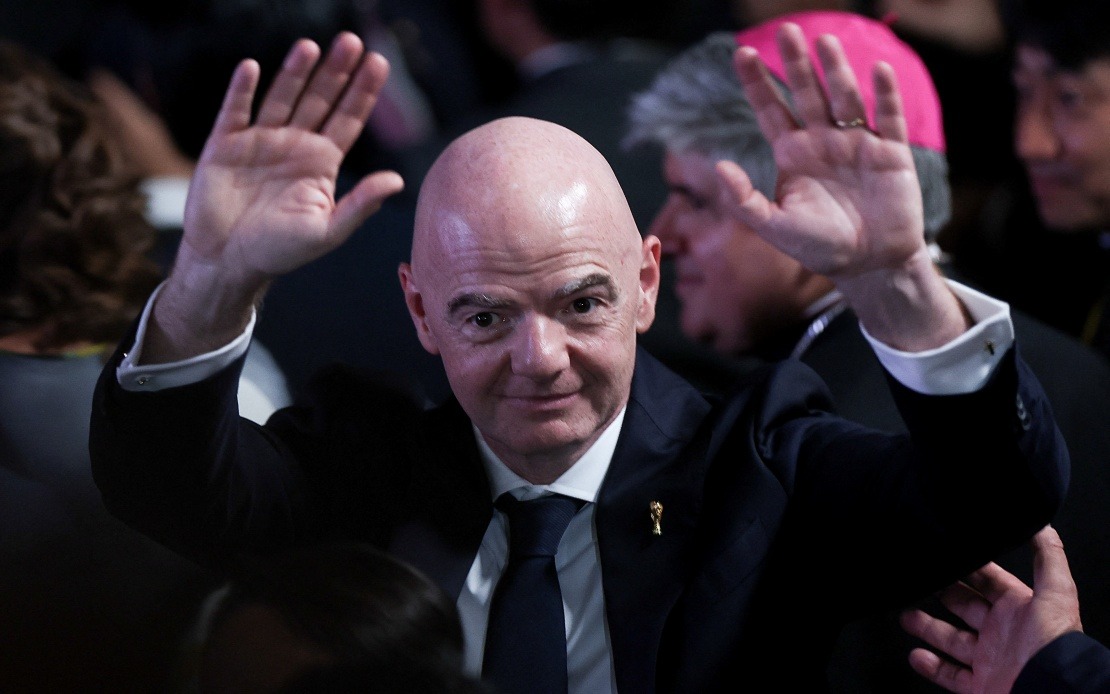
Football's global governing body has taken an unusual step in publicly defending Gianni Infantino's grip on power, issuing a strongly-worded statement late Saturday that rejects any challenge to his presidency conducted outside FIFA's constitutional framework. The intervention from Istanbul signals deepening anxiety within FIFA's upper echelons about the fractures emerging across its membership as Infantino seeks to extend his tenure beyond 2026. The explicit warning that FIFA will neither support nor tolerate irregular election processes carries significant weight, suggesting the organisation views the current challenge to Infantino's authority as the most serious institutional threat to its governance structures in recent years.
The tensions now consuming FIFA's leadership represent a marked departure from the consolidated power that Infantino has exercised since taking office in 2016. While he has historically commanded strong backing from major confederations, the emergence of visible opposition indicates that consensus around his stewardship has fractured along regional and ideological lines. The statement's reference to "a concerted and ongoing effort by some to undermine FIFA and its President" hints at coordinated resistance from multiple quarters, though FIFA has strategically refrained from naming specific critics or outlining their grievances with precision. This ambiguity itself reflects the organisation's vulnerability—naming dissenters might amplify their profile or lend credibility to their concerns.
Infantino's supporters within the confederation hierarchy have rallied to his defence, with CONMEBOL and CAF publicly endorsing his continued leadership and implicitly backing his electoral prospects. These public declarations of support from South America and Africa provide crucial backing, as these regions control substantial voting blocs within FIFA's 211 member associations. By anchoring his position to endorsements from major confederations, Infantino has constructed a coalition designed to withstand challenges that might emerge from European or Asian quarters. Malaysia and its Southeast Asian neighbours remain part of the AFC, which has not issued public statements either supporting or opposing Infantino's renewal, leaving regional positioning somewhat ambiguous on this high-stakes institutional question.
FIFA's counter-attack focuses heavily on delegitimising the methods and motives of Infantino's opponents rather than directly addressing substantive criticisms of his performance. The statement's insistence that recent allegations consist of "unsubstantiated assertions and demonstrably false claims" lacks specificity, making it difficult to evaluate FIFA's rebuttals on their merits. This rhetorical strategy—attacking the messenger rather than engaging the message—has become a familiar tactic in institutional defence, but risks appearing evasive to external observers seeking transparency about governance concerns. The dismissal of critics as engaging in "misinformation" and "distortion of facts" frames opposition as dishonest rather than principled, a framing that will resonate with some members whilst alienating those with genuine concerns about FIFA's direction.
The organisation's assertion that Infantino possesses a "mandate" from member associations rests on his previous election victories, but this characterisation obscures the underlying question driving current divisions: whether conditions justifying his original election remain valid. Infantino's tenure has coincided with significant expansion of FIFA's commercial operations and a reshaping of tournament structures, changes that have generated both substantial revenues and controversies about governance ethics and decision-making transparency. The expansion of the World Cup to 48 teams, the introduction of biennial World Cup proposals, and various regulatory shifts have proven contentious among confederations and national associations with differing commercial interests and competitive philosophies.
FIFA's reference to Infantino's "more than 30 years" of service to European and world football appears designed to establish him as an experienced insider with deep institutional knowledge rather than an outside reformer. This framing matters significantly, as it portrays opposition to his continuation as an attack on institutional continuity rather than a legitimate challenge to specific policies or decisions. The statement credits him with expanding "access, resources and opportunities across the game," a generalised claim that invites scrutiny regarding which member associations have genuinely benefited from these changes and which may feel marginalised by FIFA's strategic priorities and resource allocation patterns.
The organisation's distinction between "legitimate scrutiny" and illegitimate "insinuation" and "speculation" presents itself as open to criticism whilst simultaneously attacking the substance of that criticism as baseless. This rhetorical posture allows FIFA to claim democratic openness whilst dismissing specific challenges to Infantino's record or vision. The statement's assertion that repetition does not validate an allegation cuts both ways—FIFA's own repetition of claims about Infantino's achievements and about critics' bad faith also does not automatically establish their truth, yet the statement implicitly treats FIFA's assertions as self-evidently factual.
The escalation to public statements from FIFA's leadership reveals anxiety about internal dynamics that might previously have remained contained within private confederations discussions. Bringing this dispute into public discourse risks further inflaming divisions if member associations interpret FIFA's aggressive defence as heavy-handed pressure rather than principled institutional stewardship. The timing of the statement, on a Saturday evening when media attention might be minimal, suggests awareness that the messaging could be controversial and calculation about optimal timing for release.
For Malaysian football stakeholders and Southeast Asian observers, these institutional tensions carry implications for governance structures affecting the AFC and its member associations. The outcome of FIFA's internal leadership struggles will influence regulatory directions, revenue distribution models, and strategic priorities affecting regional football development and competition frameworks. Malaysia and its neighbours have substantial interests in FIFA's direction and decision-making processes, meaning that questions about presidential accountability, governance transparency, and equitable representation of diverse regional interests matter concretely to local football development and international competitive positioning.
The coming months will reveal whether FIFA's public defence of Infantino succeeds in consolidating support or whether his opponents will intensify their challenges through other channels. The statement's firm tone suggests determination to enforce the existing constitutional framework and prevent challenges outside formal procedures, but institutional unity ultimately depends on member associations accepting this framework as legitimate. If significant confederations come to view the electoral system or Infantino's monopoly on power as problematic, no amount of public statements from FIFA's administration will prevent serious contestation when the next presidential election approaches.

