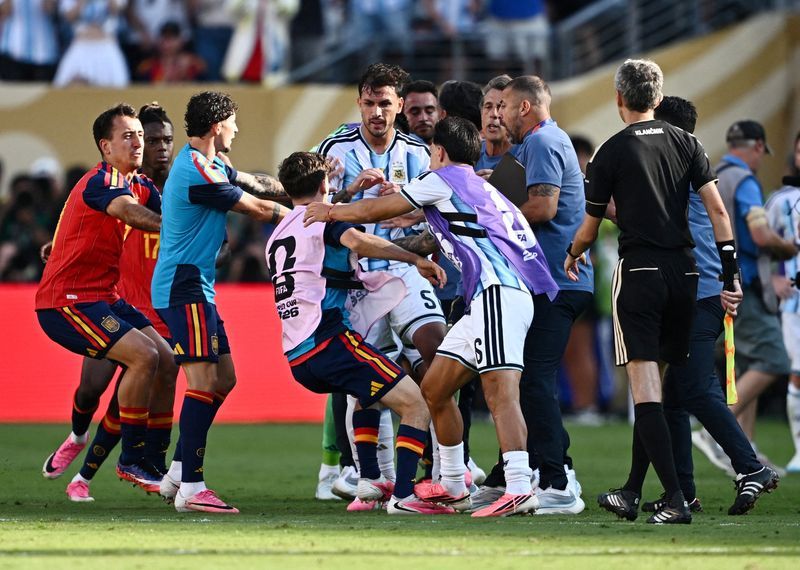
Football's international governing body FIFA has initiated a formal inquiry into violent conduct displayed by players from Spain and Argentina immediately after their World Cup final encounter on July 20, appointing a dedicated disciplinary and ethics prosecutor to oversee the examination. The incident has drawn scrutiny from the sport's regulatory authorities, underscoring the high stakes and emotional intensity surrounding championship-level competition.
Spain claimed their second World Cup title through an extra-time strike by winger Ferran Torres in what proved to be a volatile and contentious final. The match had already deteriorated in its closing stages when Argentina's midfielder Enzo Fernandez received his marching orders in the 93rd minute of regulation play for accumulating a second caution, leaving the South American team to fight with reduced personnel through the additional 30-minute period.
The immediate aftermath of the final whistle saw tempers flare dramatically. Argentina's Leandro Paredes initiated physical confrontation with multiple Spanish opponents, notably engaging with Eric Garcia and Gavi. What began as an isolated clash rapidly escalated into a widespread scuffle involving numerous players from both squads, with pushing and shoving spreading across the pitch as officials and coaching staff struggled to restore order.
Argentina's head coach Lionel Scaloni attempted to intervene and pacify his agitated players during the chaotic scenes. The final moments were characterised by considerable ill-discipline, with both teams requiring physical separation from match officials before composure could be restored. Such incidents at the pinnacle of international football attract immediate attention from governing bodies concerned with maintaining standards of conduct.
For Malaysian football enthusiasts and regional observers, this investigation carries broader implications for how international competition is governed. Southeast Asian nations participating in AFC competitions and youth development programmes look to FIFA's disciplinary frameworks as benchmarks for enforcing standards. The manner in which FIFA addresses misconduct at the highest levels influences expectations for behaviour across all levels of organised football throughout the region.
The appointment of a specialised prosecutor signals FIFA's commitment to thoroughly examining the circumstances surrounding the altercation. The investigation will need to establish the sequence of events, identify the principal protagonists, and determine appropriate sanctions consistent with football's disciplinary protocols. Such investigations typically consider player statements, video evidence, and match officials' reports.
The absence of a specified timeline for investigation completion suggests FIFA recognises the complexity inherent in such cases. High-profile incidents involving international teams generate significant documentation and require careful consideration of due process. Previous similar investigations have sometimes required several months for full resolution, particularly when determining appropriate punishments.
For Spanish football, riding the euphoria of a second World Cup triumph, the investigation presents an unwelcome complication. Similarly, Argentina faces questions about maintaining composure under pressure, particularly as the team enters a period of rebuilding following the departure of key personnel. Both nations will be keen to ensure that on-field incidents do not overshadow their achievement or trajectory.
The incident reflects broader patterns observable in contemporary international football where emotional attachment to World Cup competition sometimes outweighs the discipline expected of professional athletes. Malaysia's own football development community benefits from understanding how elite teams manage competitive pressure and the consequences when emotional intensity translates into physical misconduct.
FIFA's investigation will likely examine whether any players warrant suspension or financial penalties. Such determinations carry precedential weight, establishing standards that influence behaviour across competitions worldwide. The regulatory response will be watched carefully by national federations, including those in Southeast Asia, as guidance for their own disciplinary processes.
Argentina's reduction to ten players represented a significant tactical disadvantage that may have contributed to heightened frustration during the extra-time period. Coaching staff and players under numerical disadvantage often experience escalated emotional responses, though such circumstances do not excuse physical misconduct. Understanding these contextual factors helps explain, though not justify, the subsequent altercation.
As the investigation proceeds, both teams will face questions about their conduct management. For emerging football nations in the region observing these processes, FIFA's handling of the matter demonstrates the importance of establishing clear expectations around professionalism regardless of competition intensity. The investigation's outcome will send important signals about standards expected at international football's highest levels.

