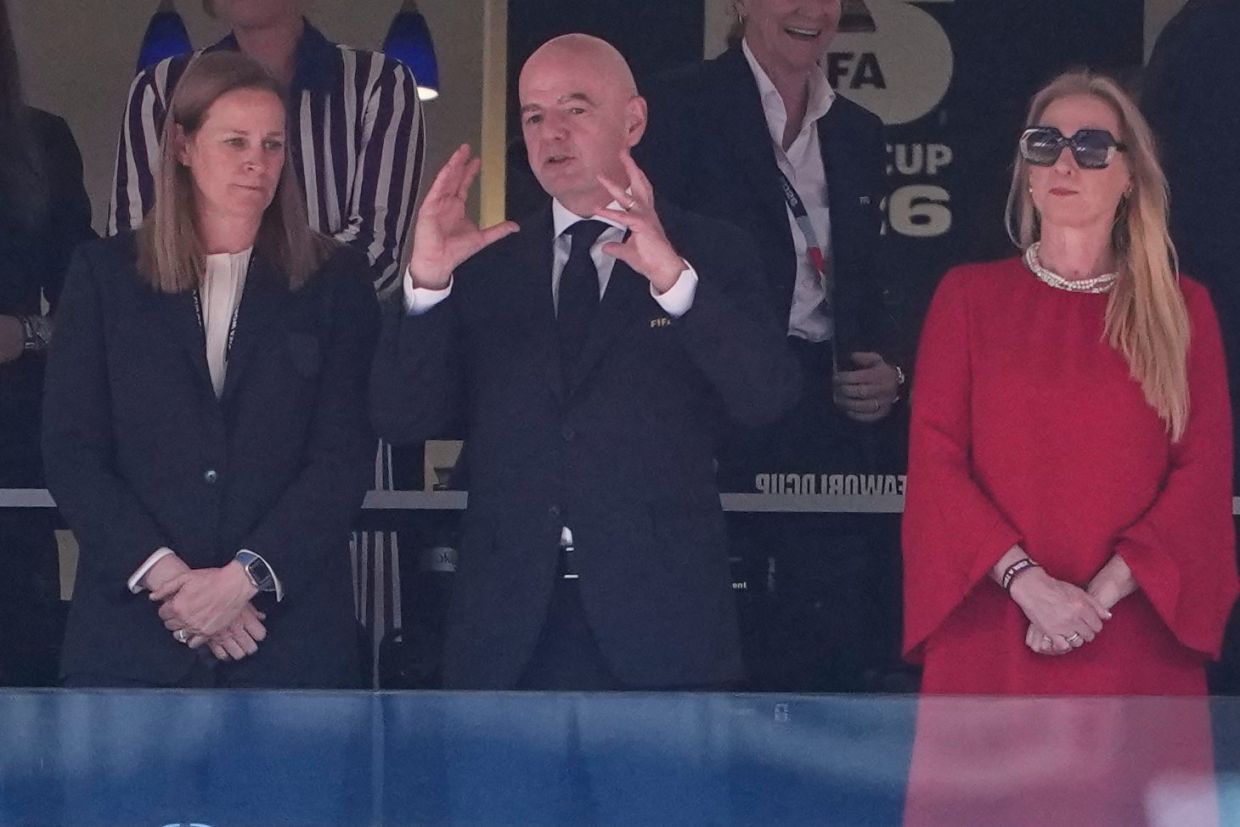
FIFA's dominance over global football has emerged largely unscathed from the 2026 World Cup, which was plagued by disputes ranging from astronomical ticket prices to accusations of political meddling in matches. The governing body's president, Gianni Infantino, appears positioned to consolidate his grip on the sport for years to come, even as questions mount about whether the organization can simultaneously serve as both a lucrative commercial enterprise and an impartial steward of the game's integrity.
The tournament generated approximately $9 billion in direct revenue for FIFA, roughly $2 billion higher than the 2022 edition staged in Qatar. This enormous financial windfall underscores a fundamental tension at the heart of modern football administration: the pressure to maximize earnings often collides with the sport's regulatory obligations. For Infantino, who took the helm in 2016 following FIFA's corruption scandals under predecessor Sepp Blatter, the explosive growth in tournament revenues has become his defining achievement and, paradoxically, a shield against mounting criticism.
Controversy dogged the tournament from its opening stages. The cost of match tickets sparked complaints about accessibility; the treatment of Iran's national squad raised questions about geopolitical interference; and decisions regarding referee assignments drew international scrutiny. Most explosively, FIFA allowed a suspended United States player to compete after reported intervention from President Donald Trump, a decision that sparked outrage across Europe and beyond. Sports lawyer Nick De Marco, based in the UK, articulated the core concern troubling observers: the scandal transcends the specific incident to suggest that FIFA has compromised its foundational authority as football's global regulator, potentially undermining the very credibility that makes the World Cup valuable.
Yet these controversies possess a remarkably short shelf life. Public anger dissipated rapidly once matches progressed, particularly after the United States suffered a decisive defeat to Belgium. This pattern reveals how tournament momentum—the sheer spectacle of elite football being played at the highest level—can overwhelm lingering doubts about governance. Infantino has proven adept at riding out such tempests, consistently directing attention toward the financial and sporting successes that characterize his tenure.
The expanded tournament format, increasing from 32 to 48 teams, has fundamentally altered the economics of international football. The prize pool expanded to a record $871 million, with every participating nation guaranteed a minimum of $12.5 million simply for competing. For developing football nations, this represents transformative capital. Cape Verde, which achieved an unprecedented tournament run, collected over $21 million—equivalent to approximately 0.75 percent of the nation's entire GDP. Such payouts have effectively secured Infantino's support among football federations across Asia, Africa, and South America, where the financial injection has become indispensable to their operations.
The commercial benefits extended far beyond FIFA's coffers. Host cities witnessed measurable economic stimulus, with Bank of America data for mid-June showing credit and debit card spending in tournament venues up 6.3 percent year-on-year, rising to 16.7 percent among visiting consumers. Stadium food and beverage operators reported spending approaching $100 per person—nearly double typical NFL game revenues. Advertisers capitalized on mandated hydration breaks, effectively restructuring the traditional football match into an American-style format with four distinct quarters rather than two continuous halves, demonstrating how FIFA's commercial priorities increasingly shape the sport's fundamental presentation.
The expansion of tournament opportunities has also expanded global representation. Nine African teams advanced to the knockout stages, marking a historically significant achievement that resonated particularly among continental confederations. Such inclusive expansion serves dual purposes for FIFA: it enhances the tournament's legitimacy while simultaneously deepening financial and political ties with member associations who might otherwise question Infantino's leadership.
Heading toward the 2027 FIFA Congress in Rabat, Morocco, Infantino faces re-election for a third term—though the result appears predetermined given he faces no opposition. With all 211 member associations possessing voting rights and major confederations already pledging support, his victory seems assured. The Congress venue itself reflects FIFA's deepening integration with African football, a strategic positioning that reinforces continental loyalty ahead of the next World Cup.
Resistance to Infantino's continued leadership has emerged primarily from football figures in wealthier, established sporting nations. Jurgen Klopp, the renowned former Liverpool manager, articulated the fundamental objection: that political figures such as Trump and football administrators should not jointly determine sporting outcomes. Politicians from the United Kingdom and Belgium have called for Infantino's resignation, framing the controversy as an invasion of sport's traditional autonomy. However, such criticism carries limited practical weight within FIFA's governance structure, where developing nations outnumber established football powers and where the financial distributions have cultivated deep reservoirs of goodwill.
Shiekh Salman, president of the Asian Football Confederation, reflected the prevailing sentiment among FIFA's power centers by declaring that "FIFA is in its best position ever." Federation leaders from Kuwait to South Africa have publicly endorsed Infantino's leadership, while the Royal Moroccan Football Federation specifically praised "the great work carried out by Mr. Gianni Infantino and his team to develop African and world football." Such statements reveal how effectively FIFA's financial reach has converted potential critics into active supporters.
For Malaysian and Southeast Asian football, the implications are significant. The expanded World Cup format and guaranteed minimum payouts have enhanced the viability of smaller nations' football programs, while the infrastructure investments in host nations demonstrate FIFA's capacity to drive regional development. However, the pattern also suggests that FIFA's governance will remain subordinate to commercial and political considerations, a reality that domestic leagues and sports administrators must navigate carefully when negotiating with the global federation.

