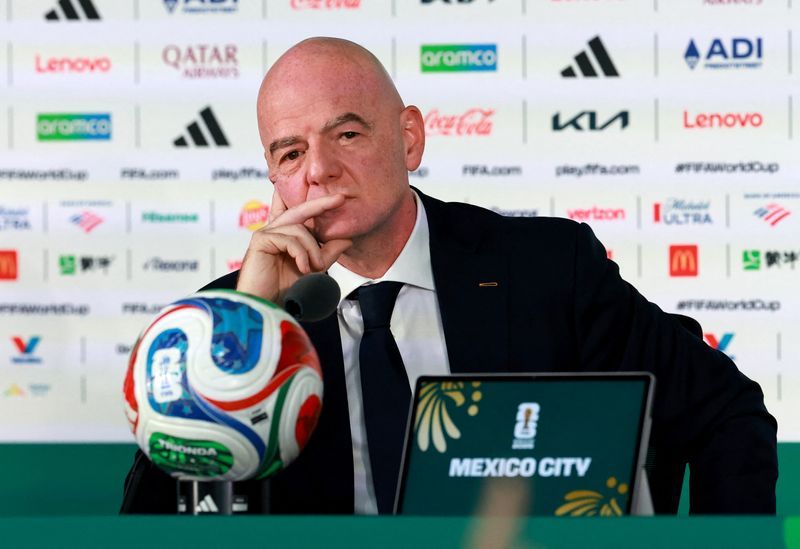
FIFA's attempt to draw a line under its most serious internal upheaval in recent years faces an uncertain outcome, with deep concerns about the organisation's decision-making processes unlikely to dissipate despite public displays of support for President Gianni Infantino. The governing body convened its leadership in Rabat to project calm and unity, yet the episode has exposed structural weaknesses that will demand attention well beyond the 2027 presidential cycle and threaten to complicate major future initiatives.
The commercial rights debacle emerged from FIFA's now-abandoned proposal to monetise a portion of the World Cup's future revenue streams—a plan that prompted unprecedented criticism from national associations, continental confederations, and professional leagues worldwide. National federations complained vociferously that they had been marginalised from the decision-making process, finding themselves presented with conclusions rather than invited to participate in deliberation. This perception of exclusion triggered the most forceful pushback against Infantino's leadership since he assumed office, forcing FIFA into a strategic retreat that culminated in the Rabat gathering.
During Wednesday's meeting, FIFA issued a formal apology acknowledging that the proposal "should have been handled differently" and accepting responsibility for making stakeholders feel shut out of the dialogue. The organisation committed to conducting a comprehensive review of the processes and procedures that enabled such a significant proposal to advance without adequate consultation. The tone struck at the summit represented a marked departure from FIFA's typical defensive posture, suggesting organisational recognition that the status quo approach to governance had become untenable.
Yet FIFA's characterisation of its missteps as procedural rather than substantive points to deeper institutional resistance to fundamental change. The organisation maintains that all actions surrounding the commercial proposal complied with existing regulations and governance frameworks, attributing the conflict to communication breakdowns rather than rule violations. This distinction matters considerably, because it allows FIFA to position the review as addressing transparency and engagement without necessarily restructuring the centralised decision-making architecture that enabled the problem in the first place.
The controversy extends beyond the withdrawn commercial initiative to encompass broader questions about how FIFA formulates and implements strategic direction. European Leagues, representing over 1,300 clubs across the continent, publicly criticised FIFA's handling of a parallel proposal to expand the 2030 World Cup from 48 to 64 teams, characterising the four-week assessment window as unrealistically compressed. The European body emphasised that stakeholders routinely find themselves reacting to predetermined positions rather than shaping policy during genuine consultative periods. These complaints reflect a widespread perception that FIFA's Council operates as an authoritative body handing down determinations, not as a forum for collaborative governance among football's diverse constituencies.
Infantino secured the immediate political objective he required from the Rabat gathering, with the management board and Secretary General Mattias Grafstrom publicly pledging their support ahead of the March presidential election scheduled for Morocco. Grafstrom's internal communication to staff, which lamented the "sad and reproachable series of events" whilst asserting that problematic "individuals, unstable moments and unfortunate episodes come and go," appeared directed at smoothing organisational morale whilst offering implicit reassurance about the president's position. The pair later posed together at a women's Africa Cup of Nations match, projecting amicable unity through social media imagery.
Nevertheless, significant institutional voices have begun questioning Infantino's leadership approach more openly. UEFA, European football's governing body, has articulated concerns about his stewardship, whilst confederations including CONCACAF and the Asian Football Confederation have registered criticisms. These objections emanate primarily from wealthier football markets where greater institutional independence from FIFA funding enables more candid dissent. By contrast, Infantino maintains formidable support among smaller associations, particularly throughout Africa and Asia, where FIFA's development programmes represent essential investments in national football infrastructure. This bifurcation means Infantino faces no credible challenger for his fourth consecutive term through 2031, yet his political coalition shows visible fractures where it matters most institutionally.
The episode has fundamentally altered the landscape for FIFA's future policy-making, regardless of Infantino's electoral outcome. Any subsequent proposals affecting commercial strategy, tournament formats, or governance architecture will encounter substantially heightened expectations regarding transparency, consultation timelines, and stakeholder accountability. The 2030 World Cup expansion conversation will almost certainly be revisited with more inclusive methodologies, and FIFA recognises that future initiatives cannot proceed using the compressed decision-making frameworks that generated this crisis. The organisation's warning that it would "no longer tolerate attacks on its integrity, good governance and due process" rings somewhat hollow given that those very concerns animated the rebellion against the commercial proposal.
For Southeast Asian football administrators and league operators monitoring FIFA developments, these governance debates carry practical implications. Any restructuring of World Cup formats or commercial arrangements will ultimately affect the continental confederations' revenues and tournament scheduling, making participation in genuine consultative processes essential for protecting regional interests. Asian Football Confederation representatives will need to leverage this moment of FIFA vulnerability to secure more meaningful engagement in future decision-making, moving beyond the pattern of being informed about conclusions already reached by headquarters staff and the most influential confederations.
The Rabat gathering may have temporarily unified FIFA's surface-level leadership, but it has not resolved the institutional legitimacy questions that the commercial proposal episode exposed. The promised governance review, which will be presented to the FIFA Council before moving forward, represents an opportunity for substantive reform or a ceremonial exercise in maintaining appearances whilst preserving hierarchical decision-making structures. The coming months will clarify whether FIFA intends genuine transformation of how it engages member associations in shaping football's future, or whether it will revert to business as usual once immediate political pressures subside.

