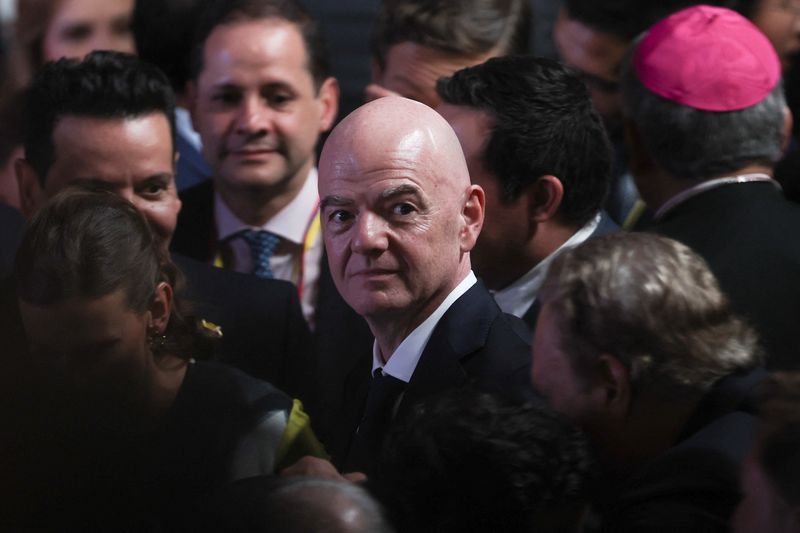
The Confederation of African Football's president Patrice Motsepe has thrown his weight behind a democratic resolution to FIFA's leadership crisis, insisting that the global football body's 211 member associations should determine whether Gianni Infantino continues in his role when the organisation convenes for its 77th Congress in Rabat, Morocco on March 18. This intervention represents a significant stance from one of football's major continental bodies as the embattled FIFA president faces mounting pressure from multiple quarters over his controversial governance record.
Infantino's position has become increasingly untenable following open criticism from three powerful confederations—UEFA, the Asian Football Confederation (AFC), and CONCACAF—which have collectively demanded his resignation. Their rebellion centres on his failed attempt to inject private investment into FIFA competitions, a commercial manoeuvre that sparked concerns across the football establishment about the sport's fundamental values and governance structures. The convergence of opposition from Europe, Asia, and the Americas underscores the depth of dissatisfaction with his presidency among influential stakeholders.
Yet Motsepe's intervention provides a counterweight to these calls for immediate removal. Speaking to Sky News, the CAF leader articulated a philosophy rooted in institutional process and democratic legitimacy. Rather than endorsing the precipitous departure of the incumbent president, he championed the electoral mechanism as the appropriate forum for resolving the leadership question. This position reflects a broader principle that major international organisations should allow their constituted processes to function rather than succumb to extra-institutional pressure, however well-intentioned.
Motsepe's framing emphasises the importance of allowing candidates opposed to Infantino to emerge and present their cases before the membership. By positioning the March Congress election as the ultimate arbiter, he creates space for a formal democratic contest in which Infantino and any challengers could articulate their visions for FIFA's future. This approach respects the sovereignty of member associations while maintaining institutional stability during a period of significant turbulence.
The CAF president's comments also signal continued African support for Infantino, a factor of considerable strategic importance given the continent's substantial voting bloc within FIFA. Motsepe acknowledged that Infantino has demonstrated loyalty to African football and retains the backing of CAF member nations. This endorsement from the world's second-largest continental confederation provides Infantino with a crucial foundation of support, particularly among nations that might otherwise be swayed by the coordinated pressure from UEFA and other confederations. For Infantino's political survival, African support may prove decisive.
Beyond the immediate question of Infantino's tenure, Motsepe's remarks illuminate deeper tensions within contemporary sports governance concerning the balance between accountability and process. He acknowledged that leaders must be subject to appropriate scrutiny and that governance failures warrant investigation. This rhetorical concession to the critics demonstrates awareness of legitimate concerns about FIFA's decision-making under Infantino's watch. However, Motsepe argued that proper institutional channels—specifically FIFA's established complaints procedures and the electoral process—provide adequate mechanisms for addressing such concerns.
The CAF leader emphasised the principle of due process, arguing that any member unhappy with an official's conduct should pursue grievances through formal FIFA procedures rather than orchestrating public campaigns for removal. This perspective reflects a traditionalist approach to institutional governance, one that privileges orderly processes over extra-institutional mobilisation. Motsepe's insistence that "everyone is entitled to fair judgement and fair treatment" positions democratic election as the ultimate expression of membership confidence or lack thereof in the incumbent.
For Southeast Asian football stakeholders and Malaysian readers, this dispute carries implications for how regional confederations navigate FIFA's evolving power dynamics. The AFC's alignment with UEFA and CONCACAF in criticising Infantino positions Asian football alongside Europe and the Americas against African and potentially other developing-world interests. The outcome of the Rabat Congress will therefore shape which philosophical approach—institutional preservation or accountability-driven reform—prevails in global football governance. Malaysia, as an AFC member, may find itself caught between competing visions of FIFA's proper governance structure.
The commercial dispute underlying this leadership crisis also warrants attention from a Malaysian perspective. Infantino's attempt to secure private investment in World Cup and other flagship competitions reflects broader pressures toward commercialisation affecting international sports. Developing nations' reactions to such proposals often depend on calculations about whether privatisation enhances revenue flows to their domestic football programmes or concentrates wealth among already-prosperous federations. This consideration may influence how AFC members, including Malaysia, ultimately vote in the presidential contest.
Motsepe's championing of electoral determination over forced removal also reflects the political mathematics confronting Infantino. Despite opposition from three confederations, he retains organisational resources and, crucially, support from at least one major continental body. The outcome of any contest before the full membership remains genuinely uncertain, making the democratic process a rational choice for an incumbent with uncertain but potentially viable electoral prospects. Conversely, his opponents face the risk that an electoral gambit could fail, leaving Infantino strengthened and their confederations isolated.
The March 2027 Congress will therefore serve as a referendum on both Infantino's personal leadership and on FIFA's broader governance direction. Whether the membership votes to renew his mandate or elects an alternative will signal which confederations and national associations hold sway within the global organisation. For Malaysian football and the AFC more broadly, the result will reverberate through future FIFA decision-making on everything from competition formats to revenue distribution—making the Congress outcome a matter extending well beyond personalities to affect the continental game's material interests.

