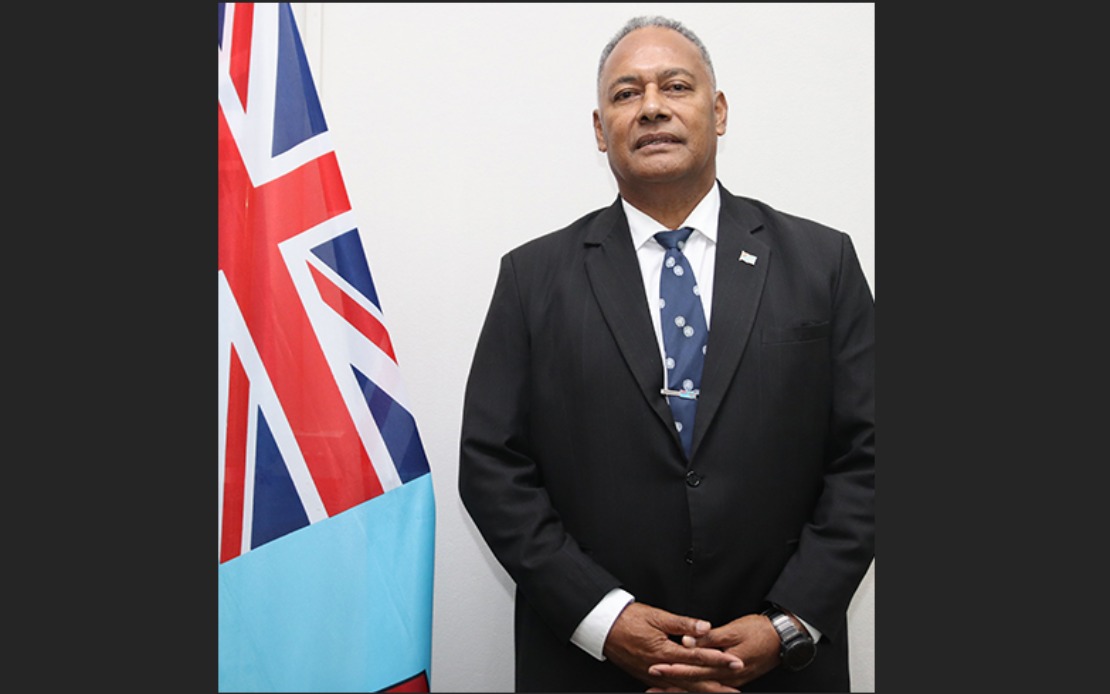
Sakiasi Raisevu Ditoka, the Foreign and External Trade Minister of Fiji, arrives in Malaysia on Sunday for a four-day working visit aimed at expanding the economic and diplomatic relationship between the two countries. The engagement signals renewed momentum in bilateral ties as both nations seek to capitalise on untapped opportunities in trade, investment, and regional engagement. Ditoka's presence in Kuala Lumpur underscores the strategic importance Malaysia places on strengthening connections with Pacific Island nations, a region often overlooked in Southeast Asian foreign policy discussions but increasingly relevant to regional stability and trade diversification.
The centrepiece of Ditoka's itinerary involves formal talks with Malaysia's Foreign Minister Datuk Seri Mohamad Hasan, during which both officials will examine avenues for deepening bilateral cooperation. The agenda extends across multiple economic sectors, with particular emphasis on trade and investment frameworks that could unlock new commercial pathways. Beyond commerce, the two countries intend to explore collaboration in capacity building—a domain where Malaysia's technical expertise and development experience could benefit Fiji's institutional frameworks. Additionally, discussions will span forestry management, renewable energy development, and cultural exchanges, reflecting a comprehensive approach to bilateral engagement that extends beyond traditional trade considerations.
The ministerial talks will also serve as a forum for exchanging perspectives on regional and international developments affecting both nations and the broader Pacific region. This diplomatic exchange carries significance beyond bilateral concerns, as it allows Malaysia to strengthen its influence in the Pacific by demonstrating commitment to island nations' priorities. For Fiji, engagement with a major Southeast Asian economy offers opportunities to diversify partnerships and reduce dependence on traditional trading partners.
Paralleling discussions with the Foreign Ministry, Ditoka will engage with Malaysia's Investment, Trade, and Industry Minister Datuk Seri Johari Abdul Ghani to explore fresh opportunities in economic cooperation. This dual-track engagement allows both countries to address trade mechanics and investment frameworks at appropriate ministerial levels, potentially accelerating decision-making on substantive proposals. The focus on identifying new economic cooperation mechanisms suggests both governments recognise the current trade relationship remains underdeveloped relative to their geographic proximity and complementary economic profiles.
A symbolic highlight of the visit involves Ditoka officially reopening Fiji's High Commission in Kuala Lumpur, a facility that represents the physical manifestation of diplomatic relations between the two countries. The High Commission's reopening after a period of closure demonstrates renewed institutional commitment to maintaining regular diplomatic presence and facilitating day-to-day bilateral communication. This development eases administrative pathways for business engagement, visa processing, and citizen services, creating practical infrastructure that supports the trade growth both nations seek.
Equally significant is the establishment of the Malaysia-Fiji Business Council during the visit. This institution will serve as a dedicated platform for private sector actors from both countries to identify commercial opportunities, share market intelligence, and forge business partnerships. Such councils have historically proven valuable in nurturing sustained economic engagement by creating structured forums where entrepreneurs and investors can connect without relying entirely on government intermediation. The council's formation signals confidence from business communities in both nations regarding mutual economic potential.
Current bilateral trade figures illustrate the asymmetry characterising the relationship and suggest substantial room for expansion. In 2025, total bilateral trade reached RM880.01 million, comprising RM867.92 million in Malaysian exports to Fiji against only RM12.09 million in Fijian exports to Malaysia. Malaysia's dominant export position reflects its more diversified and sophisticated manufacturing base, while Fiji's minimal export share indicates limited integration into Malaysian procurement networks. This imbalance suggests potential exists for Fijian agricultural products, particularly tropical fruits, fish, and processed foods, to gain greater access to Malaysian markets, while Fijian enterprises could source manufactured goods and industrial inputs from Malaysia at competitive prices.
The trade deficit dynamic also reflects structural characteristics of Pacific Island economies, where limited manufacturing capacity and geographic remoteness constrain export competitiveness. However, specific sectors may offer genuine opportunity for rebalancing. Fiji's fisheries sector, leveraging its ocean resources, could supply premium seafood products to Malaysian consumers and food processors. Similarly, renewable energy projects across the Pacific present procurement opportunities where Malaysian companies possess technical and financing advantages. Investment flows from Malaysia into Fiji could support infrastructure, manufacturing facilities, and service sectors, generating employment and economic activity that would ultimately increase bilateral trade volumes.
For Malaysia, deepened engagement with Pacific Island nations aligns with broader regional policy objectives. As China and other major powers extend influence into the Pacific, Malaysia's proactive diplomatic outreach helps maintain relevance in regions where Southeast Asian countries have traditionally enjoyed strong relationships. The Pacific Islands Forum represents a significant grouping in international affairs, and stronger bilateral ties with individual Pacific nations enhance Malaysia's standing within these multilateral institutions. Additionally, Pacific Island nations control vast ocean territories and resource rights, making them valuable partners in maritime security, fisheries management, and climate change initiatives affecting global sustainability.
The visit also occurs within the context of intensifying great power competition in the Indo-Pacific region. Both Malaysia and Fiji share interests in maintaining regional stability, supporting international law, and resisting coercive pressure from external actors. While not explicitly addressing security concerns, ministerial conversations typically encompass such dimensions, allowing officials to signal alignment on principles while exploring concrete cooperation mechanisms. For Fiji, engagement with Southeast Asian nations provides alternatives to over-reliance on traditional Western partnerships, whilst for Malaysia, strengthening Pacific connections contributes to a more balanced, multipolar regional architecture.
Looking forward, the success of Ditoka's visit will be measured not merely by agreements signed but by their implementation and follow-through. The reopened High Commission and newly established Business Council require active management and sustained political support to translate institutional structures into tangible outcomes. Both governments should establish concrete timelines for sector-specific initiatives, whether in renewable energy development, fisheries cooperation, or capacity building programmes. Trade facilitation measures, including simplified customs procedures and recognition of product standards, could reduce transaction costs and encourage private sector engagement.
The visit represents a calibrated investment in relationships with Pacific Island nations, demonstrating that Malaysia recognises their growing importance in regional affairs and global governance. As climate change, maritime issues, and geopolitical competition increasingly shape the Pacific's future, the foundations laid during this visit could prove strategically valuable. Fiji, conversely, gains meaningful access to Southeast Asian markets and technical expertise whilst diversifying its diplomatic and economic partnerships. Both nations stand to benefit from sustained engagement, provided they move beyond ceremonial diplomacy towards genuine institutional cooperation and mutually beneficial economic initiatives.

