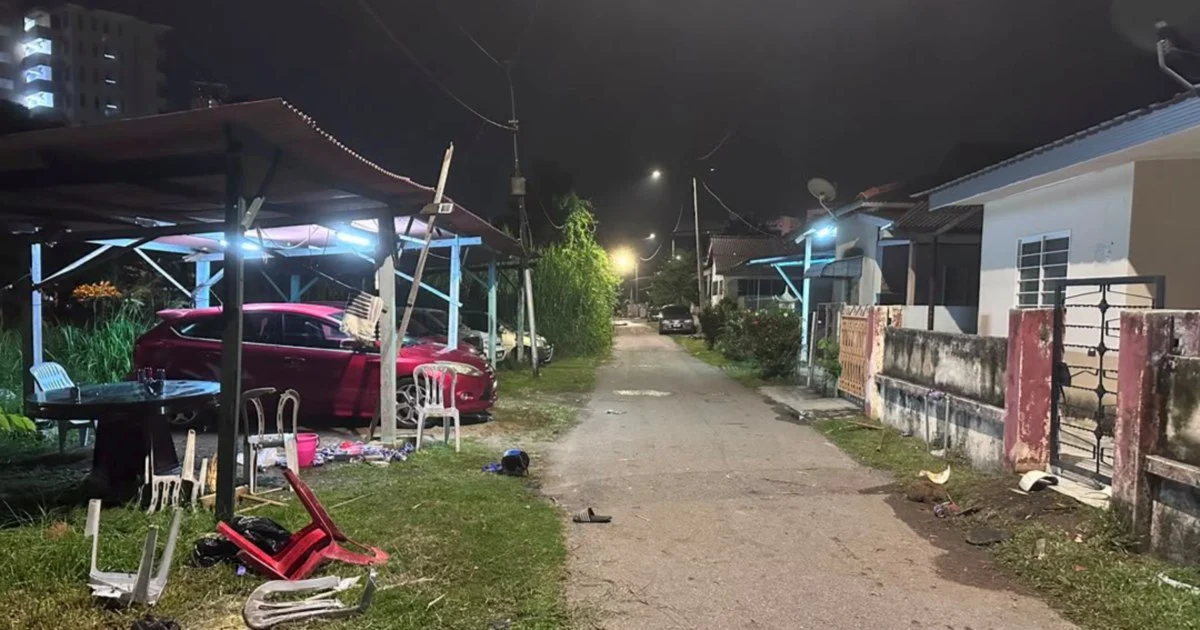
Police have arrested five suspects in connection with a violent attack in Melaka that left one victim in critical condition with a fractured skull. The incident occurred in the early hours near Jalan Pengkalan in Kampung Pengkalan Rama Pantai, when two men were set upon by a group of unidentified assailants while attempting to collect a motorcycle parked close to a local temple.
The two victims sustained significant injuries in what authorities are treating as a serious assault case. The severity of one victim's condition, which saw him hospitalised with a fractured skull, elevated the incident to priority status within the local police constabulary. The victim's critical status upon admission triggered an intensive investigation into the circumstances surrounding the confrontation.
Full details regarding the motivations behind the attack and the specific circumstances that led to the deployment of such violence remain under investigation. Police have not yet disclosed whether the assault was targeted specifically at these individuals or whether the motorcycle itself was the focus of the perpetrators' intentions. The location near a temple suggests the incident occurred in a residential neighbourhood, raising community safety concerns in what residents may have considered a relatively secure area.
The timing of the early-morning attack presents another investigative angle for authorities. Such incidents occurring in the pre-dawn hours often indicate either spontaneous violence or carefully planned assaults executed when victim vigilance and community presence are at their lowest. The fact that both men were together during the incident suggests they may have been known to one another, though police have not confirmed whether the injured parties were specifically targeted or whether they were chance victims of opportunistic violence.
The arrest of five suspects within what appears to be a relatively short timeframe indicates either swift police work or that the assailants were apprehended near the scene. This raises important questions about visibility of the area and whether there were witnesses to the assault. Residential neighbourhoods in Melaka, like much of Malaysia, have increasingly featured closed-circuit television systems, and such footage may have proven instrumental in rapid suspect identification and apprehension.
The involvement of multiple perpetrators in attacking just two individuals suggests either the severity of some underlying dispute or that the assailants were acting from a position of perceived group advantage. Such disproportionate force often characterises gang-related incidents or situations where previous animosity between parties has escalated to physical violence. The authorities' rapid arrest suggests they may have already identified a coherent group operating in the area.
For the Melaka community, incidents of this nature raise broader concerns about personal safety in suburban and rural-fringe areas. While major urban centres typically receive more police presence and surveillance infrastructure, smaller neighbourhood clusters around temples and local commercial hubs can sometimes become blind spots in preventive policing strategies. The Kampung Pengkalan Rama Pantai vicinity may now see increased police patrols as part of follow-up community reassurance efforts.
The condition of the critically injured victim will likely influence the severity of charges prosecutors pursue against the five arrested individuals. Assault causing serious injury carries substantially greater penalties under Malaysian law than simple assault cases, and the presence of a fractured skull may elevate charges to more serious categories. Medical reports documenting the extent of injuries become crucial evidence in such prosecutions.
Temple precincts and their surrounding areas occupy particular significance in Malaysian communities, functioning not merely as religious spaces but as informal gathering and recreational zones. An assault occurring near such a location carries symbolic weight beyond the immediate incident, potentially affecting community members' sense of security in spaces they consider culturally important. Police statements acknowledging the location may include reassurances about future protection of these community-significant areas.
The investigation's next phases will likely focus on establishing clear timelines, identifying any previous connections between victims and perpetrators, and determining whether this incident forms part of any larger pattern of violence in the district. Neighbouring areas may be canvassed to ascertain whether the same group has been involved in previous confrontations. Digital forensics, including analysis of mobile phone records and surveillance footage, typically play central roles in contemporary assault investigations.
As the five arrested individuals move through the judicial process, the recovery trajectory of the critically injured victim will remain a critical factor in both criminal proceedings and community response. Serious assault cases in Malaysia frequently attract media attention and public scrutiny, particularly when weapons or significant violence have been employed. The case may ultimately influence local conversations about community safety initiatives and police resource allocation in suburban Melaka districts.

