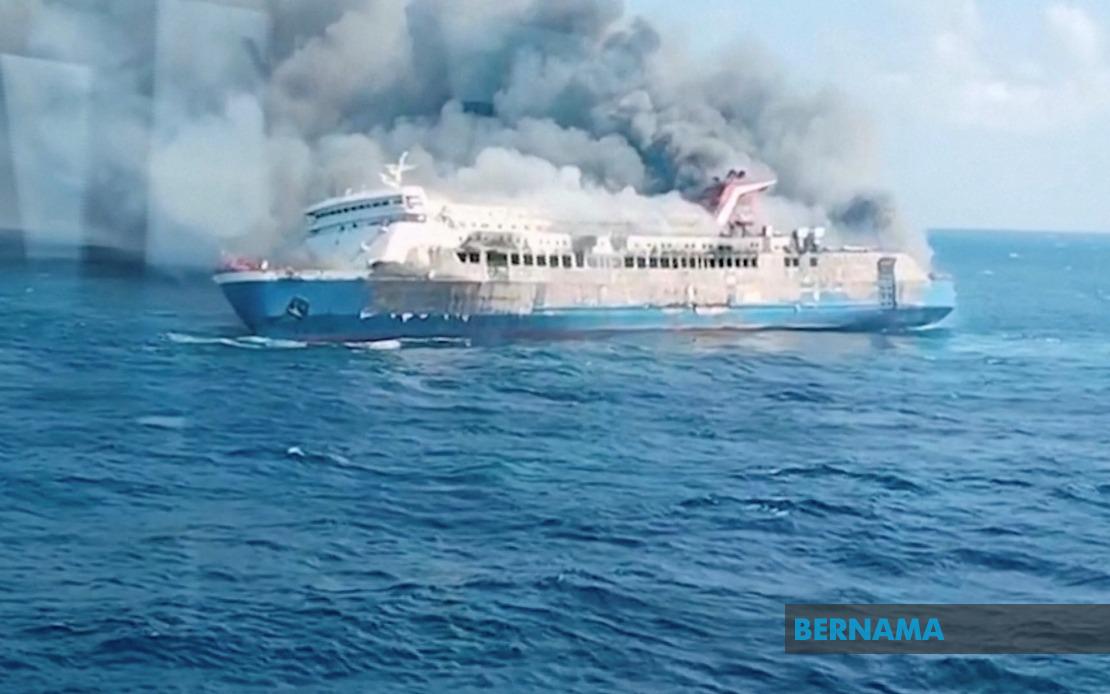
A major maritime disaster unfolded in Indonesian waters early today when the KMP Mutiara Santosa 2, a passenger ferry, erupted into flames while transiting between two major ports. The vessel, which departed from Surabaya bound for Makassar, was engulfed by fire in the waters off the northern coast of Sumenep in Madura, resulting in at least five confirmed deaths and leaving 41 passengers or crew members unaccounted for as rescue operations stretched into the evening.
The ferry, carrying 232 passengers and 39 crew members, first reported distress at 8.24 am local time, prompting the Surabaya Search and Rescue Office to mobilise immediate response efforts. According to Nanang Sigit, the chief of the Surabaya Search and Rescue Office, the scale of the disaster became apparent as firefighting and evacuation operations began. By 4 pm, rescue teams had successfully brought 225 people to safety, though the fate of the remaining passengers and crew remained uncertain as darkness fell across the waters where the vessel was still burning.
The ferry's structure suffered catastrophic damage as flames consumed much of the vessel. Passengers desperately sought refuge by congregating on the bridge and forward sections of the ship, hoping to maintain distance from the advancing fire while awaiting rescue. The crowding in these limited safe zones highlighted the chaos and panic that gripped those aboard as the situation deteriorated rapidly and the ferry's condition became increasingly perilous.
Desperate passengers resorted to jumping overboard, seeking salvation in the surrounding waters. Several of those who took this dangerous option were rescued by nearby commercial vessels that happened to be operating in the area, underscoring the critical role played by other maritime traffic in what could have become an even greater tragedy. These impromptu rescues prevented additional fatalities and demonstrated the coordinated response of the broader maritime community to the emergency.
The rescue operation mobilised substantial resources and personnel from multiple Indonesian agencies, reflecting the severity of the incident and the determination to locate all missing persons. Search and rescue teams deployed various vessels and aircraft to scour the waters and conduct systematic sweeps of the area. The operation continued well into the evening, driven by the urgency of locating survivors who may have remained afloat despite the challenging conditions and the advanced hour.
The incident carries particular significance for maritime safety in Southeast Asia, a region crossed daily by thousands of ferries transporting millions of passengers. Indonesia's archipelagic geography means that inter-island ferry services form the backbone of the nation's transport infrastructure, connecting remote communities and facilitating commerce across the vast island chain. When such vessels are compromised by fire or mechanical failure, the consequences cascade rapidly through a system with limited redundancy and considerable distances between islands.
Investigators have begun preliminary examination of what caused the fire, though officials acknowledged that the true origin remains under investigation. The rapid spread of flames and the vessel's extensive damage suggest the fire originated in a location that afforded little opportunity for early detection or containment. Determining the cause will be crucial not only for assigning responsibility but also for understanding whether systemic safety issues contributed to the disaster, raising questions about maintenance protocols and safety inspections across Indonesia's ferry fleet.
The KMP Mutiara Santosa 2 was operating one of Indonesia's most vital maritime corridors, connecting Surabaya, a major port city in East Java, with Makassar, the principal hub in South Sulawesi. This route carries significant commercial traffic alongside passenger services, making it a critical artery for regional trade and movement. The incident will inevitably prompt scrutiny of safety standards on this and similar routes, particularly regarding fire prevention systems, emergency response procedures, and crew training protocols.
For Malaysian stakeholders, the incident raises relevant concerns about maritime safety across the region. Many Malaysian nationals travel on Indonesian ferries for business and tourism, while Malaysian shipping companies operate in Indonesian waters. The disaster underscores the importance of harmonised safety standards and regular inspections across Southeast Asian maritime operators, ensuring that vessels crossing the region meet consistently high safety requirements regardless of their flag state or operator nationality.
The search for the 41 missing individuals continues as rescue teams work against fading light and challenging sea conditions. Families of those aboard face an agonising wait for information, while authorities attempt to account for all passengers and crew. The full toll of the disaster will become clearer as rescue operations continue and investigators piece together the sequence of events that led to one of Indonesia's most serious maritime incidents in recent memory, serving as a sobering reminder of the risks inherent in maritime transportation across the developing world's busy shipping lanes.

