The Negeri Sembilan state election is shaping up as a fiercely competitive contest, with the Nilai seat emerging as the most fractured battleground yet. Incumbent assemblyman J. Arul Kumar, who doubles as DAP National vice chairman, will defend his Pakatan Harapan colours against an unusually crowded slate of four opponents when voters head to the polls on August 1. The decision by multiple political parties and an independent candidate to contest the same seat signals the intense nationwide jockeying for political ground in Malaysia's smaller states, where traditional voting patterns are being tested by new political alignments.
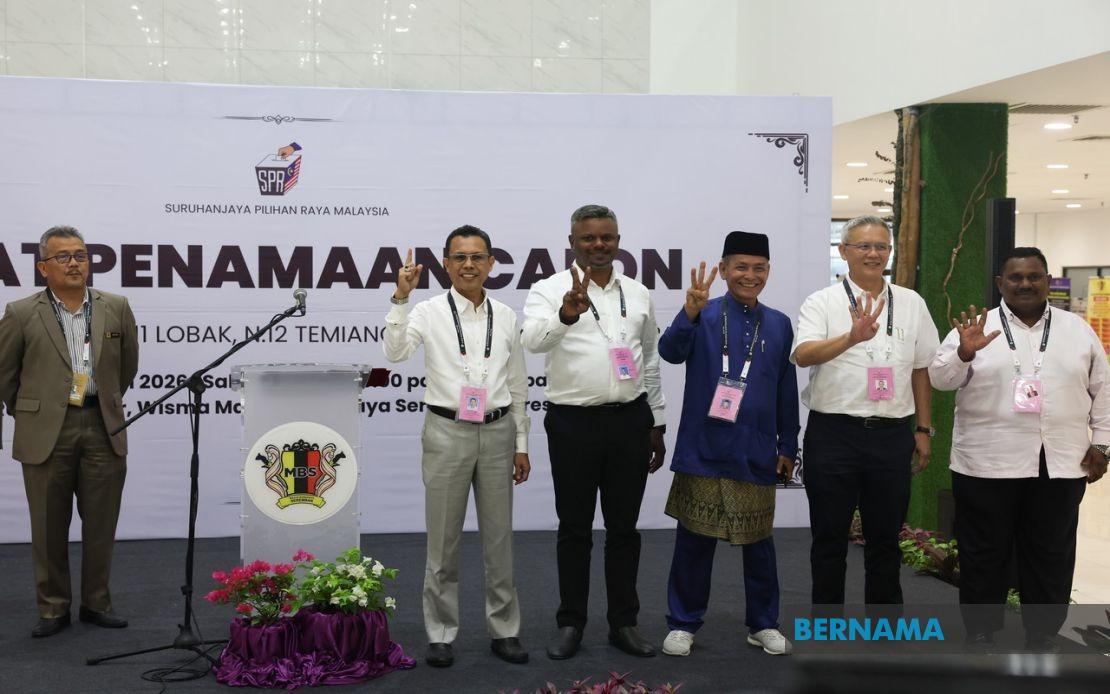
The Nilai battlefield has drawn candidates from across the political spectrum, reflecting the fragmented landscape of Malaysian state politics in 2023. Zamani Ibrahim represents Berjasa, while Barisan Nasional has fielded Datuk Lai Chien Kong, the party hoping to reclaim ground lost in recent cycles. Datuk V. Saravana Kumar carries Bersatu's banner, the Muhyiddin-led faction that has repositioned itself as a kingmaker in several state contests. Independent candidate Omar Mohd Isa completes the lineup, suggesting grassroots frustration with traditional party structures. The nomination of these five contestants was confirmed by returning officer Datuk Masri Baharuddin at Wisma Bandaraya Seremban on July 18, just hours after the nomination deadline. Such crowded fields typically advantage incumbents with established machinery, though they can also fracture votes unpredictably if voters are dissatisfied with performance.
Elsewhere across Negeri Sembilan's 36 assembly seats, contests are taking more conventional shapes, though few appear entirely straightforward. The Sikamat seat will see Nor Azman Mohamad, serving as political secretary to the Menteri Besar, fly the Pakatan Harapan flag against Perikatan Nasional's Datuk Razali Abu Samah and Bersatu's Datuk Tun Faisal Ismail Aziz. An independent candidate, Bujang Abu, had registered for the race but withdrew at the final hour, a last-minute decision that simplified what had threatened to become another five-way contest. Such withdrawals are not uncommon during nomination periods as candidates reassess their prospects or negotiate support from larger party structures. The Lenggeng seat presents a three-way engagement between Pakatan's Zarinna Abu Zarin, Barisan's incumbent Datuk Mohd Asna Amin, and Bersatu's Zool Amali Hussin, illustrating how consistently the three-corner has become the standard contest format in state elections.
By contrast, the Lobak seat stands out as an unusually clean two-candidate duel, with incumbent Chew Seh Yong defending Pakatan's position against Perikatan Nasional challenger Dr P. Kumar. Such binary contests are increasingly rare in Malaysian state politics, where the multiplication of political parties has created perpetually fragmented contests. The Temiang seat reverts to the three-way pattern, with Pakatan's Ho Weng Wah, who holds the position of political secretary to the Transport Minister, facing Barisan's Datuk Leaw Kok Chan and Bersatu's Fazly Hamid. The prominence of political secretaries in several key contests—including Ho Weng Wah and Nor Azman Mohamad—suggests both parties are deploying politically connected technocrats rather than relying solely on traditional party stalwarts, a trend reflecting the professionalization of state-level politics.
The Ampangan contest similarly follows the three-way formula, though it features Muhammad Nazri Kassim, director of Yayasan Negeri Sembilan, contesting for Pakatan against Perikatan's Datuk Dr Mohamad Rafie Malek and Bersatu's Noor'azah Harun. The prominence of appointed board directors and state foundation officials entering the electoral arena illustrates how government positions have become jumping-off points for political candidacy, blurring lines between administration and campaigning. For Malaysian voters unfamiliar with smaller-state politics, these contests matter significantly because they demonstrate how competition has fundamentally altered the traditional two-coalition framework that dominated Malaysian elections for decades. The consistent presence of Bersatu candidates across multiple seats underscores how thoroughly the party has inserted itself into state-level politics since its formation and entry into government at federal level.
The Negeri Sembilan state assembly itself has 36 seats total, meaning the contests detailed here represent major battlegrounds rather than outliers. The state assembly was dissolved on June 5, triggering the current electoral process. The Election Commission has scheduled early voting for July 28, allowing eligible voters to cast ballots before the official polling day on August 1. For Malaysian observers tracking political trends, Negeri Sembilan's elections offer instructive lessons about how state-level politics increasingly diverges from federal patterns. While the federal government may rest in one party's hands, state governments frequently fragment across different coalitions, creating complex governance dynamics that require cross-party cooperation and compromise. The outcomes in seats like Nilai, where voters must choose among five candidates, could reshape the Menteri Besar's working majority and influence state policy on education, development, and economic priorities affecting two million residents.
The multiplication of candidates in contests like Nilai also reflects deeper shifts in voter behaviour and party strategy. When five serious candidates contest a single seat, vote-splitting becomes unavoidable, and the winner may capture office with substantially less than 50 percent of the vote. This scenario incentivizes negative campaigning—attacking specific opponents to consolidate support among particular demographic or community groups rather than building broad coalitions. For established incumbents like Arul Kumar, such fragmented fields present both opportunities and perils. His DAP base may remain loyal, but if dissatisfied with his performance on constituency issues like road maintenance or hawker licensing, voters may plausibly switch to alternatives without abandoning their broader political orientation. The presence of independent candidate Omar Mohd Isa particularly adds unpredictability, as unaffiliated candidates can appeal across traditional partisan lines but rarely have organizational resources to mount sustained campaigns.
Bersatu's consistent presence across these contests deserves particular attention for readers tracking Malaysian political realignment. The party, formed by former Prime Minister Muhyiddin Yassin, has repositioned itself as neither clearly Pakatan nor Barisan, instead functioning as a swing force that can negotiate support from whichever coalition proves more accommodating at state level. This strategy has proven particularly effective in smaller states like Negeri Sembilan, where traditional structures are less entrenched than in Selangor or Johor. By contesting multiple seats, Bersatu either strengthens a potential coalition partner's position or negotiates for ministerial portfolios and resource allocation post-election. For Malaysian political observers, understanding Bersatu's role is crucial to decoding state-level outcomes, as the party increasingly acts as kingmaker rather than kingslayer.
The involvement of minor party Berjasa in the Nilai contest, fielding Zamani Ibrahim, further indicates how state politics have opened to newer political forces. Berjasa, a party with roots in Pahang, has gradually expanded its footprint into neighbouring Negeri Sembilan, capitalizing on voter appetite for alternatives to the established frameworks. Such expansion by minor parties suggests that while major coalitions still dominate, they do not monopolize voter choice, and constituencies with particular grievances or communities underrepresented in mainstream party structures increasingly explore alternatives. For voters in Nilai specifically, the five-candidate scenario presents both richer choice and greater complexity in assessing comparative qualifications and policy positions.
The Negeri Sembilan state election ultimately exemplifies how Malaysian democracy now operates at multiple simultaneous levels, with federal and state dynamics increasingly disconnected. While Pakatan Harapan controls the federal government, it must compete fiercely at state level against reinvigorated Barisan, expanding Perikatan, and emerging Bersatu. Each state election functions partly as a referendum on federal government performance and partly as a local contest where parochial issues—water supply, hawker allocation, land disputes—dominate voter thinking. For readers across Malaysia, Negeri Sembilan's election outcomes in August will signal whether federal administrations can effectively mobilize state-level support or whether voters compartmentalize their choices, rewarding or punishing state governments independently of their federal counterparts. The crowded Nilai contest, in particular, will test whether incumbent Arul Kumar's DAP performance on assembly matters outweighs any federal-level considerations in voter calculations.

