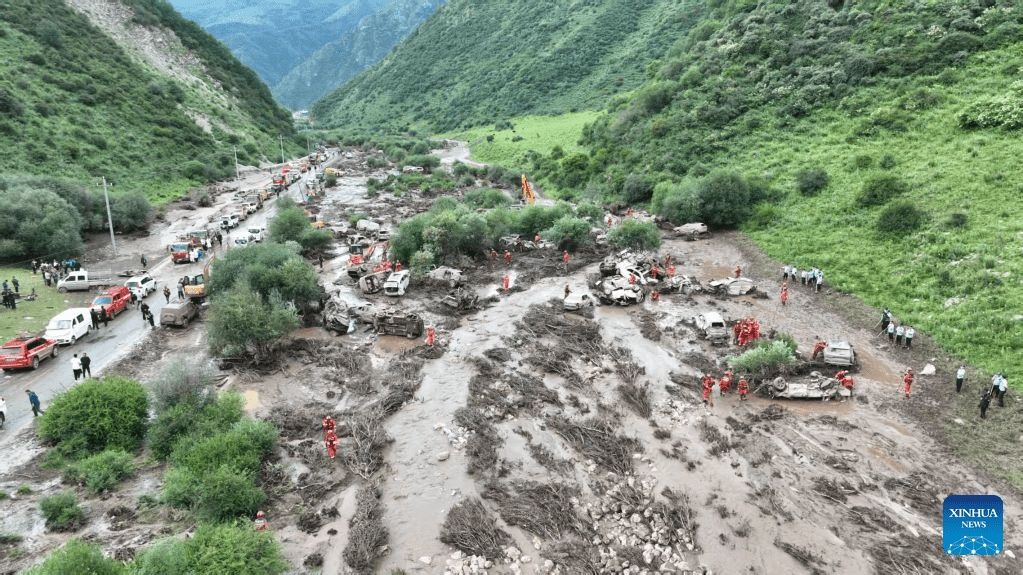
A devastating flash flood swept through a popular tourist destination in Gansu Province on Sunday afternoon, claiming ten lives and leaving twenty-three people injured as emergency responders launched intensive rescue operations in the affected area. The disaster struck Weiyuan County in Dingxi City when sudden torrential rainfall triggered the deluge, trapping visitors who had been camping at the scenic location. Local public security and fire-and-rescue teams immediately mobilised personnel to the site to conduct urgent search-and-rescue missions as darkness fell, with operations continuing into the evening.
The flooding in northwestern China coincided with the arrival of Typhoon Noul, which made landfall along the southern coast near Huidong county at approximately 3:50 a.m. on Sunday morning, delivering gale-force winds and unprecedented rainfall across Guangdong province and Hong Kong. The typhoon, the twelfth tropical cyclone to form this year and China's third major typhoon in a single month, represents one of the year's most powerful storm systems and has demonstrated the increasing intensity of extreme weather events affecting the region.
The impact of Noul's arrival prompted an extraordinary response from Chinese authorities, who issued the nation's highest-level alert for flash flooding across multiple provinces. The Ministry of Water Resources and the China Meteorological Administration jointly declared a red warning—the most severe classification in China's alert system—for flash flood risks affecting areas of Jiangxi, Hunan, Guangdong, Sichuan, Shaanxi, Gansu, and southeastern Xinjiang. This coordinated warning reflects the widespread geographical threat posed by the typhoon and the seasonal rainfall patterns it has triggered across diverse regions.
To manage the immediate dangers, authorities mandated the relocation of more than 700,000 residents from Guangdong province alone, representing one of the largest emergency evacuations undertaken in response to a single weather event. This unprecedented displacement demonstrates both the scale of the typhoon's destructive potential and the preparedness mechanisms that have been established to protect vulnerable populations. Residents were encouraged to remain vigilant regarding real-time weather monitoring, official flood warnings, and evacuation instructions issued by local government bodies.
Meteorologists anticipate that Typhoon Noul will continue delivering heavy to torrential rainfall across much of southern China through Monday evening, with the system gradually weakening as it moves inland from its coastal entry point. Persistent precipitation is expected to last until Tuesday in several regions, particularly Fujian province, where some areas face the prospect of extremely heavy downpours that could exacerbate flooding in already saturated areas. The extended forecast reflects concerns that saturated soil conditions and swollen waterways will amplify flood risks well beyond the initial typhoon impact.
Local governments received explicit instructions to conduct enhanced monitoring of flood-prone geographical features, including mountainous terrain, river valleys, construction sites, and bridge infrastructure. These specific risk zones have historically proven vulnerable to rapid water accumulation and structural failures during severe weather events, necessitating focused attention from emergency management officials. The warning underscores the cascading hazards that typhoons pose beyond direct wind damage, with secondary flooding representing a persistent threat to life and infrastructure.
Hong Kong's meteorological authorities reported that the typhoon had passed within eighty kilometres of the territory, generating strong southwesterly gales that affected parts of the Asian financial hub. All typhoon warning signals were formally cancelled on Sunday evening as the system moved inland, indicating that the most acute threat to the territory had diminished. However, residual impacts continued to affect transportation and daily operations throughout the early hours of the evening.
The disruption extended to Hong Kong's aviation sector, as the airport authority suspended most flight operations for more than twelve hours in response to adverse weather conditions. Recovery operations began gradually on Sunday afternoon, with authorities announcing that normal flight schedules would progressively resume as wind speeds decreased and visibility improved. This operational suspension reflects the significant safety risks that typhoon-force winds pose to aircraft operations and ground handling activities.
The naming of the typhoon itself carries cultural significance—Noul derives from Korean terminology meaning the glow of sunrise or sunset, reflecting the international collaboration inherent in tropical cyclone nomenclature systems used across the Asia-Pacific region. This year's elevated frequency of powerful typhoons, with Noul representing the third major system to impact China within a month, raises ongoing questions about climate patterns and the long-term implications for disaster preparedness in Southeast Asia and East Asia.
For Malaysian observers and regional analysts, Typhoon Noul's destructive path serves as a reminder of the interconnected nature of extreme weather systems across Southeast Asia. While Malaysia's geographic position places it outside the direct trajectory of this particular typhoon, the broader pattern of intensifying tropical cyclones and the scale of evacuations undertaken in affected Chinese provinces underscore the region's vulnerability to severe meteorological events. The rapid mobilisation of resources and coordination between multiple Chinese agencies provides both a model for regional emergency response and a cautionary tale regarding the escalating human and economic costs of extreme weather.
The tragedy in Gansu, combined with the mass displacement along China's southern coast, illustrates how monsoon-season weather systems continue to pose substantial risks despite modern forecasting capabilities and established evacuation protocols. The concentration of tourists in scenic areas at the moment of the flash flood highlights the unpredictability of localised rainfall intensity and the challenges facing emergency planners in protecting both residents and transient populations during typhoon season. As climate change continues to influence weather pattern intensity, the frequency and severity of such incidents may increase, requiring enhanced investment in early warning systems and resilience infrastructure across the entire region.

