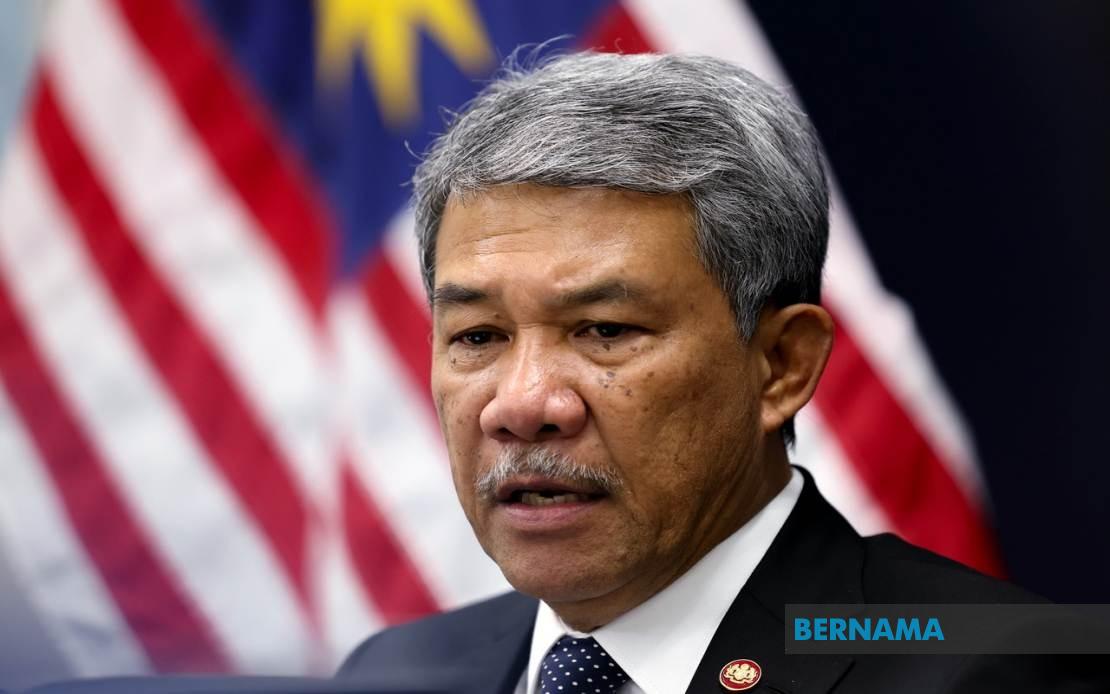
Foreign Minister Datuk Seri Mohamad Hasan touched down in Manila on Sunday afternoon to spearhead Malaysia's participation in a week of intensive regional diplomatic engagement centred on the 59th ASEAN Foreign Ministers' Meeting and its related sessions. Mohamad landed at Ninoy Aquino International Airport at 4.15 pm local time, where he received an official welcome from the Philippines' Department of Foreign Affairs Assistant Secretary and Chief of Protocol Ariel Rodelas Peñaranda. Malaysian Ambassador to the Philippines Datuk Abdul Malik Melvin Castelino Anthony was also in attendance at the airport reception, underscoring the significance of the visit for bilateral relations between the two nations.
The gathering takes place under the Philippines' current ASEAN Chairmanship, which operates under the overarching framework "Navigating Our Future, Together." The proceedings will extend through Thursday and are expected to feature wide-ranging discussions on pressing regional and global issues, with the escalating situation in West Asia anticipated to command substantial attention among the ten member states' foreign ministers. This timing reflects growing international concern about the Middle East's geopolitical trajectory and ASEAN's desire to contribute meaningfully to regional stability discussions on the world stage.
A particularly significant aspect of Mohamad's agenda involves Malaysia's leadership role within the association. He will co-chair the ASEAN Post-Ministerial Conference with China alongside Foreign Minister Wang Yi, leveraging Malaysia's position as the country coordinator for ASEAN-China Dialogue Relations for the 2024-2027 period. This responsibility places Malaysia at the centre of one of ASEAN's most consequential bilateral relationships, given China's economic significance to Southeast Asia and its strategic influence across the region. The bilateral coordination role underscores how individual member states shoulder collective responsibilities that shape ASEAN's external engagement.
The Myanmar situation remains a critical focal point for ASEAN's diplomatic efforts. During an extended informal consultation, the foreign ministers will assess progress on implementing the Five-Point Consensus, the framework through which ASEAN has attempted to mediate the country's political and humanitarian crisis. Malaysia's participation in these discussions reflects the broader Southeast Asian commitment to Myanmar's stability, though the association has faced considerable international criticism for the perceived ineffectiveness of its consensus-based approach. The ministers will review recommendations from the previous ASEAN Leaders' Review and Decision, seeking to refine ASEAN's strategy for addressing the deepening conflict and severe humanitarian deterioration affecting Myanmar's civilian population.
Beyond the core AMM, Mohamad's schedule encompasses multiple parallel multilateral forums that collectively demonstrate ASEAN's complex web of institutional relationships. He will engage with the ASEAN Intergovernmental Commission on Human Rights during a dedicated interface meeting, addressing the region's approach to human rights challenges amid various security concerns. Additionally, the Southeast Asia Nuclear Weapon-Free Zone Commission meeting will touch upon non-proliferation issues relevant to Southeast Asian security, an area where the region maintains a longstanding commitment to keeping the region free from weapons of mass destruction.
The broader gathering incorporates three strategic partnerships that represent ASEAN's positioning between major powers. The 27th ASEAN Plus Three Foreign Ministers' Meeting will bring together ASEAN with Japan, South Korea, and China, representing East Asia's economic and diplomatic core. The 33rd ASEAN Regional Forum, which includes dialogue partners such as Australia, Canada, the European Union, India, New Zealand, the United Kingdom, and the United States alongside Russia, provides a comprehensive platform for addressing transnational security issues. The 16th East Asia Summit Foreign Ministers' Meeting focuses on the Indo-Pacific region, where ASEAN nations maintain crucial interests and where major power competition intensifies.
Malaysia will also engage in bilateral Post-Ministerial Conferences with all of ASEAN's major dialogue partners, including Australia, Canada, China, the European Union, India, Japan, New Zealand, the Republic of Korea, the Russian Federation, the United Kingdom, and the United States. These individual sessions allow Malaysia and other member states to address tailored concerns and opportunities with each partner, whether trade relations, security cooperation, or development assistance. Such structured bilaterals complement the multilateral forum discussions and enable more candid conversations on sensitive topics.
On the sidelines of these formal proceedings, Mohamad is expected to conduct additional bilateral meetings with selected counterparts, likely focusing on issues of particular concern to Malaysia's foreign policy agenda. These informal sessions often prove as consequential as the formal meetings, enabling deeper discussions on bilateral challenges or opportunities away from the constraints of multilateral settings. The nature of these conversations typically remains undisclosed until official readouts are released, though they frequently address trade disputes, regional tensions, or specific cooperation initiatives.
Another notable component of the Manila gathering is the fifth Conference on Cooperation among East Asian Countries for Palestinian Development, which reflects ASEAN nations' continued engagement with Middle Eastern affairs despite geographical distance. Malaysia's participation in this forum signals the country's longstanding commitment to Palestinian issues and its broader engagement with Muslim-majority nations and causes. This conference provides a platform through which East Asian perspectives on development cooperation with Palestinian territories can be coordinated, reflecting both humanitarian concerns and diplomatic positioning on a deeply contentious issue.
The timing and scale of this diplomatic exercise underscore ASEAN's persistent relevance in managing regional affairs and maintaining mechanisms for dialogue amid great power competition. For Malaysia specifically, the opportunity to chair the China dialogue relationship while engaging with the full spectrum of regional partners demonstrates the balancing act that defines Southeast Asian foreign policy. The outcomes from these meetings, whether reflected in joint statements or individual country positions on Myanmar, West Asia, and other issues, will shape regional responses to persistent challenges in the coming months.

