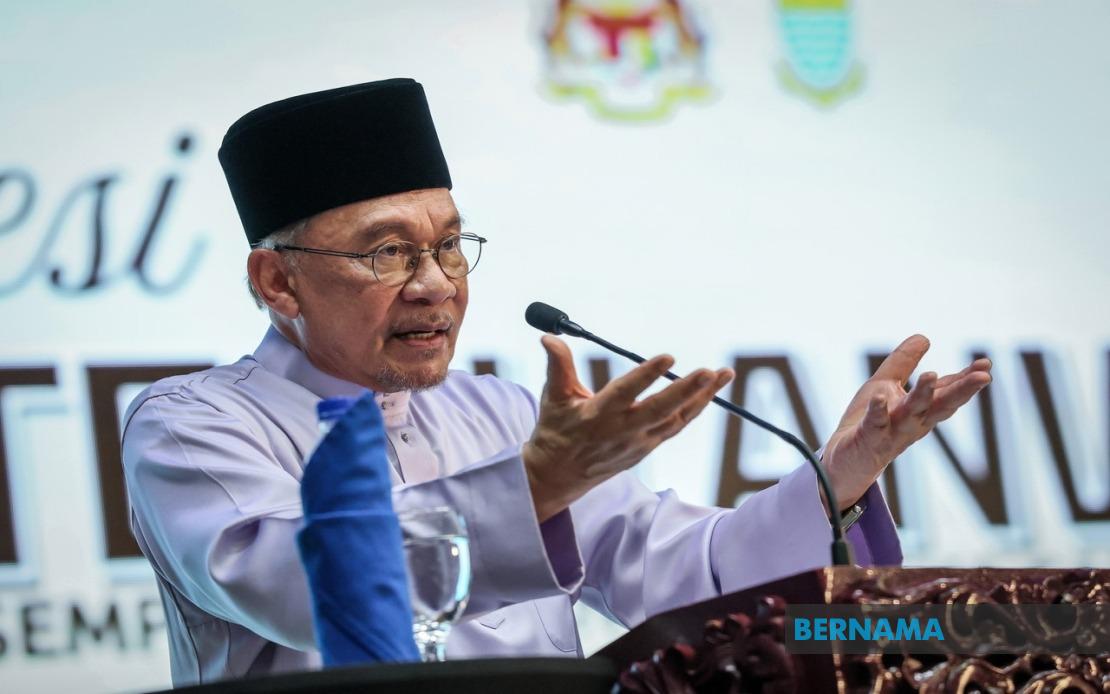
Prime Minister Datuk Seri Anwar Ibrahim announced at an education engagement in Bukit Mertajam today that the federal government will establish a financial assistance programme for Form Six students through the forthcoming Budget 2027, to be presented to Parliament in October. The move marks a significant shift in education financing policy, addressing what the government identifies as a critical gap in student welfare support that has existed for years across Malaysia's school system.
Anwar, who concurrently holds the portfolio of Finance Minister, explained that the decision emerged from consultations with pre-university students who highlighted the disparity in government assistance. Currently, pupils from primary school through Form Five receive various allowances, and university-level students benefit from multiple funding schemes, yet Form Six learners—a critical transitional cohort pursuing advanced qualifications—fall outside these support mechanisms entirely. This inconsistency prompted the government to reconsider its allocation priorities within the education budget framework.
During a dialogue session at the Tuanku Bainun Teacher Education Institute, Anwar acknowledged that Form Six represents a distinct phase in Malaysia's education pathway. Students at this level undertake rigorous pre-university coursework that determines their readiness for higher education, yet they receive no government stipend despite their enrollment in formal, federally-recognised programmes. The Prime Minister indicated that this oversight had been brought repeatedly to his attention through direct conversations with students and their representatives, particularly during recent consultation sessions with the pre-university community.
Education Minister Datuk Seri Fadhlina Sidek, present at the engagement, revealed that the proposed allowance scheme emerged as one of twelve resolutions tabled at the MADANI Pre-University Congress held in Klang earlier that morning. The ministry has committed to examining all twelve recommendations with a view toward implementation, suggesting that the allowance initiative reflects broader student concerns about educational equity and financial accessibility rather than an isolated policy adjustment. This multi-pronged approach indicates the government's attempt to address systemic issues within pre-university education provision.
The allowance programme arrives at a moment when Malaysia faces increasing pressure to improve educational outcomes and student retention rates across all academic levels. Form Six completion rates have historically been subject to economic fluctuations, as families sometimes withdraw students from costly pre-university study to pursue immediate employment. A targeted allowance could potentially reduce dropout rates and ensure that economically disadvantaged students have genuine access to advanced secondary qualifications, thereby broadening the pool of candidates eligible for university admission.
Anwar stressed that the precise quantum of the allowance remains undetermined and will be contingent upon the government's fiscal position when Budget 2027 is finalised. This caveat reflects the broader budgetary constraints that Malaysia continues to navigate, even as the administration prioritises education spending. The government must balance competing demands across multiple sectors while maintaining fiscal discipline, meaning the allowance level will ultimately reflect available resources rather than an idealised support figure. Such fiscal realities often determine whether assistance programmes achieve meaningful impact or function primarily as symbolic gestures.
The announcement carries particular significance for lower-income and middle-income Malaysian families, who constitute the majority of Form Six enrollees nationwide. Allowing these students to pursue pre-university education without financial hardship represents a fundamental equity principle and could have cascading effects on university access, degree completion rates, and ultimately workforce competitiveness. Students freed from financial pressure during Form Six years can concentrate on academic performance, potentially translating into stronger university outcomes and more productive career trajectories.
Regionally, Malaysia's initiative places it within a growing cohort of Southeast Asian nations examining how to optimise pre-university education financing. Neighbouring countries including Thailand and Vietnam have implemented or expanded student support schemes at comparable academic levels, recognising that the secondary-to-tertiary transition period demands particular attention. Malaysia's move signals alignment with regional trends toward more comprehensive educational welfare systems, though implementation details will determine whether the scheme matches international benchmarks.
The October 2027 budget presentation will provide the definitive answer regarding allowance quantum, eligibility criteria, and implementation timeline. Education stakeholders, including Form Six students, their families, educational institutions, and student advocacy groups, will scrutinise these specifications closely. The government's capacity to deliver a meaningful, well-designed programme—rather than a minimal or bureaucratically cumbersome initiative—will significantly influence its actual impact on student welfare and educational equity across Malaysia's secondary school system.

