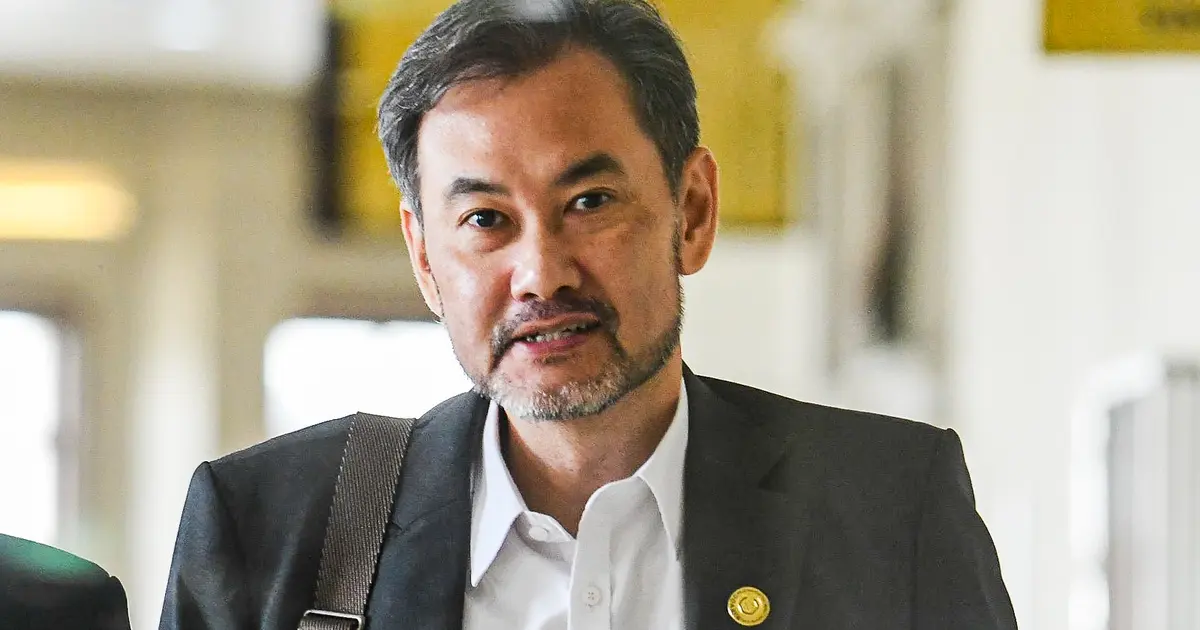
Shahrol Azral Ibrahim Halmi, who previously headed the scandal-ridden 1Malaysia Development Berhad, has pushed back against allegations that he treated Low Taek Jho—the fugitive financier at the centre of one of the world's largest financial scandals—with the same deference he would have shown Malaysia's sitting prime minister. The distinction he draws, though narrow, underscores the complex hierarchies of power and influence that allegedly characterised the fund's operations during the tenure of former premier Najib Razak.
At the heart of the controversy surrounding 1MDB lies the question of how decision-making authority truly flowed within the development fund. The notion that Jho Low, a non-governmental figure with no official position, could wield influence comparable to that of the nation's chief executive strikes at the fundamental governance failures that led to the fund's near-total collapse and the subsequent international investigation. Shahrol's clarification suggests that while he did indeed engage with Jho Low on matters relating to 1MDB, he maintained a formal distinction between channels of communication and ultimate authority.
Shahrol has stated that his interactions with then-Prime Minister Najib Razak proceeded through informal mechanisms, a revelation that itself indicates the opacity characterising high-level decision-making within 1MDB. The involvement of Jho Low in these informal communication pathways raises further questions about the degree to which a private businessman operated as an intermediary between the fund's leadership and the country's chief executive. This arrangement, even if Shahrol insists it did not elevate Jho Low to quasi-prime ministerial status, speaks to the unusual and potentially problematic nature of 1MDB's governance structure.
The distinction between communicating with someone and treating them as equivalent to the prime minister may seem semantic, yet it carries significant legal and administrative weight. Shahrol's assertion attempts to establish that while Jho Low served as a conduit for information and potentially influenced certain decisions, ultimate authority remained with Najib Razak in his official capacity. However, this defence does little to dispel concerns about the integrity of decision-making processes at a fund entrusted with billions of ringgit in public capital.
For Malaysian observers and regional financial regulators, Shahrol's testimony underscores how 1MDB's operational failures extended beyond simple embezzlement or mismanagement. The involvement of unofficial channels and the reliance on an unvetted intermediary to facilitate communications between a major state investment vehicle and the prime minister's office represents a systemic governance breakdown. The fact that such arrangements warranted legal defence and clarification years after 1MDB's exposure suggests just how far the fund's operations deviated from accepted standards.
Jho Low, who remains a fugitive from international law enforcement, has been accused of orchestrating a vast scheme to misappropriate billions from 1MDB for personal enrichment and extravagant spending. His alleged ability to influence decisions at the fund—regardless of whether this occurred through direct channels or via figures like Shahrol—forms a central element of multiple investigations spanning the United States, Singapore, Malaysia, and other jurisdictions. The fugitive's apparent access to corridors of power remains emblematic of the scandal's scale and audacity.
Shahrol's denials and clarifications emerge within an ongoing legal landscape in Malaysia where accountability for 1MDB remains contested. Various officials, business associates, and fund executives have faced charges, acquittals, and appeals as courts grapple with proving intentional wrongdoing versus negligence or poor judgment. Shahrol himself has faced scrutiny for his role in approving and overseeing transactions that funnelled money away from 1MDB's stated developmental objectives.
The testimony also reflects broader concerns about how state-linked companies in Malaysia and across Southeast Asia maintain governance standards and protect public assets from potential abuse. 1MDB's failure to establish clear decision-making hierarchies and to enforce transparency in communications between executives and external parties has become a cautionary tale for policymakers reviewing institutional safeguards. The involvement of informal channels—whether involving Jho Low or others—suggests that official governance frameworks proved insufficient to constrain unofficial influence.
For investors and international observers monitoring Malaysia's commitment to financial integrity, Shahrol's statements represent neither full vindication nor clear culpability, but rather an illustration of the murkiness that pervaded 1MDB's operations. The very fact that distinguishing between Jho Low's influence and that of the prime minister requires legal clarification demonstrates how thoroughly the scandal compromised institutional clarity. Moving forward, Malaysian policymakers continue grappling with how to strengthen oversight mechanisms to prevent similar abuses.
The case remains unresolved in several respects, with ongoing investigations and potential further charges ensuring that 1MDB continues to shape Malaysia's governance discourse. Shahrol's refutation, measured and legalistic in tone, provides incremental detail rather than definitive closure on the roles various parties played in the fund's implosion. As testimony accumulates and court proceedings advance, the full contours of how Jho Low penetrated Malaysia's highest circles of power and influence grow incrementally clearer, even as some officials continue to contest specific characterisations of their own involvement.

