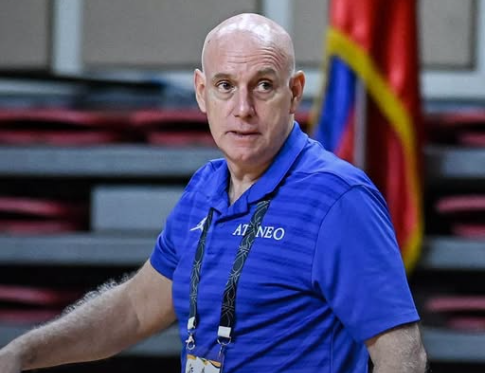
The Philippine National Police's Criminal Investigation and Detection Group has recommended filing charges against Ateneo de Manila University men's basketball head coach Thomas Anthony 'Tab' Baldwin and ten other team personnel for violations of the Anti-Hazing Act following the drowning deaths of players Rene Baterbonia and Divine Adili. The two athletes died during a supervised training activity held in Dipaculao, Aurora on June 8, with investigators concluding that the conditions under which the session was conducted constituted illegal hazing despite being framed as team-building.
Beyond Baldwin, authorities identified ten additional respondents whose involvement in planning or executing the activity triggered the charges. These included strength and conditioning coaches Grant Dearns and Ceasar Vicent Javellana Elumba, assistant coaches Dean Caesar B. Castaño, Sandro Nicholas Romero Soriano and Reynaldo Jacinto, student managers Paolo Manuel Maceda Adevoso and Andrew Lorenzo 'Drew' Bondoc Salud, physical therapist John Eric Quiambao Rueca, and utility personnel Aris Ramos Pronce and Joel 'Boy' Palmiano Rapa. The breadth of the charges reflects investigators' assessment that responsibility extended across the entire support structure surrounding the team.
Crucially, authorities emphasised that all eleven Ateneo personnel were present at the beach during the fatal activity, and none intervened despite the escalating physical demands placed on the athletes. The absence of any staff member objecting to or halting the increasingly dangerous conditions became a central element in establishing how systematically the hazing occurred. Officials characterised the passivity of the coaching and support staff as particularly damning evidence that the risky activity proceeded with collective consent and awareness.
The charges hinged on a reinterpretation of what constitutes hazing under Republic Act No. 11053, the Anti-Hazing Act. Rather than limiting the definition to traditional initiation rituals, investigators demonstrated that the law encompasses any activity resulting in physical or psychological harm as part of a prerequisite for team membership. The June 8 itinerary was reconstructed to show a pattern of escalating physical stress: players were roused at 4am and ordered to run four kilometres before participating in intense competitive games with punishments for underperformers. This extended series of punishing physical exertion set the stage for the water activity scheduled for approximately 2 to 2:30pm.
The timing of the seawater training proved fatally problematic, as investigators established that the activity occurred at nearly the precise moment of the day's highest tidal surge, with active high tide predicted at 2:27pm. The combination of forced swimming in an open-sea environment characterised by dangerous rip currents, powerful waves and inconsistent seabed depths transformed what team officials presented as a skill-development exercise into an objectively hazardous situation. Rather than being incidental features, these environmental hazards emerged from the investigation as predictable consequences of the activity's scheduling.
Authorities further established that the training activity served a competitive selection function, determining which athletes from the twenty present would ultimately be included in the final seventeen-member roster to be registered with the University Athletics Association of the Philippines. This selection context reframed the entire day as an initiation rather than routine training, since participation and performance directly influenced whether athletes would secure their official team status. By subjecting players to an exhausting series of physical tests culminating in dangerous water work, team leadership created conditions where athletes felt compelled to endure and comply despite escalating risks to their safety.
Baldwin released a video apology through Ateneo's official social media channels shortly after the drowning deaths, expressing remorse for Baterbonia and Adili's passing. Nevertheless, the police investigation proceeded independently and conclusively, ultimately determining that the coach bore direct responsibility for organising and overseeing the session. The nine-minute recording did not sway investigators' determination to pursue charges, as the evidence of harm resulting from the day's activities remained concrete and incontrovertible.
A significant investigative finding concerned the absence of any weights discovered on the bodies of either victim when recovered from the water. This detail initially sparked speculation about potential foul play but proved to have no bearing on the hazing charges, which focused instead on the dangerous circumstances and pattern of physical conditioning that preceded the water activity. The finding was clarified publicly to prevent unfounded alternative theories from overshadowing the established facts about how the day's activities contributed to the tragedy.
The case carries substantial implications for Philippine collegiate sports, as it established legal precedent that institutional team-building exercises cannot operate in a legal grey zone merely by avoiding traditional hazing labels. Universities and coaches nationwide now face explicit notice that activities combining intense physical exertion, environmental hazards and selective outcomes may violate anti-hazing statutes even when framed as legitimate training. The charges signal that prosecutors and police will examine whether athletes face coercive conditions that threaten safety in pursuit of team membership, a standard that extends protective coverage considerably beyond previous hazing jurisprudence.
The recommendation for charges proceeds now to the Department of Justice for formal evaluation and preliminary investigation, beginning a prosecutorial phase that will determine whether the evidence warrants full charges and eventual court proceedings. The deliberate nature of how the day's itinerary was constructed, the systematic way physical exhaustion preceded water work, and the collective responsibility shared by eleven team officials all factored into police conclusions that Baldwin and his staff engaged in coordinated conduct that violated anti-hazing protections. The case underscores how institutional pressures within collegiate athletics can normalise dangerous practices until tragedy forces legal accountability.

