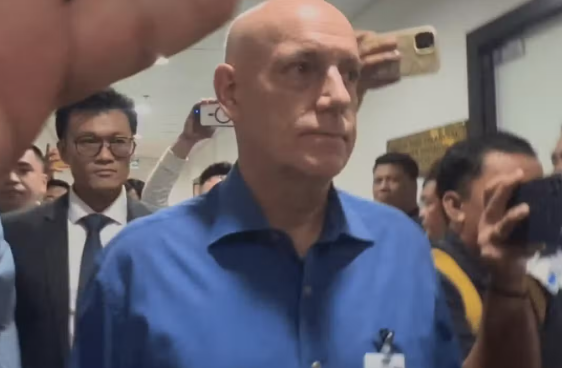
Tab Baldwin, the recently departed head coach of Ateneo de Manila University's men's basketball programme, walked into the National Bureau of Investigation's Homicide Division on Tuesday afternoon to answer questions regarding the deaths of two student-athletes whose bodies were recovered after a drowning incident in Dipaculao, Aurora. The appearance came after the coach had twice failed to present himself for scheduled questioning, prompting considerable scrutiny from authorities conducting parallel investigations into the circumstances surrounding the tragedy.
Baldwin's legal representative Karl David accompanied him to the NBI offices, where the session commenced around 1:45 in the afternoon. The coach's attendance marked a significant development in what has become an increasingly high-profile inquiry, given both the prominence of Philippine university basketball and the sensitive questions raised about safety protocols during team activities. His arrival followed mounting pressure on the coach to cooperate fully with investigators from two separate agencies now examining the incident.
The former coach's absence from two prior scheduled appearances had drawn considerable notice from law enforcement officials. On June 16, Baldwin did not show up for his initial NBI interview, with his legal team attributing his non-appearance to health concerns, claiming he was "not in good condition." This explanation, whilst accepted at the time, contributed to perceptions that the coach's cooperation with investigators was reluctant. The second missed appointment on June 19 came despite Baldwin's simultaneous appearance that same day before the Philippine National Police-Criminal Investigation and Detection Group, raising questions about the coordination between the two investigative bodies.
The drowning occurred during what was officially described as a team activity at a location in Aurora province earlier in the month. The two deceased students, Rene Baterbonia and Divine Adili, were both members of the Ateneo basketball squad, focusing public and media attention on the university's athletic programmes and their management. The incident has prompted broader discussions within Philippine sports circles about the adequacy of safety measures and supervision during team-building exercises and training activities conducted away from campus facilities.
Parallel investigations by the NBI and the Philippine National Police's Criminal Investigation and Detection Group have proceeded somewhat independently, though authorities have indicated plans to cross-reference their findings. NBI Director Melvin Matibag announced that investigators intended to compare Baldwin's statement provided to the bureau with the testimony the coach gave to the CIDG the previous Friday. This comparative analysis suggests that inconsistencies or variations between the two accounts could become significant in determining what transpired during the fatal activity.
The involvement of two separate investigative agencies reflects the severity with which authorities are treating the incident. The NBI's Homicide Division focuses on potential criminal responsibility, whilst the CIDG's parallel inquiry addresses broader investigative concerns. This dual approach, whilst sometimes creating procedural complications, generally ensures more comprehensive examination of the facts and circumstances. For Baldwin, navigating statements to both agencies whilst maintaining legal consistency presents considerable complexity.
Baldwin's tenure as head coach at the prestigious Jesuit institution had placed him in a prominent position within Philippine basketball circles. His coaching record and profile meant his involvement in the incident immediately elevated its public significance. The investigation into his conduct and any potential culpability has attracted attention not only from sports observers but also from broader public discourse regarding institutional accountability within athletic programmes.
The National Bureau of Investigation indicated its intention to conclude its portion of the investigation by the end of that same week, suggesting authorities felt they were nearing completion of their fact-finding phase. This timeline implies that investigators had substantially gathered evidence and witness testimony before Baldwin's Tuesday appearance, meaning his statement would likely represent a final opportunity to hear directly from a central figure in the events leading to the drowning.
The case has raised broader questions within Southeast Asian sporting circles about the responsibilities of coaches and institutions when organising team activities outside normal facilities. Similar incidents in other countries have prompted reviews of consent documentation, safety briefing protocols, and supervision ratios during off-campus athletic events. Filipino sports administrators and educational institutions have faced mounting pressure to demonstrate that adequate safeguards exist to protect student-athlete welfare during all programme-related activities.
For Ateneo de Manila University, the incident and its aftermath have created institutional challenges extending beyond the immediate investigation. Questions about how the activity was authorised, what safety measures were implemented, and what warnings were provided to participants have emerged as central concerns for the university's leadership. The investigation into Baldwin's role necessarily connects to broader institutional accountability questions that the university itself must address.
The incident underscores persistent safety concerns in Philippine athletics, particularly regarding team activities conducted in remote locations where immediate emergency response capacity may be limited. The Aurora location where the drowning occurred is considerably distant from major urban medical facilities, potentially affecting response times and treatment capabilities had survivors been present. This geographical factor has become part of broader discussions about site selection and risk management for team events.
As the investigation progresses, Baldwin's full cooperation with both agencies appears essential to resolving outstanding questions about the tragedy. The coach's previous unavailability had suggested possible reluctance to engage with the process, but his appearance before the NBI, combined with his Friday interview with the CIDG, now positions him as having engaged substantially with authorities. The statements provided will prove crucial to investigators' final determinations regarding any potential charges or findings of responsibility.