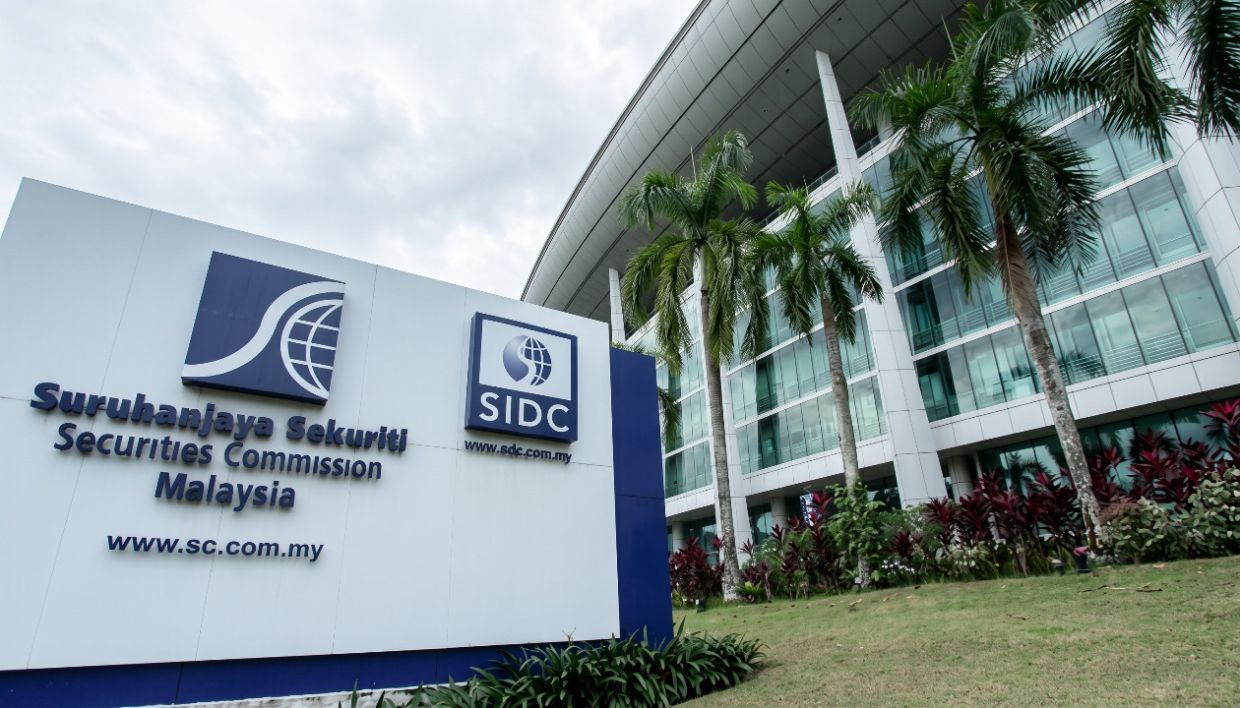
The Kuala Lumpur Sessions Court has handed down a three-year prison sentence to Mohd Arif Fadzlee Mohd Arifin, a former bank analyst convicted of conducting securities operations without proper regulatory authorisation. The conviction represents a landmark enforcement action by the Securities Commission Malaysia (SC), underlining the financial regulator's commitment to protecting the public from fraudulent investment practitioners who operate outside the formal licensing framework.
Mohd Arif faced two distinct charges under the Capital Markets and Services Act 2007 (CMSA), both of which the court found proven beyond reasonable doubt. The first charge centred on his representation as an agent of CIMB Wealth Advisors Berhad while engaging in securities dealing—a regulated activity that explicitly requires holders of a Capital Markets Services Representative's Licence (CMSRL) issued by the SC. The prosecution demonstrated that Mohd Arif possessed no such credential, nor was he registered as an authorised person with any regulatory body. This breach strikes at the heart of Malaysia's financial services regulatory system, which mandates that any individual directly involved in buying, selling, or advising on securities must undergo vetting and maintain compliance standards set by the SC.
The second charge addressed what the SC describes as a deliberate misappropriation of professional credentials. Mohd Arif falsely held himself out as a Unit Trust Consultant (UTC), a designation that carries implicit authority to advise clients on investment instruments. By assuming this title without proper accreditation, he created a false impression of legitimacy that would have influenced clients' trust in him as a financial professional. This form of credential fraud is particularly insidious because it exploits the information asymmetry between retail investors and purported specialists, making unsuspecting members of the public vulnerable to bad advice or outright deception.
The offences occurred in two locations—Petaling Jaya and Nilai—dating back to 2011, meaning investigators took more than a decade to build and prosecute the case. During the trial, the prosecution marshalled ten witnesses to establish its case, including two individuals who had been direct victims of Mohd Arif's unlawful activities. This extensive witness testimony was crucial in demonstrating not only the technical violation of regulatory requirements but also the concrete harm caused to ordinary Malaysians who placed their trust in someone presenting himself as a qualified professional.
In February 2026, the Sessions Court determined that the prosecution had established a prima facie case sufficiently strong to require Mohd Arif to mount a defence. He chose to testify under oath but did not call supporting witnesses, a strategic decision that ultimately failed to persuade the judge. The court concluded that his testimony had not raised reasonable doubt about the state's evidence, a finding that reflects the strength of the prosecution's documentation and witness accounts. Judges rarely discount multiple victims and prosecution witnesses in favour of a single defendant's uncorroborated testimony, particularly in cases involving regulatory breach where documentary records often exist.
The concurrent three-year sentences—running together rather than sequentially—represent a measured approach that balances deterrence with proportionality. Under section 59(1) of the CMSA, the maximum penalty is five years imprisonment and a fine up to RM5 million, while section 362(3) allows for up to five years and a fine of RM1 million. By imposing three-year concurrent terms, the court signalled that these were serious offences warranting substantial punishment, yet stopped short of the maximum available sentence. This sentencing philosophy serves as a warning to others contemplating similar conduct while allowing room for circumstances judged more egregious.
The conviction carries broader implications for Malaysia's financial services industry and consumer protection landscape. Unlicensed securities dealing represents a systemic risk to retail investors who may not possess the knowledge to verify credentials or assess the qualifications of advisors recommending investment products. When individuals like Mohd Arif operate outside the regulatory framework, they escape the compliance obligations, insurance requirements, and conduct standards that licensed practitioners must observe. This creates an unlevel playing field where properly regulated wealth managers compete against unscrupulous operators who cut corners and ignore ethical guardrails.
The SC's pursuit of this case over many years demonstrates institutional commitment to enforcing capital markets law despite the investigative challenges posed by time delays and the need to locate witnesses years after infractions occur. Successful prosecutions like this one provide concrete evidence to the public and to industry participants that regulatory breaches carry real consequences. Without such enforcement action, the deterrent effect of licensing requirements diminishes, and opportunistic individuals are emboldened to take regulatory risks.
For Malaysian consumers, this judgment reinforces the importance of verifying that any person offering investment advice or dealing in securities holds current, verifiable credentials from the SC. The presence of an official CMSRL or similar authorisation can be checked through the SC's official database, a step that would have revealed Mohd Arif's lack of standing. Victims of investment fraud or malpractice by unlicensed operators can report concerns to the SC, which maintains a dedicated channel for whistleblowers and fraud reports. This case also highlights why regulated products and licensed intermediaries, while sometimes seeming bureaucratic, exist to protect ordinary Malaysians from precisely the kind of deceptive conduct in which Mohd Arif engaged.

