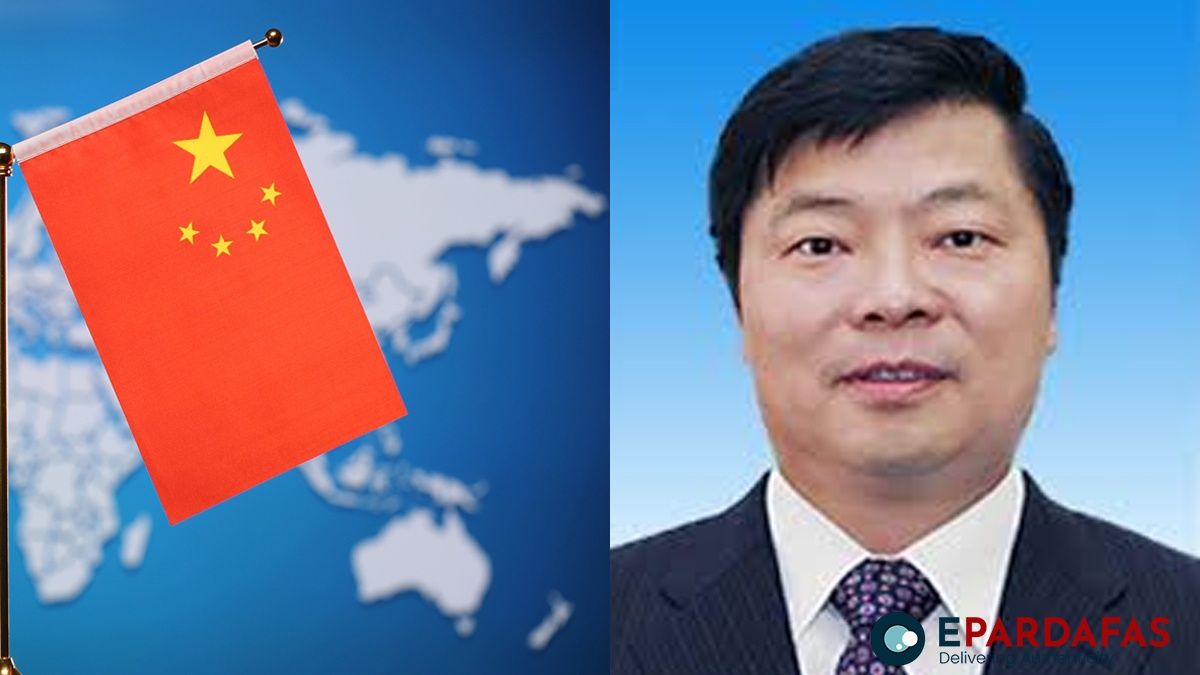
Beijing's top anti-graft authority announced on Sunday that Ouyang Weimin, who previously led the China Development Bank, is being investigated for suspected serious violations of Communist Party discipline and the law. The Central Commission for Discipline Inspection provided minimal detail in its announcement, merely confirming that both it and the National Commission of Supervision had opened the investigation into the former senior financial official.
Ouyang's career in China's financial sector spans multiple decades. He joined the Communist Party in 1986 and spent a significant portion of his early working life at the People's Bank of China before advancing to more senior roles within the Chinese government and state-owned enterprises. His trajectory exemplifies the career path typical of high-ranking officials in China's state financial apparatus, where positions at central banks and development institutions often serve as stepping stones to broader policy influence.
Before leading the development bank, Ouyang served as vice-governor of Guangdong Province, one of China's most economically dynamic regions situated adjacent to Hong Kong. His appointment to the China Development Bank presidency and concurrent role as deputy party secretary came in 2019, positions he maintained until his resignation from the presidency in 2023. The timing of his departure and the subsequent investigation suggests potential tensions or complications that emerged during his tenure or shortly thereafter.
The China Development Bank, established in 1994, operates as a state-funded financial institution designed to channel capital toward strategic economic development priorities. Operating under direct oversight from the State Council, the organisation focuses on supporting industries deemed critical to China's national development strategy and funding projects in economically underdeveloped regions. Its mission positions it as a crucial instrument of state economic policy rather than a purely commercial enterprise, making its leadership roles positions of considerable political and economic significance.
Chinese President Xi Jinping's administration has maintained an extensive and sustained anti-corruption campaign since assuming power, which has targeted officials at various levels of government as well as senior military figures. The scale and breadth of these investigations have drawn international attention and scrutiny, with observers noting that the anti-corruption drive has coincided with the removal of potential political rivals and consolidation of Xi's authority within the Communist Party hierarchy. The investigation into Ouyang fits within this broader pattern of high-profile financial sector investigations.
Ouyang's case carries particular significance given the strategic importance of the China Development Bank within China's economic architecture. Development banks play instrumental roles in channelling state resources toward priority sectors, infrastructure projects, and Belt and Road Initiative investments. Leadership positions at such institutions inherently involve oversight of substantial financial flows and decisions affecting major investment allocations, creating multiple potential avenues for investigations into alleged misconduct, financial impropriety, or policy violations.
The investigation's implications extend beyond the individual case. For Malaysia and other Southeast Asian nations, particularly those engaged in development finance partnerships or Belt and Road projects with China, the investigation underscores the internal governance dynamics within Chinese state financial institutions. Changes in leadership at institutions like the China Development Bank can influence policy priorities, project approvals, and the terms of future financing arrangements in the region.
The minimal disclosure by Chinese authorities—providing only confirmation of the investigation without specifics regarding alleged violations—reflects standard procedure in China's anti-corruption processes. Detailed charges are typically released only after investigations conclude, meaning the substantive nature of the allegations against Ouyang remains undisclosed for now. This approach maintains opacity about the investigation's scope and focus until conclusions are formally announced.
Ouyang's background in Guangdong administration adds another dimension to his professional standing. The province hosts some of China's most significant economic zones and maintains particularly extensive commercial ties with Hong Kong and international markets. Experience in such a position would have exposed him to complex commercial dealings, foreign investment flows, and regional economic policy decisions, any of which could potentially form the basis of investigation into regulatory compliance or official conduct.
The investigation also reflects the broader institutional dynamics within China's state sector, where periodic anti-corruption campaigns intersect with leadership transitions, policy shifts, and internal party politics. For external observers and regional partners, such investigations can create uncertainty regarding continuity of policies, personnel relationships, and institutional priorities during transition periods. The development bank's role in financing major regional projects means that investigations into its leadership warrant careful monitoring by affected economies.

