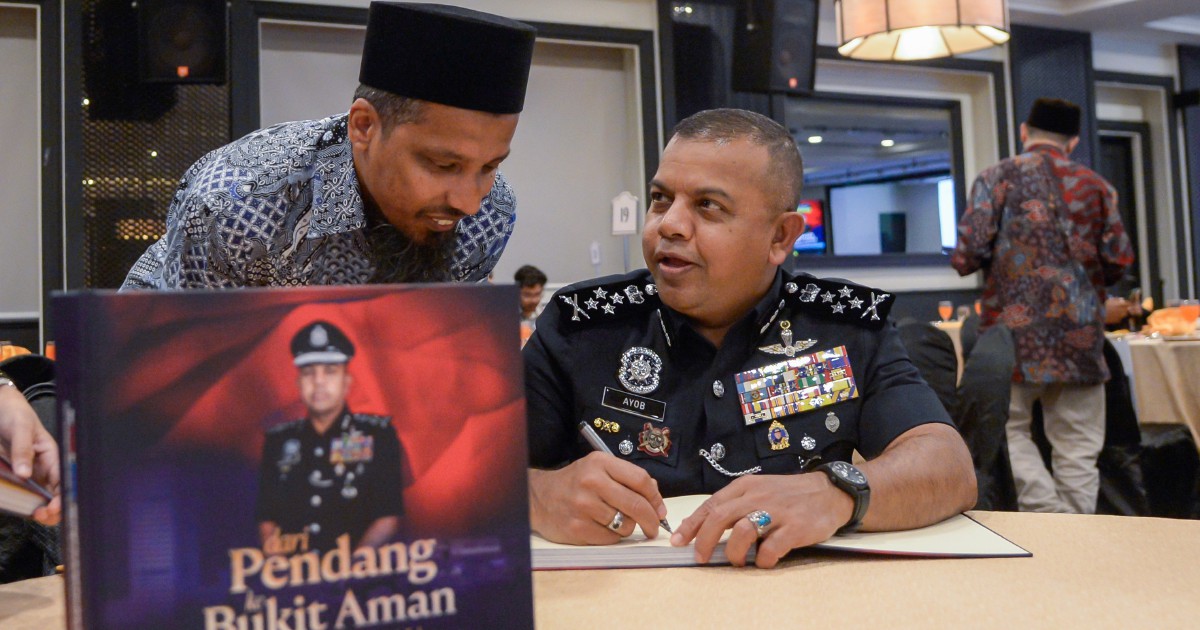
The investigation into what became known as the "Gang Nicky" operation stands as a defining moment in Malaysia's law enforcement history, according to Tan Sri Ayob Khan Mydin Pitchay, who served as deputy Inspector-General of Police during his distinguished career. The high-ranking former officer has reflected on the case's significance, noting that few inquiries conducted by the Royal Malaysia Police at their Kuala Lumpur headquarters have generated comparable institutional impact or demanded such sustained investigative resources.
The prominence Ayob Khan assigns to this case reflects its far-reaching consequences for police operations and public safety discourse in the country. Large-scale criminal investigations that capture sustained government and public attention often serve as catalysts for operational reforms, procedural refinements, and shifts in strategic priorities within law enforcement agencies. The Gang Nicky investigation appears to have occupied this status within Bukit Aman, suggesting that its scope extended beyond a single criminal enterprise to encompass broader implications for how the police force conducts major operations.
While specific details of the investigation remain matters of historical and law enforcement interest, the characterisation by a former deputy IGP provides valuable perspective on cases that have tested and shaped Malaysian policing capabilities. Ranking officers who ascend to the deputy Inspector-General position bring extensive operational experience across multiple command levels, positioning them to make informed assessments about which investigations have fundamentally influenced institutional practices and knowledge.
The Gang Nicky case appears to have been sufficiently complex to demand coordination across multiple police divisions and likely required integration of various investigative methodologies. Such large-scale probes often compel law enforcement agencies to develop new capabilities, refine inter-departmental communication protocols, and establish precedents for resource allocation during extended operations. The fact that Ayob Khan identifies it specifically as one of Bukit Aman's most significant cases suggests it may have involved organised criminal networks of considerable sophistication or scale.
For Malaysian readers and those observing the country's law enforcement landscape, the significance of such historical cases extends beyond their immediate criminal outcomes. They illuminate how police institutions respond to major challenges, what investigative tools and strategies have proven effective in the Malaysian context, and how senior leadership has evolved in tackling complex criminal enterprises. Understanding these past operations contributes to informed public discourse about policing priorities and effectiveness.
The timing of Ayob Khan's reflections on this case carries particular relevance given ongoing discussions in Malaysia about crime prevention strategies, organised crime combating, and the resource allocation decisions within the Royal Malaysia Police. Historical perspective from senior retired officers helps the public and policymakers appreciate the complexity of large investigations and the institutional memory that guides current operations. Senior officers frequently draw on lessons from significant past cases when formulating responses to emerging criminal challenges.
Investigations reaching the scale that Ayob Khan describes typically generate internal documentation, procedural guidelines, and operational learnings that persist within an organisation long after the case concludes. These institutional legacies shape how subsequent investigations are approached, what preliminary indicators trigger major resource mobilisation, and how different police units coordinate during extended operations. The Gang Nicky investigation likely contributed substantially to such institutional development within Bukit Aman.
The characterisation of this case as among Bukit Aman's biggest also suggests it probably attracted significant media attention and public interest during the investigation period, elements that add complexity to major police operations. Managing public expectations, maintaining operational security, and conducting investigations under intense scrutiny requires careful judgment that distinguishes between information that supports prosecution objectives and matters requiring public transparency. Major cases often become benchmarks against which the public evaluates police effectiveness and institutional competence.
For Malaysian law enforcement agencies developing their investigative capacities and training methodologies, reflection from senior retired officers on significant historical cases provides valuable guidance. Ayob Khan's assessment of the Gang Nicky investigation's magnitude and impact contributes to the professional discourse within Malaysian policing about which operational approaches have proven effective and what challenges emerge when addressing large-scale criminal enterprises. Such institutional memory, preserved through accounts from senior retired officers, helps ensure that valuable lessons inform future operations.
The broader significance of such reflections lies in their contribution to public understanding of how Malaysia's law enforcement institutions function when confronted with major criminal challenges. While specific operational details often remain appropriately restricted, the opportunity to hear from senior officers about the institutional significance of major investigations helps balance public discourse between accountability and operational security considerations. Ayob Khan's perspective on the Gang Nicky case underscores how major investigations shape policing evolution and institutional capability development over time.

