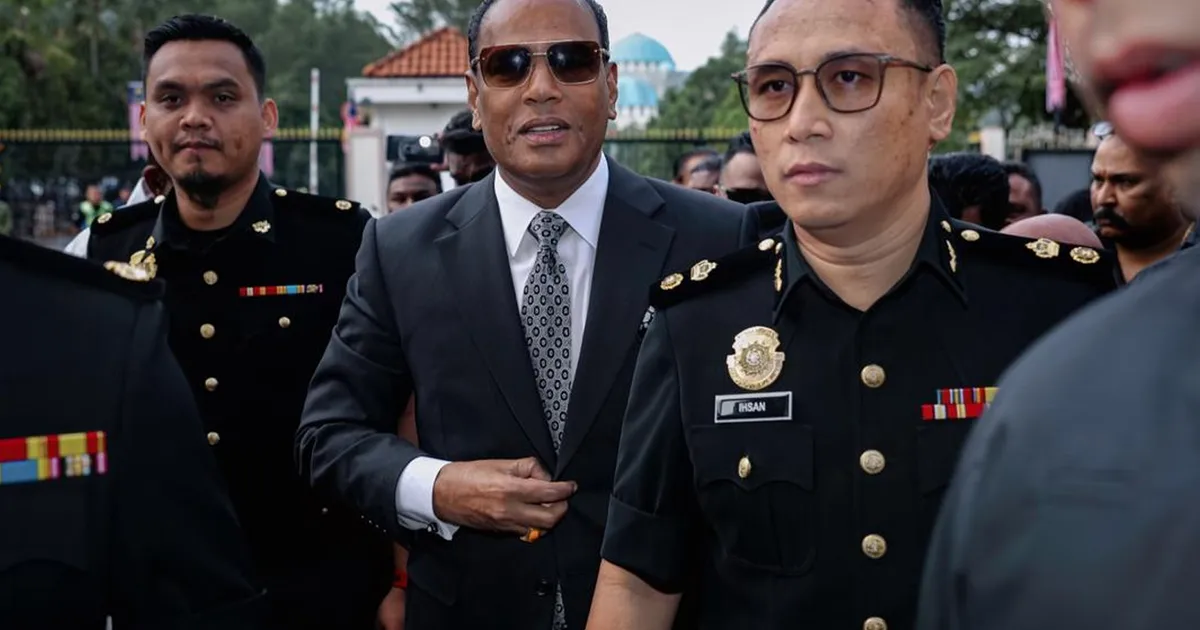
Former human resources minister Saravanan arrived at the Kuala Lumpur courts complex in the early hours of Tuesday morning, presenting a composed and well-groomed appearance as he made his way through the judicial precinct at about 8.25am. The arrival marks another chapter in the ongoing legal proceedings involving the veteran politician, whose ministerial tenure came to an end following his involvement in various matters that subsequently drew judicial scrutiny.
The timing of the early morning arrival underscores the gravity with which court schedules are maintained within Malaysia's judicial system, where proceedings commence promptly and punctuality remains a fundamental expectation for all parties involved, regardless of their previous standing in government. Saravanan's presence at the courts reflects the continuation of legal processes that have kept him in the public eye over recent months, maintaining media attention on developments within Malaysia's political and administrative landscape.
As a former minister in the human resources portfolio, Saravanan held one of the cabinet positions responsible for overseeing Malaysia's labour policies, worker welfare, and employment regulations. His tenure placed him at the centre of important policy decisions affecting millions of Malaysian workers across both public and private sectors. The circumstances that led to his subsequent legal involvement have been the subject of considerable public discourse within Malaysia's politically engaged communities.
The appearance of a former senior government figure at the courts inevitably draws heightened attention, not merely from journalists and observers but also from citizens who maintain active interest in matters affecting the integrity and accountability of Malaysia's political establishment. Such moments serve as public reminders that no individual, regardless of rank or previous office, stands above the law or immune from judicial processes.
The demeanour with which Saravanan approached the courts—described as dapper and composed—speaks to his preparation for the proceedings ahead, suggesting a level of readiness and perhaps confidence in his legal representation and strategy. These visible elements of courtroom conduct, while seemingly peripheral to the substantive legal questions at stake, often carry significance in public perception and media narrative surrounding high-profile cases.
The Kuala Lumpur courts complex itself represents the institutional heart of Malaysia's judicial system, handling cases of considerable political and public importance. The complex's location in the capital and its role in adjudicating matters involving government figures mean that developments there frequently carry implications beyond the immediate parties involved, affecting public trust in institutional accountability mechanisms.
Former ministers facing legal proceedings present a complex dimension to Malaysia's governance story. Such cases intersect questions of ministerial accountability, the proper exercise of public office, and the mechanisms through which the country's legal system holds officials responsible for their actions. The procedures followed in these cases establish precedents that influence how Malaysian society understands the relationship between political power and legal obligation.
The continuity of these legal proceedings, signalled by Saravanan's regular court appearances, indicates that the judicial process continues its course without interruption. Multiple appearances and extended timelines are characteristic of Malaysian court cases, reflecting the complexity of legal arguments, the accumulation of evidence, and the careful deliberation required by judges presiding over significant matters.
For observers within Southeast Asia more broadly, developments in Malaysia's handling of former government officials through legal channels carry relevance. Regional governance standards and the strength of judicial independence across ASEAN nations attract ongoing international attention, and the manner in which Malaysia's courts address cases involving prominent political figures contributes to broader assessments of institutional strength and democratic health.
The legal journey of a former minister typically extends considerably beyond initial charges or accusations, encompassing multiple procedural stages, opportunities for testimony and rebuttal, and careful examination of evidence and legal arguments. Each court appearance represents a scheduled milestone within this extended process, maintaining momentum toward eventual resolution or judgment.
Beyond the immediate legal questions, Saravanan's continued involvement in court proceedings maintains broader questions within Malaysian civil society about governance accountability, ministerial conduct, and the institutional frameworks through which officials are held responsible. These discussions occur not only in courtrooms but also within public discourse, political circles, and media analysis.
The visual aspect of political figures navigating judicial processes—their arrival times, their demeanour, their legal teams—often captivates media attention partly because such moments humanise abstract legal concepts and present them as concrete, observable reality. Saravanan's appearance on Tuesday morning constitutes one such visible moment within an ongoing narrative of political accountability and judicial process.

