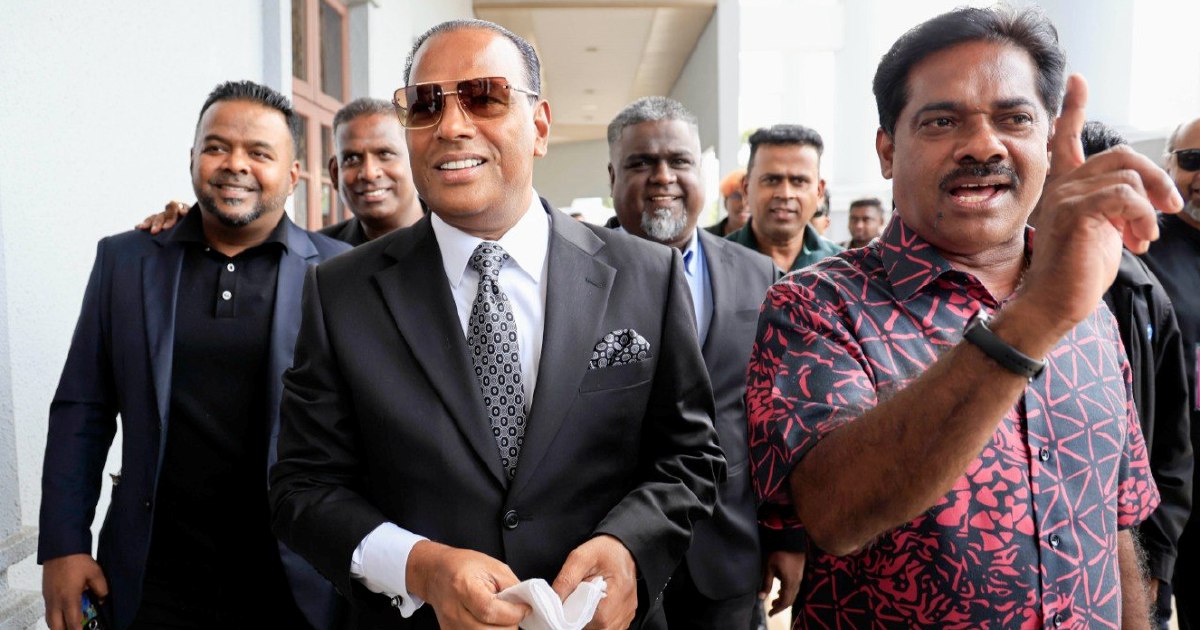
Datuk Seri M. Saravanan, who previously held the portfolio of Human Resources minister, has mounted a robust defence against serious corruption allegations, calling the charges levelled against him a "wild accusation" during recent remarks in Kuala Lumpur. The former minister faces three separate charges of accepting bribes totalling RM1.097 million, placing him at the centre of a significant integrity investigation that has drawn public and political scrutiny.
The charges represent a serious legal challenge for Saravanan, whose tenure in the Human Resources ministry placed him in a position of considerable authority and responsibility. The allegation that he accepted bribes of this magnitude strikes at the core of Malaysia's ongoing anti-corruption efforts, particularly given the government's stated commitment to strengthening accountability among public officials. The timing of these charges comes within a broader period of increased focus on high-level corruption cases, suggesting that investigative agencies are intensifying their scrutiny of alleged misconduct among prominent political figures.
Saravanan's characterisation of the charges as "wild" suggests he intends to mount a vigorous defence, disputing the factual foundation of the allegations. This defensive posture is typical of individuals facing corruption charges, though it raises questions about what evidence led investigating authorities to bring charges in the first place. Malaysian courts will ultimately determine the veracity of these claims, but the former minister's public statements indicate he believes there is insufficient or unreliable evidence supporting the prosecution's case.
The specificity of the amount—RM1.097 million across three charges—suggests that investigators conducted detailed financial tracing to reach their conclusions. This level of precision typically indicates that authorities examined bank records, transaction histories, and other documentary evidence before proceeding to charge. For Malaysian readers concerned about institutional integrity, such detailed investigations may be reassuring, yet the case also highlights vulnerabilities within systems designed to prevent such alleged misconduct among senior officials.
The implications of this case extend beyond Saravanan's individual circumstances. High-profile corruption charges against former ministers inevitably prompt broader discussions about governance standards and the effectiveness of checks and balances within Malaysia's administrative machinery. Public perception of how authorities handle such cases significantly influences confidence in institutions responsible for maintaining integrity across government sectors.
The Human Resources ministry, under which Saravanan served, carries substantial responsibility for personnel management across the civil service and public sector employment matters. Allegations that a minister overseeing such a crucial portfolio accepted bribes raise additional concerns about whether decisions during his tenure may have been influenced by financial considerations rather than merit or public interest. This dimension makes the investigation particularly consequential for evaluating the integrity of decisions taken during his ministerial period.
The legal proceedings ahead will require careful examination of the evidence presented by prosecutors and the defence's counter-arguments. Malaysian courts have established standards for evaluating bribery charges that require demonstrating intent, knowledge, and clear quid pro quo arrangements. Saravanan's legal team will likely challenge the prosecution's ability to prove these elements beyond reasonable doubt, particularly if they argue that his characterisation of the allegations as "wild" reflects genuine evidentiary weaknesses.
For the broader Southeast Asian context, this case reflects ongoing challenges that many regional countries face in combating corruption among political elites. The fact that Malaysian authorities are pursuing charges against a former minister demonstrates institutional capacity, though critics might observe that such investigations often occur after officials have left office rather than during their tenure. This retrospective approach raises questions about real-time accountability mechanisms and how effectively systems deter misconduct before it occurs.
The public attention surrounding Saravanan's case also underscores the importance of transparency in corruption investigations. Media coverage, court proceedings, and public statements help ensure that the justice system functions under scrutiny and that outcomes are subject to public evaluation. This transparency mechanism serves as an important counterbalance to abuse of prosecutorial power while simultaneously requiring fair treatment of the accused throughout the legal process.
As the case proceeds through Malaysia's courts, several interested constituencies will monitor developments closely: civil service employees concerned about ministerial oversight of their sector, political observers tracking integrity issues within government, and ordinary Malaysians evaluating whether institutions are effectively addressing high-level corruption. The outcome will carry significance beyond the individual defendant, potentially setting precedents for how similar cases are prosecuted and adjudicated in Malaysian courts and influencing public discourse about accountability standards for government officials.

