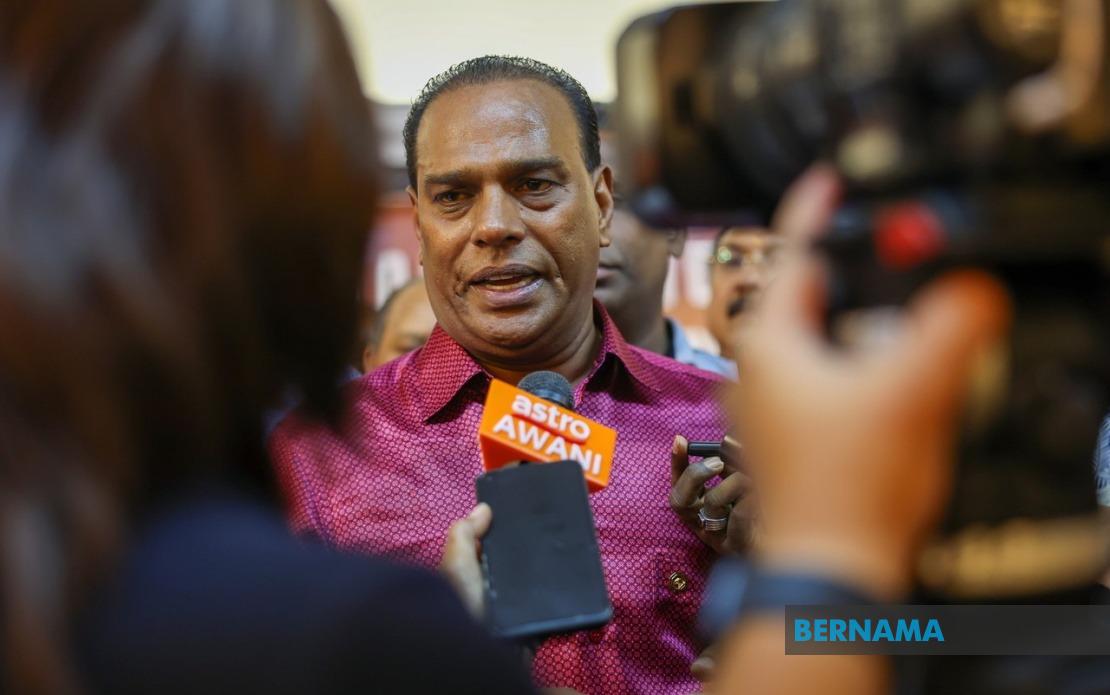
Former Human Resources Minister Datuk Seri M. Saravanan confirmed on Wednesday that he will be charged in the Sessions Court here on Thursday, marking a significant development in a corruption investigation that has drawn scrutiny to the government's handling of workforce policies during the COVID-19 crisis. The Tapah MP and MIC deputy president disclosed his impending court appearance through a video statement released to journalists, asserting his readiness to defend himself against the allegations.
The charges relate to assertions concerning the recruitment of foreign workers during 2022, a period when Malaysia was in the midst of pandemic recovery. According to Saravanan's account, the original allegations originated from a third party who subsequently died two months before his statement. This timeline raises questions about the evidentiary foundation of the case and the investigative pathway that led authorities to pursue charges against the former minister.
In a significant detail that may strengthen his defence, Saravanan revealed that the individual who made the initial allegations later submitted a Statutory Declaration formally retracting those accusations. This development suggests potential complications in the prosecution's case, as a primary witness has both died and previously renounced the allegations through a legal mechanism. Saravanan stated unequivocally that he had never contacted or communicated with the witness through any medium, including phone calls or text messages.
The former minister emphasised his commitment to the legal process despite the apparent weakening of the evidence against him. His explicit statement that he remains "prepared to defend myself and face this charge according to the law" signals confidence in his ability to address the allegations, though it also underscores the seriousness with which he views the proceedings. For Malaysian observers, the case represents a test of whether evidence from a deceased witness and contradictory Statutory Declarations will support sustained prosecutorial action.
The Malaysian Anti-Corruption Commission (MACC) issued the media invitation regarding the charges on Wednesday, confirming that Saravanan will be prosecuted under Section 16 of the MACC Act 2009. This provision concerns soliciting, receiving, giving, promising, or offering a bribe, establishing that the investigation has focused on potential graft rather than administrative or regulatory violations. The specific statutory framework being invoked suggests investigators believe the foreign worker recruitment issue involved corrupt inducements or gratification.
The backdrop of foreign worker policy during the pandemic adds context to understanding why such allegations warrant MACC involvement. Malaysia's economy depends substantially on migrant labour, and government decisions about foreign workforce recruitment during 2022 carried significant implications for employers, workers, and public finances. Any suggestion that such decisions were influenced by corrupt arrangements would strike at the heart of fair and merit-based policymaking during a critical economic period.
Saravanan's legal team plans to file an expedited trial application on Thursday, indicating the defence's strategy to move quickly toward resolution rather than engage in protracted preliminary proceedings. This approach may reflect confidence in the strength of his position, particularly given the retraction by the primary witness and the witness's subsequent death. An expedited trial could also serve the former minister's interests by maintaining public attention and preventing prolonged uncertainty about the case's outcome.
The case carries implications extending beyond Saravanan's personal legal jeopardy. As a prominent MIC figure, any conviction would reverberate through Malaysia's coalition politics and racial community representations. The Democratic Action Party, PKR, and other opposition groupings will likely monitor the proceedings closely to assess whether the government coalition's own members face equal prosecution scrutiny compared to opposition figures. Such comparative analysis shapes public confidence in anti-corruption institutions.
From a broader Southeast Asian perspective, Malaysia's handling of high-profile corruption cases involving government ministers reflects the region's ongoing struggle to balance accountability with political stability. Thailand, the Philippines, and Indonesia have faced similar tensions when investigating sitting or recently departed officials. The MACC's willingness to pursue charges against a minister from the governing coalition suggests institutional independence, though observers will assess whether the case's evidential weaknesses—particularly the deceased witness and retracted allegations—should have prevented prosecution.
The foreign worker dimension of this case also resonates throughout Southeast Asia, where cross-border labour mobility remains contentious. Singapore, Thailand, and other regional economies grapple continuously with balancing domestic worker protections against employer demands for migrant labour. If Saravanan's prosecution stems from allegations that he facilitated inappropriate foreign recruitment, it underscores ongoing challenges in maintaining transparent and equitable hiring practices during periods of crisis when rule enforcement typically weakens.
As Saravanan prepares to enter court, Malaysian observers will scrutinise both the substantive evidence presented and the procedural fairness extended to a senior political figure. The case may ultimately reveal whether Malaysia's anti-corruption framework can sustain charges against powerful individuals when foundational evidence has been undermined by witness death and retraction. The outcome will likely influence future MACC prosecutions and public perceptions of whether elite accountability applies uniformly or remains selective.
The former minister's composure in addressing the charges through a prepared video statement, combined with his legal team's aggressive expedited trial strategy, suggests he views his position as defensible on the merits. Whether the court agrees will depend substantially on evidence beyond the deceased witness's retracted allegations. The proceedings will unfold under intense scrutiny from Malaysia's political establishment and civil society observers monitoring whether institutions can investigate and prosecute corruption fairly regardless of a defendant's political standing.

