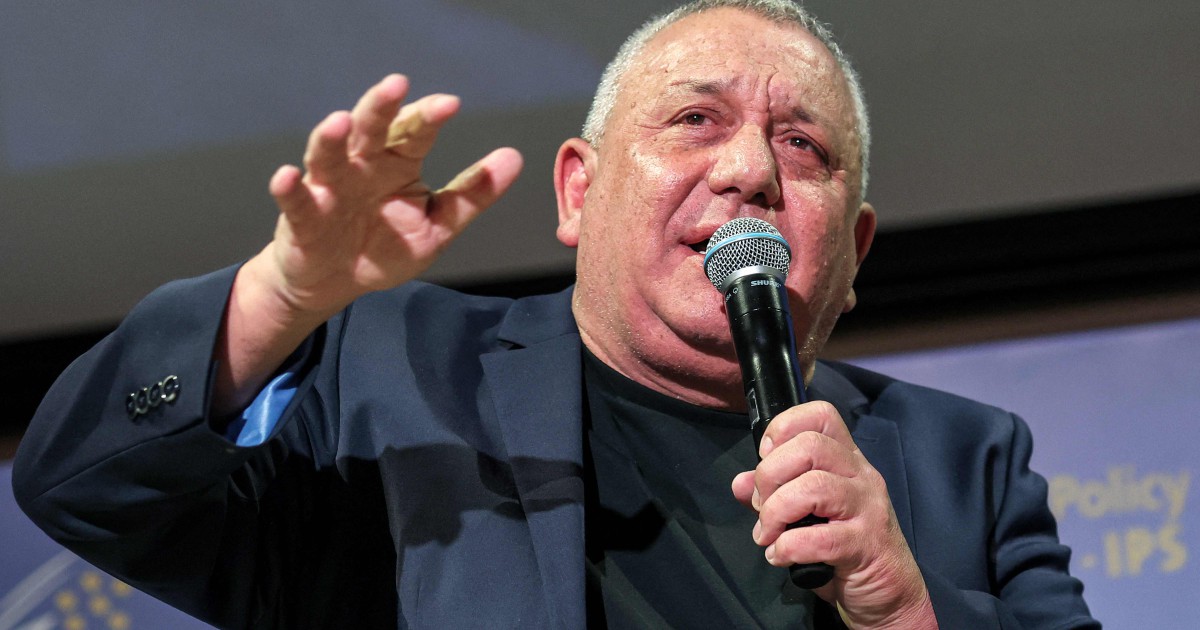
As Israel approaches its general election on October 27, former military chief Gadi Eisenkot has crystallised into Prime Minister Benjamin Netanyahu's most formidable political opponent, marking a potentially consequential shift in the country's fractious electoral landscape. The emergence of Eisenkot as the centrepiece of the opposition challenge reflects mounting discontent with Netanyahu's decade-long grip on power and signals that security credentials may prove decisive in swaying undecided voters.
Eisenkot's ascent carries particular weight in the Israeli context, where military service and combat experience hold substantial sway over public perception. His background as former chief of the Israel Defense Forces provides him with institutional credibility that many traditional political rivals lack, offering voters a tangible alternative framed not through ideological positioning alone but through demonstrable executive experience in Israel's most sensitive security apparatus. This positioning allows Eisenkot to contest Netanyahu's traditional claim to be the only figure capable of managing national security concerns that dominate Israeli political discourse.
The timing of Eisenkot's emergence as the focal point of opposition campaigns reflects deeper structural dynamics within Israeli politics. Netanyahu's tenure has witnessed persistent legal challenges, controversy surrounding judicial reform initiatives, and questions about the government's direction following significant military operations. These factors have created political space for challengers to position themselves as stabilising forces rather than revolutionary alternatives, a strategy that Eisenkot's military background naturally facilitates.
Eisenkot's challenge to Netanyahu occurs within a broader fractionalisation of Israeli politics, where no single party commands overwhelming parliamentary support. This fragmentation typically necessitates coalition-building and compromise among multiple factions, creating opportunities for personalities with cross-partisan appeal. Eisenkot's military heritage positions him as someone potentially capable of bridging divisions that have historically plagued Israeli electoral coalitions, though translating such appeal into actual governmental formation remains a distinct challenge.
The prospective contest between Netanyahu and Eisenkot carries implications extending beyond Israel's immediate political sphere. Regional actors across the Middle East closely monitor Israeli domestic politics, particularly leadership transitions, as these directly influence diplomatic postures, military policies, and strategic orientations toward neighbours. A potential shift from Netanyahu's lengthy stewardship toward a new leadership model could signal recalibrations in Israel's approach to longstanding conflicts and negotiations.
For Malaysian observers and Southeast Asian analysts monitoring developments in the Eastern Mediterranean, Israeli elections represent important indicators of broader Middle Eastern stability. Leadership changes in Israel frequently precipitate shifts in regional alliance structures, arms procurement patterns, and military doctrine that produce ripple effects across international relations frameworks affecting global partners, including ASEAN nations with complex relationships spanning security partnerships, trade arrangements, and diplomatic engagement.
Eisenkot's prospective challenge also reflects generational dynamics within Israeli political culture. While Netanyahu represents continuity and institutional entrenchment accumulated over multiple electoral cycles, Eisenkot embodies a potentially fresher approach, even within the security establishment. This generational dimension may resonate particularly strongly with younger Israeli voters seeking alternatives to long-standing political personalities whose tenure has become synonymous with various controversies and polarisations.
The electoral contest scheduled for October 27 represents the culmination of months of political manoeuvring, coalition arrangements, and campaign positioning by multiple parties and candidates. Eisenkot's consolidation as the principal opposition figure suggests that the election will largely crystallise around competing visions of leadership and governance rather than dramatic ideological transformations. This binary-focused contestation may simplify electoral choices for many voters but simultaneously risks narrowing the scope of policy debate beyond security-dominated frameworks.
Looking forward, the outcome on October 27 will substantially determine Israel's political trajectory for years ahead. Should Eisenkot succeed in displacing Netanyahu from the premiership, it would represent a significant culmination of electoral dynamics that have been building throughout Netanyahu's extended tenure. Conversely, a Netanyahu victory would validate his political resilience despite facing formidable institutional and electoral pressures, consolidating his position as Israeli politics' dominant figure across multiple consecutive electoral cycles.
The broader significance of this electoral contest extends to how Israeli voters balance competing priorities regarding security concerns, economic management, social cohesion, and governance stability. Eisenkot's emergence as the centrepiece of opposition efforts suggests that Israeli electorates perceive sufficient grounds for reconsidering leadership continuity, even among candidates whose careers remain substantially embedded within existing institutional frameworks. This dynamic will shape not only Israel's immediate political future but potentially influence regional alignments and international relations frameworks affecting the wider Eastern Mediterranean and Middle Eastern policy environments.

