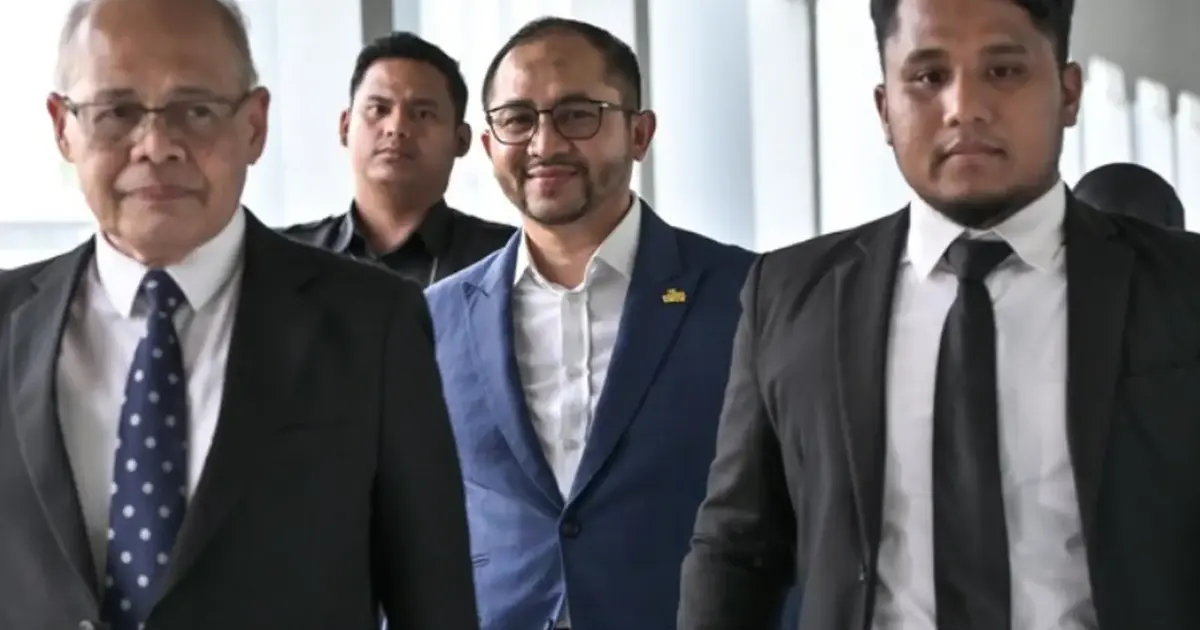
A managing director has told the court that he faced sustained pressure from a former political secretary to hand over roughly half of a substantial consultancy fee he had received in connection with a police department tender. Khairi Mat Jahya provided testimony detailing the alleged demands made by Sayed Amir Muzzakkir Al Sayed Mohamad, who previously served as a political aide to a senior government figure.
The initial contract that sparked the dispute was valued at RM19 million and emerged from a police procurement process. According to Khairi's account, the consultancy arrangement was concluded and the fee had been secured by his company. However, the transition from successful contract award to actual fee collection became fraught when the former aide asserted what he viewed as an entitlement to a significant portion of the proceeds.
Sayed Amir Muzzakkir's demands centred on obtaining approximately RM9 million, representing roughly half of the total RM19 million contract value. The pattern of pressure described by the witness suggests this was not a one-time request but rather an ongoing matter that escalated sufficiently to warrant legal action. The nature of such demands—where someone associated with political or governmental circles seeks a cut from business transactions—raises questions about the boundaries between legitimate political fundraising and inappropriate extraction of private business proceeds.
This case arrives at a moment when Malaysia's business and political communities remain acutely sensitive to questions about rent-seeking behaviour and the improper use of political connections for financial gain. The alleged conduct, if proven, would exemplify concerns that have animated recent governance reforms: the need to prevent public office holders and their associates from leveraging their positions to secure unearned financial benefits from private sector activities.
The police tender context adds institutional weight to the allegations. Government procurement processes, particularly those involving law enforcement agencies, are meant to operate on merit and transparent criteria. When individuals within the political orbit of decision-makers appear to demand cuts from successful bidders, the integrity of those processes comes into question. This pattern can distort competition, discourage qualified bidders from participating, and ultimately compromise the public sector's ability to obtain value for money.
Khairi's willingness to testify publicly about these demands reflects a broader shift in Malaysia's legal landscape, where witnesses increasingly come forward to document what they characterise as improper financial extraction schemes. The court proceedings themselves signal official willingness to scrutinise such allegations, though such cases often hinge on documentary evidence, communications records, and corroborating witnesses rather than assertion alone.
The role of a political secretary warrants particular examination. These positions typically exist in a grey zone between genuine administrative functions and more problematic influence-peddling arrangements. A political secretary who maintains contacts with government officials and business leaders can legitimately facilitate meetings or provide advice. However, when such roles are weaponised to extract financial benefits from those seeking government contracts, the line between appropriate political work and improper coercion becomes unmistakably crossed.
For Malaysian businesses engaged in tendering for government contracts, cases of this nature reinforce the importance of documentation, refusing informal demands, and reporting attempts at improper fee-sharing to appropriate authorities. The RM9 million figure involved here represents exactly the kind of substantial claim that typically becomes impossible to conceal, as it would show up in financial records or require unusual banking transactions. Such high-profile demands often become vulnerabilities for those making them, as they generate documentation and create witness testimony.
The case also underscores why transparency in political funding and disclosure of conflicts of interest remain crucial governance issues. In jurisdictions where such mechanisms are weak, those with political proximity maintain incentive to pursue aggressive fee-sharing arrangements. Strengthening asset declarations, campaign financing rules, and consequences for undisclosed financial benefits would reduce the prevalence of such allegations.
Regional observers have noted that South-East Asian countries continue grappling with similar issues around political patronage networks and business capture. Malaysia's willingness to prosecute such cases, when accompanied by credible testimony and evidence, distinguishes it from jurisdictions where such conduct remains entirely normalised and unpunished.
The court will ultimately need to weigh Khairi's testimony against any defence mounted by Sayed Amir Muzzakkir, examining documentary evidence, communication records, and any other witnesses who can speak to the transactions and demands in question. The proceedings carry implications extending beyond the two parties involved, as they test whether Malaysia's legal institutions can effectively constrain attempts by politically connected individuals to extract unearned rents from legitimate business activities.

