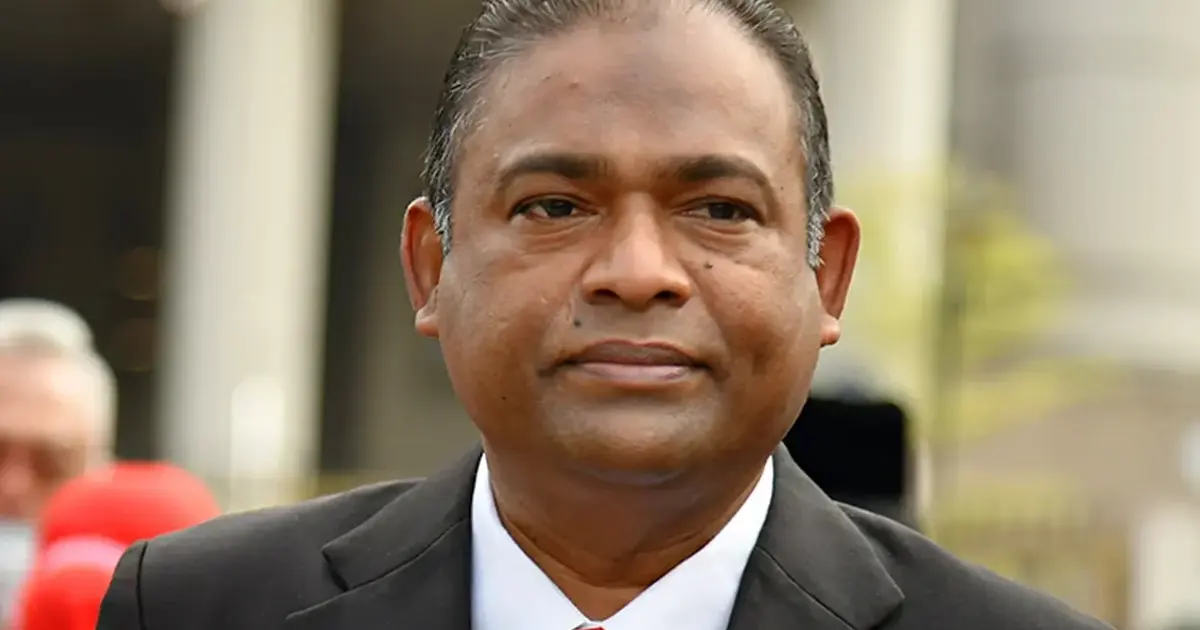
Rumours that former Baling Member of Parliament Abdul Azeez Abdul Rahim had been detained by the Malaysian Anti-Corruption Commission have circulated extensively across social media platforms since yesterday evening, prompting his family to issue a public clarification on the matter. The speculation intensified overnight, with various unverified claims gaining traction among online users discussing the former legislator's whereabouts and legal status.
The son of Abdul Azeez Abdul Rahim has now moved to quash these allegations, making a direct statement that his father has not been apprehended by any enforcement agency and remains at liberty. This intervention was deemed necessary given the breadth of the misinformation campaign and its potential to damage the former politician's reputation in the absence of factual corroboration.
Abdul Azeez Abdul Rahim's most recent prominent public position was as chairman of Tabung Haji, the Islamic pilgrimage fund and financial institution that manages savings and investments for Malaysian Muslims preparing for their hajj journeys. His tenure at the institution places him within circles of significant public responsibility and fiduciary obligation, which likely explains why speculation about his detention attracted such immediate attention across Malaysian social networks.
The swift circulation of unverified claims highlights the vulnerability of public figures in an era where social media enables rapid dissemination of information without the constraints of traditional editorial verification. In this case, the absence of any official statement from law enforcement or regulatory authorities appears not to have deterred the spread of allegations, underscoring the challenges faced by prominent individuals seeking to manage their public image during periods of unsubstantiated rumour.
The Malaysian Anti-Corruption Commission, which operates under the purview of the Prime Minister's office, regularly conducts investigations into allegations of misconduct involving public officials and figures in positions of trust. When the MACC does take enforcement action, such steps are typically communicated through official channels, though operational sensitivities sometimes result in delayed public acknowledgment. The absence of any such official notification in this instance lends credence to the family's denial.
Tabung Haji itself has faced significant scrutiny in recent years regarding its financial management and governance structures. Various investigations and regulatory reviews have examined the institution's investment decisions and administrative practices, making individuals associated with its leadership subject to heightened public interest and speculation. This institutional context may have amplified the resonance of the unverified claims in this case.
The incident reflects a broader pattern affecting Malaysian public discourse, where allegations circulate with considerable velocity before verification mechanisms can be engaged. Social media algorithms tend to amplify sensational content, creating conditions where speculation and misinformation gain prominence disproportionate to their factual foundation. For individuals in the public eye, managing such narratives requires rapid response and clear communication, as silence can be misinterpreted as an admission of guilt.
Family members of public figures increasingly find themselves positioned as defenders of reputation and character, obliged to address allegations in public forums rather than through conventional legal or institutional channels. The family's intervention in this case demonstrates the necessity for those close to prominent individuals to actively counter false narratives, particularly when official authorities have not issued statements to clarify the situation.
The former Baling MP's family statement serves as a reminder of the importance of source verification in an environment where information spreads instantaneously across multiple platforms. Without reliance on credible reporting or official sources, the social media ecosystem becomes vulnerable to the amplification of unsubstantiated claims that can persist despite lacking any factual basis.
For Malaysian public discourse, this episode underscores the ongoing tension between the speed of digital communication and the rigour required for accurate reporting. While the family's denial should provide clarity to those seeking reliable information about Abdul Azeez Abdul Rahim's status, the incident demonstrates how readily unverified allegations can dominate conversation spaces before facts have opportunity to establish themselves.
Going forward, this situation may serve as a case study in media literacy and information verification during an election cycle or period of heightened political activity. The rapid mobilisation of speculation about a prominent figure's potential legal troubles, regardless of factual foundation, illustrates how vulnerable democratic discourse can become when critical thinking and source evaluation are displaced by the reflexive sharing of sensational content.

