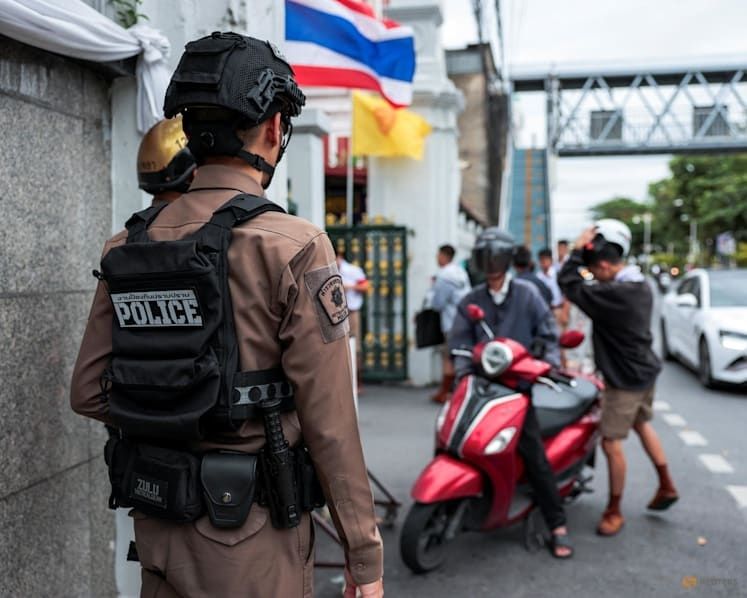
Authorities in Thailand have detained a former member of parliament in connection with a shooting incident that left two men wounded in Nonthaburi province, just north of the capital Bangkok. The arrest of Chalong Riewrang on Monday underscores the escalating gun violence troubling the kingdom and comes amid heightened scrutiny over firearm regulations following a devastating school shooting in the same region just days earlier.
The victims of the alleged attack included the chairman of the Nonthaburi local government administration, who sustained serious injuries, and a male driver who accompanied him. Both men were receiving medical treatment at a hospital when police chief Dejrapee Kongdee confirmed the arrest to international media. Investigators indicated they were actively examining Chalong's motivation for the incident, though specific details about the circumstances surrounding the shooting remained limited in initial police statements.
Chalong, who previously served as a local parliamentarian representing the region, was affiliated with Prime Minister Anutin Charnvirakul's political party. This connection raises questions about factional tensions within Thai politics and the types of disputes that might precipitate violence among prominent figures. The alleged shooting appeared rooted in a private disagreement rather than political maneuvering, according to reporting from local news outlets, though police authorities declined to elaborate on potential triggers for the violence.
The timing of this incident is particularly significant given that Nonthaburi province experienced a tragedy of far greater magnitude merely days before. On Friday, a 14-year-old student opened fire at his school after first killing the elderly grandparents who had raised him, ultimately taking eight lives before turning his weapon on himself. That massacre intensified national conversation about the accessibility of firearms and the adequacy of existing safety regulations.
Thailand's relationship with firearm ownership distinguishes it significantly from many regional neighbours. Current estimates indicate approximately ten million firearms circulate throughout the country—a ratio of roughly one gun per seven inhabitants—reflecting one of Southeast Asia's highest rates of civilian gun ownership. This prevalence has created an environment where deadly force remains a recourse for settling disputes, whether personal or political, despite the documented human costs of such access.
Previous episodes of gun violence have regularly prompted government officials to announce intentions toward stricter regulatory frameworks. However, these repeated commitments have consistently failed to translate into meaningful implementation or measurable reductions in shooting incidents. The gap between official rhetoric and actual policy change has become increasingly apparent to observers and citizens alike, suggesting structural barriers to reform exist within Thailand's political and bureaucratic systems.
The back-to-back incidents in Nonthaburi have renewed focus on whether Thailand's authorities possess either the political will or administrative capacity to implement substantive gun control measures. International observers note that cultural attitudes toward firearm ownership, combined with weak enforcement mechanisms and widespread black-market availability, create formidable obstacles to reform efforts. For Malaysia and other Southeast Asian nations monitoring the situation, Thailand's ongoing struggles offer cautionary lessons about the challenges of regulating private weapons once widespread ownership becomes normalized.
For Malaysian readers particularly, the contrast between regional approaches to gun control warrants consideration. Malaysia maintains comparatively stringent firearms regulations and strict licensing requirements, resulting in far lower civilian gun ownership rates. The trajectory of violence in Thailand—where regulations have proven ineffective—contrasts sharply with Malaysia's more restrictive framework, suggesting that early and sustained enforcement of strict standards yields better public safety outcomes than attempting to impose restrictions after widespread ownership becomes entrenched.
The investigation into Chalong's alleged actions will likely reveal details about the nature of the dispute and whether any prior warning signs existed. Such information could inform broader policy discussions about threat assessment and early intervention mechanisms. As authorities in Bangkok prepare to announce additional gun control measures, questions persist about whether such initiatives can achieve meaningful results or whether Thailand's gun violence epidemic reflects deeper structural challenges within the nation's legal, enforcement, and social systems that extend beyond firearms regulation.

