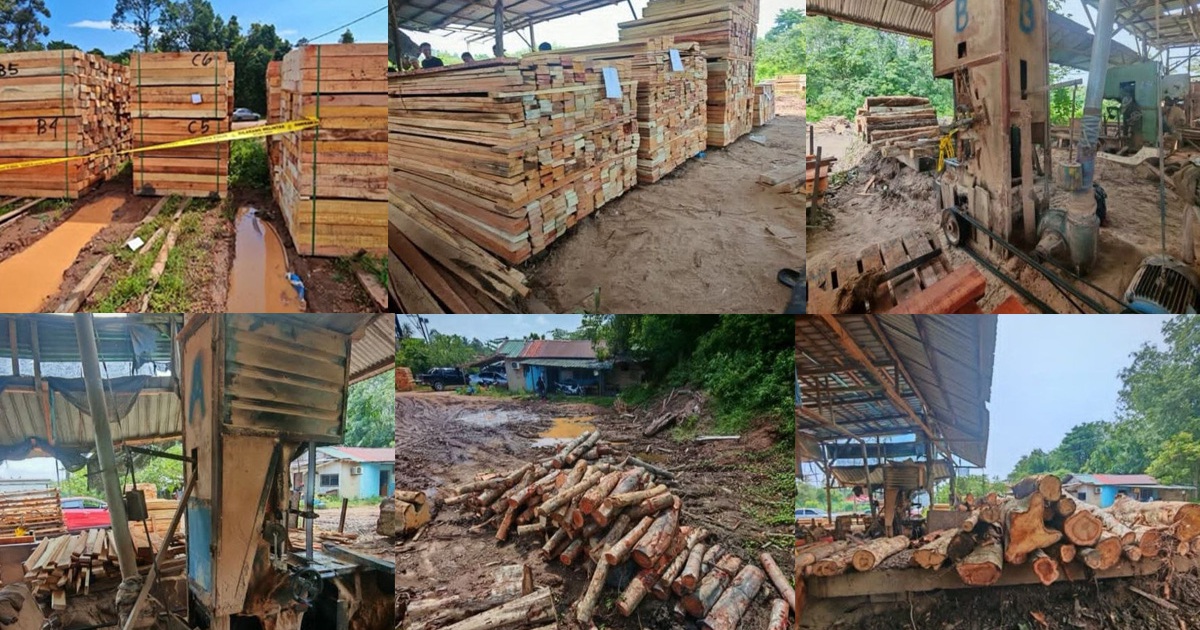
An enforcement operation targeting illegal logging activities in Kelantan has resulted in the arrest of four individuals, including an unlicensed sawmill operator and three of his workers. The raid, conducted in Kampung Bukit Kechik in Tanah Merah district, uncovered extensive evidence of timber processing operations conducted without proper authorisation, leading to the seizure of materials and equipment worth RM600,000.
The operation represents a continuation of regulatory efforts to combat unauthorised timber milling in the state, an issue that has long concerned both environmental advocates and government enforcement agencies. Kelantan has historically been a focal point for timber-related concerns, with its dense forest reserves making it susceptible to both legal and clandestine logging operations. The raid highlights the ongoing challenge authorities face in monitoring remote processing facilities that operate outside formal regulatory frameworks.
The confiscation of RM600,000 in timber stocks and machinery suggests a substantial operation, indicating that the facility may have been functioning for some time and potentially processing considerable quantities of raw materials. Such facilities typically require significant capital investment in milling equipment, suggesting the operator may have been conducting business at a meaningful commercial scale despite the lack of requisite licensing and compliance documentation.
Unlicensed timber milling operations create multiple regulatory complications for Malaysian authorities. Beyond the direct legal violations related to processing timber without proper permits, such facilities often generate environmental concerns including inadequate waste management and lack of adherence to sustainable harvesting principles. The absence of formal oversight means these operations exist outside established monitoring systems designed to track timber origins and ensure compliance with forestry regulations.
For Kelantan specifically, addressing unauthorised timber processing has proven complex due to the state's vast forestry resources and the economic incentives surrounding timber extraction. The district of Tanah Merah, where this facility was located, encompasses significant forested areas that require consistent enforcement presence to prevent illicit activity. Each successful raid provides authorities with enforcement data and intelligence that can inform future operations targeting similar unlicensed facilities.
The four individuals facing charges represent different roles within the operation. The sawmill operator bears responsibility as the principal party authorising and overseeing activities, while the three workers would have been engaged in the direct processing and handling of timber. Prosecutorial outcomes in such cases typically depend on factors including the scale of operation, duration of illegal activity, and whether this represents a first or repeat offence.
This enforcement action occurs within Malaysia's broader regulatory framework governing timber and forestry resources. The country maintains licensing systems intended to ensure that only authorised entities process timber, with requirements designed to promote sustainability, proper record-keeping, and environmental accountability. When these systems function effectively, they protect legitimate timber businesses operating under proper certification while deterring competitors from circumventing formal approval processes.
From a regional perspective, Malaysia's capacity to maintain timber sector integrity remains important for its international standing on forestry governance. Export markets and trading partners increasingly scrutinise timber sourcing documentation, and enforcement against unlicensed processing supports Malaysia's credibility in certifying that exported timber originates from legitimate, regulated supply chains. Such operations undermine confidence in the entire system.
The value of seized assets in this case—RM600,000—reflects equipment, inventory, and work-in-progress materials likely worth more than the immediate fine that would typically be imposed for operating without licenses. This substantial confiscation aims to impose genuine economic consequences that discourage future illegal milling ventures. The seizure serves both as enforcement outcome and as deterrent messaging to other potential operators in the region.
Local communities and surrounding businesses have competing interests when clandestine timber operations are addressed. While unlicensed facilities may provide employment to workers and supply materials to construction sectors at lower cost, the regulatory violations create broader negative externalities including environmental degradation and undermining of legitimate businesses attempting to operate within formal frameworks. The enforcement action therefore serves stakeholders extending beyond immediate regulatory concerns.
Moving forward, the investigation into how these four individuals sourced their timber, who their customers were, and how long the facility operated will likely generate additional intelligence for authorities pursuing wider enforcement campaigns. Understanding supply and demand networks surrounding unlicensed milling helps enforcement agencies target upstream and downstream actors within these informal timber processing economies.
The successful execution of this raid demonstrates that enforcement infrastructure exists to detect and act against illegal operations, though the continued emergence of unlicensed facilities suggests that the scale of clandestine activity likely exceeds the number of operations actually detected and disrupted. The RM600,000 seizure represents one enforcement success, yet authorities acknowledge that comprehensive oversight of all facilities operating across Malaysia's extensive timber regions remains operationally challenging.

