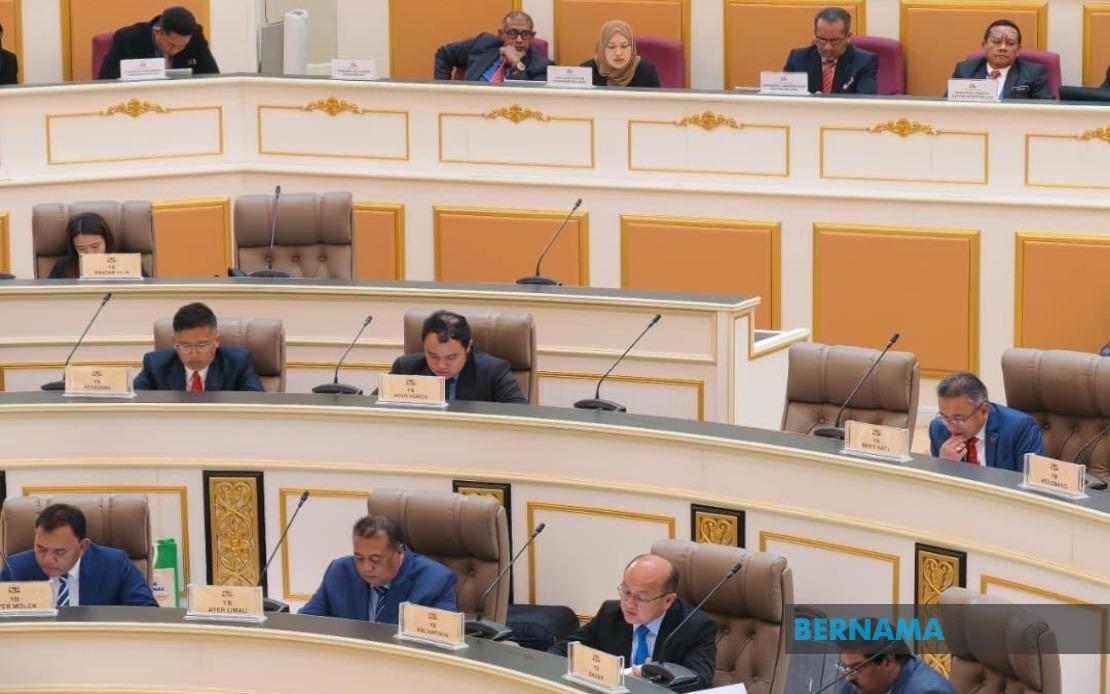
A significant political realignment unfolded in Melaka on the final day of the state assembly sitting on July 15, as four Democratic Action Party (DAP) representatives shifted from the government side of the chamber to join the opposition bloc. The repositioning of Allex Seah Shoo Chin (Kesidang), Low Chee Leong (Kota Laksamana), Leng Chau Yen (Banda Hilir), and Kerk Chee Yee (Ayer Keroh) reflected the party's decision announced the previous day to sever its support for the Barisan Nasional (BN)-administered state administration, marking a notable fracturing within the ruling coalition.
The four relocated assemblymen now occupy seats alongside members representing Perikatan Nasional and independent candidates. However, the situation remains complicated by the fact that Adly Zahari, the sole Parti Amanah Negara (Amanah) representative and Melaka Pakatan Harapan (PH) chairman, opted to maintain his position within the government bloc rather than align with the departing DAP members. This divergence highlights the complexity of managing multiparty coalitions at the state level, where component parties may hold divergent positions on critical governance questions.
The withdrawal of DAP from Melaka's governing arrangement represents a response to the state assembly's passage of constitutional amendments that would enable the appointment of nominated assemblymen without electoral competition. Melaka DAP chairman Khoo Poay Tiong articulated the party's objection, positioning the amendments as fundamentally incompatible with democratic principles and the sanctity of electoral processes. For many Malaysian observers, the episode underscores the ongoing tensions between ruling coalitions and their constituent parties over matters of democratic governance and institutional reform.
Prime Minister Datuk Seri Anwar Ibrahim had previously appealed to the Melaka DAP leadership to reconsider the timing of their decision, advocating for a postponement to preserve governmental focus on development initiatives and populist welfare concerns. His intervention reflects the federal government's interest in maintaining coalition stability at the subnational level, even when individual member parties express fundamental disagreements with state-level policies. The unsuccessful plea also demonstrates the limits of federal-level persuasion when state parties feel their core principles are at stake.
The constitutional amendments in question represent a broader debate within Malaysia's political system regarding the balance between appointed and elected representation. Proponents of the measures argue that nominated seats allow for technocratic expertise and minority representation, while critics contend that such provisions dilute the direct democratic mandate conferred through elections. The Melaka episode exemplifies how this tension plays out in practice, with the DAP taking a principled stance against what it perceives as the erosion of electoral legitimacy.
Assembly Speaker Datuk Ibrahim Durum's exhortation that members conduct themselves with discipline, decorum, and courtesy during proceedings on the day of the repositioning suggests that the debate proceeded without major disruption, despite the underlying political tension. The maintenance of procedural order, even during moments of coalition fracturing, reflects institutional maturity within the state legislature. Nevertheless, the formal rearrangement of seating positions carries symbolic weight in parliamentary practice, visibly marking the shift in political alignments.
For Southeast Asian observers, the Melaka situation illustrates challenges that multiparty democracies face when managing coalition governments. The region has witnessed numerous instances of coalition instability, party realignments, and disputes over constitutional amendments. Malaysia's experience demonstrates that even in relatively institutionalized democracies, coalitions require ongoing negotiation and occasional accommodation of member party concerns. The fact that DAP was willing to sacrifice its role in state government rather than acquiesce to constitutional changes it opposed suggests that democratic principle, rather than purely opportunistic power-seeking, remains a factor in Malaysian political calculations.
The split between DAP and Amanah, despite their shared opposition coalition parentage, reveals the heterogeneity within broader political alliances. While both parties are nominally part of Pakatan Harapan, they demonstrated differing risk tolerances regarding the constitutional amendments and the consequences of withdrawal from government. Amanah's decision to remain within the government bloc while DAP departed may reflect either a different assessment of the amendments' severity or distinct political calculations regarding future electoral prospects in the state.
The implications of this realignment extend beyond Melaka's immediate political dynamics. Coalition stability at the state level remains crucial for the federal government's broader political strategy, particularly given Malaysia's federal structure and the significant autonomy exercised by state administrations. The withdrawal of a component party from the ruling coalition, irrespective of its size, sets precedents that may influence negotiations and positions taken by member parties in other states. Additionally, the episode may embolden voices within various parties calling for greater clarity regarding each member's red lines and non-negotiable principles within coalition arrangements.
The positioning of the four DAP assemblymen within the opposition bloc also restructures the numerical balance of forces within the Melaka State Legislative Assembly. While the BN-led government presumably retains its majority without the four DAP members, the loss of these representatives diminishes the coalition's margin and potentially limits its ability to pursue controversial legislation or constitutional amendments without facing significant internal dissent. The Amanah representative's continued support provides some mitigation, yet the coalition's governance capacity has undoubtedly been weakened.
Moving forward, the questions of whether DAP might eventually return to government, under what conditions negotiations might occur, and whether other states experience similar withdrawals remain open. The Melaka case demonstrates that while parties may prioritize their participation in government, they reserve the right to exit coalitions when fundamental democratic principles appear threatened. This dynamic, while complicating coalition management, ultimately reflects a commitment to principled political behavior that goes beyond simple calculation of ministerial positions and political patronage.
The broader Malaysian political landscape continues to evolve as parties navigate the complex terrain of coalition politics, constitutional governance, and electoral legitimacy. The Melaka DAP's action serves as a reminder that modern Malaysian politics, despite its complexities and occasional instability, retains an undercurrent of concern for democratic integrity. Whether this principled stance will influence broader trends toward greater coalitional discipline or further fragmentation remains to be seen, but the episode has undoubtedly marked a significant moment in the state's recent political evolution.

