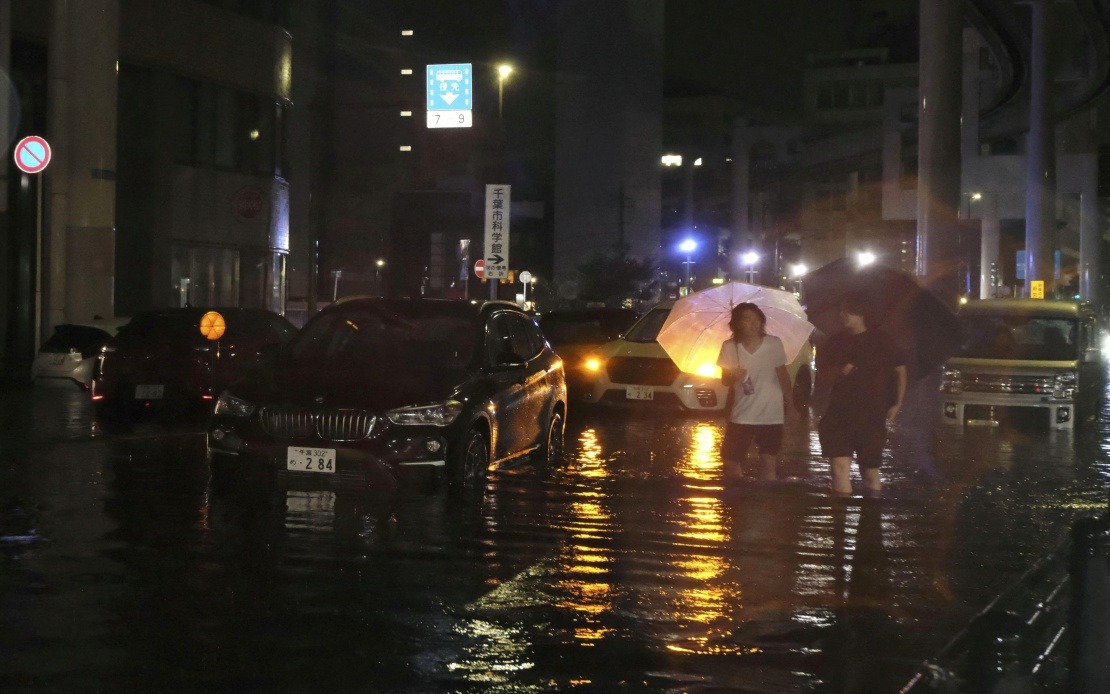
Four people have died and another remains unresponsive following an intense weather system that battered eastern Japan's Chiba Prefecture with torrential rain throughout Thursday and into Friday morning. The Japan Meteorological Agency activated its maximum alert level—designated Level 5—for rainfall across more than one-third of the prefecture's municipalities, marking an exceptionally severe weather event. The deluge transformed roads into rivers, prompting authorities in major urban centres including Chiba and Ichikawa to issue urgent public safety directives.
The meteorological conditions proved especially hazardous due to the collision of warm, moisture-laden air masses moving into eastern Japan with a cold air layer positioned above. This atmospheric instability created the ideal recipe for record-breaking precipitation, a phenomenon that forecasters expect may continue through Friday across Chiba and neighbouring areas. The intensity of the downpour proved particularly striking in certain locations: Chiba's Chuo Ward experienced hourly rainfall of 115 millimetres Thursday night, equivalent to the entire month of August's typical precipitation in ordinary years.
Emergency authorities coordinated one of the largest evacuation efforts in recent memory, with orders initially affecting more than 400,000 residents across Chiba and neighbouring Ibaraki prefectures. Though the situation improved by Friday morning, approximately 126,000 people remained under evacuation orders across both prefectures, underscoring the persistent threat posed by flooding and potential mudslides. The Japan Meteorological Agency complemented its rainfall warning with a Level 5 landslide alert covering multiple municipalities in Chiba and Ichihara, though both warnings were subsequently downgraded on Friday morning as conditions stabilized.
The scale of displacement required establishing over 200 evacuation centres distributed across Chiba, Ibaraki, Saitama, and Gunma prefectures to accommodate displaced residents. The prefectural government building itself accommodated approximately 1,800 stranded commuters unable to reach their homes as transportation networks deteriorated. These facilities represented critical infrastructure for providing shelter, water, and medical attention to vulnerable populations caught in the emergency.
Urban infrastructure suffered extensive damage throughout the affected areas. In Chiba city, water surged from underground utility access points, creating dangerous conditions on streets and in residential neighbourhoods. Pedestrians found themselves wading through water reaching knee height as they attempted to navigate toward their homes. Power failures compounded residents' difficulties, with Tokyo Electric Power Company Holdings Inc. reporting approximately 45,000 homes without electricity at the peak of the crisis, leaving affected households without air conditioning, refrigeration, and essential communications during an already stressful situation.
For Malaysia and Southeast Asia, this disaster underscores the intensifying weather volatility increasingly common across the region as climate patterns shift. Chiba's experience demonstrates how rapidly developing urban areas remain vulnerable to extreme precipitation events, particularly where aging drainage infrastructure cannot accommodate unprecedented rainfall volumes. Southeast Asian cities experiencing comparable tropical monsoons should note that even technologically advanced nations with sophisticated warning systems face significant challenges when atmospheric conditions create exceptional weather scenarios.
The Japanese government's response revealed both the strengths and limitations of modern disaster management frameworks. While evacuation coordination and shelter provision operated efficiently, the four fatalities indicate that prevention remains elusive when meteorological conditions produce such intense precipitation. Malaysian authorities and regional governments might consider whether their own early warning systems, evacuation protocols, and emergency shelter capacities would suffice should comparable weather events develop locally.
The incident also highlights infrastructure vulnerabilities that transcend national boundaries. Underground utility systems, particularly water management and electrical networks, face design challenges when confronted with precipitation rates that exceed historical norms. As climate science projects more frequent extreme weather in coming decades, regional policymakers must weigh expensive infrastructure upgrades against the escalating costs of disaster response and recovery.
Chiba's flooding represents a cautionary case study in urban resilience for rapidly developing Southeast Asian economies. The prefecture, located near Japan's capital region and representing one of the world's most developed areas, still experienced significant disruption and loss of life. This reality suggests that economic development and technological sophistication alone cannot eliminate all weather-related risks, particularly when atmospheric systems produce precipitation exceeding design specifications of existing infrastructure.

