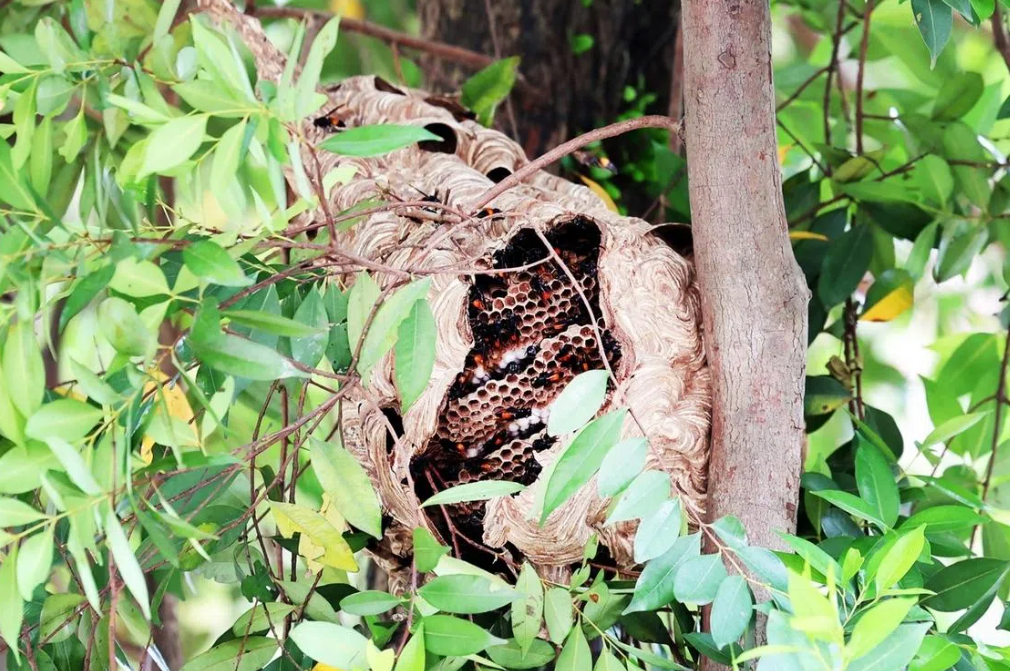
Four residents were admitted to Singapore General Hospital after being attacked by hornets near Redhill Market on the afternoon of July 10. The Singapore Civil Defence Force and Tanjong Pagar Town Council responded to the incident around 1pm, with authorities identifying a nest lodged in a tree along the footpath between Block 78 Redhill Lane and a Shell petrol station as the source of the swarm. Town council officers moved swiftly to secure the vicinity while engaging pest control specialists to extract the nest, with the site declared safe for public access once the operation concluded.
Eyewitness accounts paint a harrowing picture of the assault. Chen, a coffee drinker at the market, recounted hearing shouts warning of hornets before witnessing an elderly man being pursued and struck by the insects. Another witness, Mei Zhen, discovered a woman in her seventies in considerable distress at a nearby toilet facility. The victim's ears were visibly swollen and bleeding, with her hair matted from the attack. Zhen's account suggested the swarm comprised more than ten insects that circled the woman's head relentlessly, some burrowing into her hair whilst others scattered across the toilet area. The victim reported experiencing headaches and dizziness—common symptoms following such assaults.
Understanding the severity of hornet venom helps explain the gravity of these incidents and why victims require urgent medical intervention. According to the National University Hospital, hornets deliver substantially larger quantities of venom per sting compared to bees or smaller wasp species. The venom composition itself presents multiple dangers to human physiology. Histamine within the venom triggers allergic cascades, whilst melittin generates acute pain. The presence of proteins including phospholipase and hyaluronidase compounds the threat, as these enzymes actively damage human cellular tissue.
In the most severe cases, victims face life-threatening complications that extend well beyond localised swelling and pain. Multiple stings can precipitate systemic reactions including dangerously low blood pressure and reduced blood perfusion to critical organs. Airway inflammation represents perhaps the most immediately perilous consequence, potentially causing asphyxiation if swelling obstructs the throat and windpipe. This explains why emergency responders classify hornet attacks as potential medical emergencies requiring rapid transportation to hospital facilities equipped to manage severe allergic reactions and respiratory compromise.
The Tanjong Pagar Town Council has issued guidance to residents emphasising the importance of remaining composed should they encounter hornets or active nests. The overriding instruction is to distance oneself from the location without delay, seeking refuge inside a building and avoiding any attempt to interfere with or dismantle nests independently. Such actions often provoke more aggressive responses from the insects. When stings do occur, individuals should vacate the immediate vicinity immediately and contact emergency services by dialling 995 should they experience severe symptoms or require rapid medical assistance.
Singapore has experienced multiple hornet-related incidents in recent years, highlighting an emerging public health concern in the city-state. In 2024 alone, hornet attacks claimed considerable attention. An earlier incident at Sungei Buloh resulted in five people requiring hospitalisation. More tragically, another 2024 attack along the Sembawang Park Connector proved fatal when a man succumbed to injuries sustained whilst cycling through the area. These successive incidents underscore the unpredictability and potency of hornet encounters, particularly for those enjoying outdoor recreational spaces.
For Malaysian and broader Southeast Asian readers, hornet attacks carry particular relevance given the region's tropical climate and abundant natural habitats where such insects thrive. The medical protocols established in Singapore—rapid cordoning of affected areas, swift nest removal by professional contractors, and clear communication to the public about safety measures—offer a useful framework for regional consideration. Many Southeast Asian cities grapple with similar challenges as urbanisation intersects with natural insect populations, requiring coordinated emergency response procedures and public awareness campaigns.
The incident near Redhill Market demonstrates both the dangers posed by these creatures and the effectiveness of rapid institutional response. The town council's decision to immediately cordon the area prevented further casualties, whilst engaging professional pest control services ensured the nest removal proceeded safely without exacerbating the situation. The swift hospitalisation of victims enabled medical professionals to administer appropriate treatment for what could have developed into more severe complications, particularly given that one victim was elderly and therefore potentially more vulnerable to systemic reactions.
Public education remains essential in regions where hornet encounters occur with regularity. Many individuals lack awareness that attempting to swat or flee erratically from hornets typically intensifies attacks, as the insects perceive such movements as threats. Calmly moving indoors and allowing emergency services to handle professional removal represents the optimal response. The prompt provision of first aid—including the removal of stingers and application of ice to reduce swelling—can significantly mitigate the severity of symptoms whilst awaiting professional medical evaluation.
Authorities have engaged the National Parks Board to provide supplementary analysis regarding this incident, suggesting an intention to better understand environmental and seasonal factors that might increase hornet activity in populated areas. Such investigations help public agencies develop predictive frameworks and preventive strategies, potentially identifying high-risk zones where additional monitoring or preventive measures warrant implementation. As Southeast Asian cities continue expanding into previously undeveloped areas, understanding and managing interactions with potentially dangerous wildlife becomes increasingly important for public safety planning.

