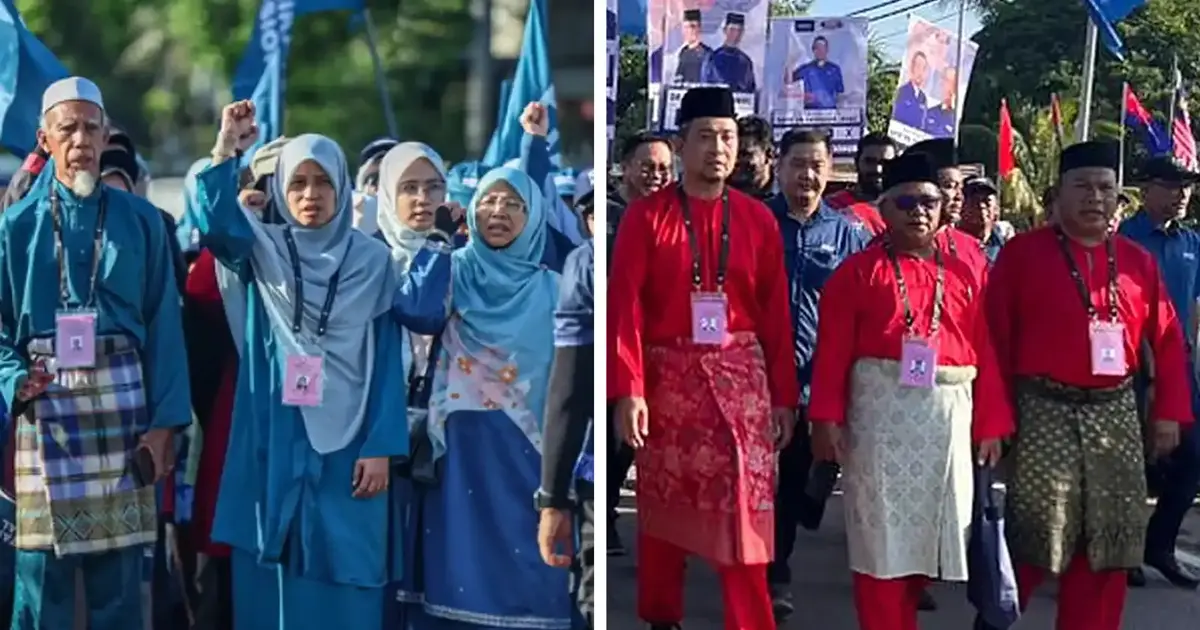
The ongoing schism between PAS and Bersatu within the Perikatan Nasional alliance poses a significant risk to the coalition's electoral prospects in the Johor state election, with political observers warning that visible discord at the leadership level will likely dampen voter enthusiasm and confidence in the bloc's ability to govern effectively.
A divided coalition presents a particularly challenging scenario during an election campaign, when parties typically seek to project unity and present a compelling vision to persuade swing voters and shore up core supporters. When internal tensions spill into public view—through competing messaging, separate campaign activities, or contradictory policy statements—voters begin to question whether the alliance can function coherently once in office. This erosion of confidence becomes especially pronounced in state elections, where voters focus intensely on which local leaders and coalitions can deliver tangible results in education, infrastructure, and public services.
Analysts point out that Perikatan Nasional's fragmentation comes at a particularly inopportune moment. The coalition had sought to position itself as a strong alternative to established political forces, but internal divisions undermine that narrative. When PAS and Bersatu pursue separate campaign strategies or emphasize different policy priorities, the unified message necessary to attract undecided voters becomes obscured. This diffusion of messaging weakens the coalition's ability to capitalize on discontent with incumbent administrations or to build momentum around a coherent governing platform.
The Johor electorate has historically demonstrated sophistication in evaluating coalition stability. Voters in the state have punished fractious alliances in previous elections, preferring instead to support coalitions demonstrating clear internal discipline and harmonious leadership. A coalition perceived as dysfunctional before assuming office faces steep challenges in convincing voters it will function better once entrusted with state resources and administrative responsibilities. The credibility gap between campaign promises and perceived capability to deliver widens considerably when voters observe public friction among coalition partners.
For PAS specifically, the split with Bersatu creates a dilemma in rural and semi-urban constituencies where the party has traditionally maintained strong support. Party machinery functions most effectively when leadership projects confidence and forward momentum; prolonged internal disputes drain organizational energy that could otherwise be directed toward voter mobilization and ground-level campaigning. Grassroots party workers become demoralized when they perceive uncertainty at the top, and their enthusiasm directly translates into the intensity of door-to-door canvassing and community engagement efforts.
Bersatu faces a similarly challenging predicament, though its circumstances differ somewhat. As a relatively newer entrant to Malaysian electoral politics, the party has yet to establish deep institutional roots in many constituencies. Internal conflicts with coalition partners like PAS complicate the party's efforts to build local credibility and demonstrate that it represents a stable political home for voters seeking change. Without the appearance of internal cohesion, Bersatu struggles to convince voters that supporting the party represents a wise investment in political alternatives.
The broader implication extends beyond immediate electoral calculations. A Perikatan Nasional that cannot maintain alliance discipline before elections will struggle to govern effectively afterward, and voters understand this reality. They recognize that parties displaying internal discord during campaigning will likely face magnified governance challenges once in office, when they must manage competing interests, allocate resources across constituencies, and implement policy in the context of coalition compromise. The voter confidence gap reflects reasonable skepticism about the coalition's ability to perform these tasks.
Southeast Asian political dynamics increasingly demonstrate that voters prioritize coalition stability as a prerequisite for electoral support, particularly in contests involving multiple competing alliances. Malaysian electoral history reinforces this pattern consistently. Voters view coalitions as governance vehicles, not merely electoral conveniences, and they reward alliances demonstrating internal harmony while punishing those displaying visible tension. The Johor election will provide a clear test of whether Perikatan Nasional can reverse negative perceptions about its cohesion or whether the damage from internal divisions proves too substantial to overcome through campaign messaging alone.
The timing and visibility of PAS-Bersatu divisions also matter significantly. If tensions emerge early in the campaign period and persist throughout the election cycle, their impact on voter behavior magnifies considerably. Conversely, if the coalition can rapidly contain internal disputes and project renewed unity, damage to voter confidence may prove more limited and recoverable. The next weeks will determine whether Perikatan Nasional can reorganize behind a unified platform or whether fragmentation will continue eroding the coalition's electoral appeal.
For the Malaysian electorate at large, the Johor election serves as a bellwether for whether Perikatan Nasional can function as a credible governing alternative. The coalition's performance in bridging internal divisions will signal to voters nationwide whether it represents a viable choice in future national contests. Analysts suggest that failure to demonstrate unity in Johor would carry implications extending well beyond that single state, potentially damaging Perikatan Nasional's long-term political trajectory and voter perception across the peninsula. The coalition faces mounting pressure to resolve its internal contradictions and present voters with compelling evidence that it can govern effectively despite its recent internal turbulence.

