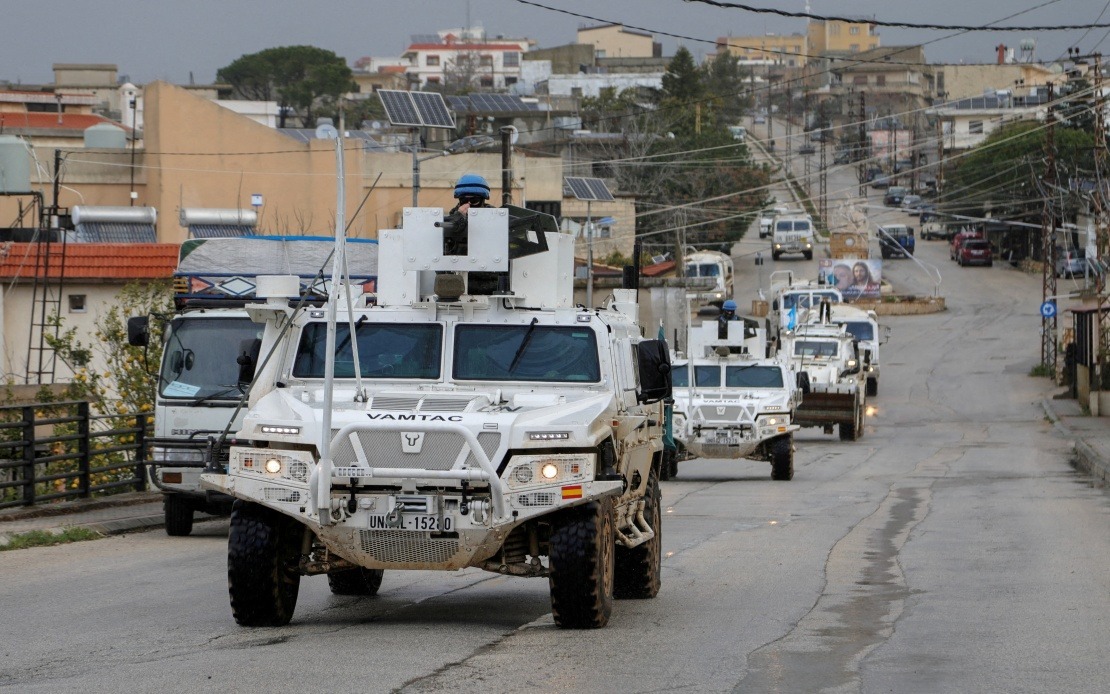
France and Italy have committed to establishing a multinational coalition aimed at supporting Lebanon's stability following the scheduled conclusion of the United Nations Interim Force in Lebanon (UNIFIL) at the end of December. French President Emmanuel Macron announced the agreement during a joint press conference with Italian Prime Minister Giorgia Meloni in Antibes on the French Riviera, signalling a coordinated European response to maintaining security and political order in the eastern Mediterranean nation.
Macron framed the initiative as essential to protecting Lebanon's territorial integrity and preventing the country from becoming a flashpoint for wider regional instability. The coalition would operate with the explicit backing of both the European Union and the United Nations system, ensuring that any intervention carries multilateral legitimacy rather than appearing as unilateral European military presence. The French president emphasized that the arrangement aims specifically to reinforce Lebanon's armed forces and protect state sovereignty during a critical transition period when international oversight will otherwise diminish significantly.
Meloni's endorsement reflected Italy's substantial strategic interests in Mediterranean security and its growing diplomatic role alongside France in regional affairs. The Italian premier warned that without an organized international presence to fill the void left by UNIFIL's departure, Lebanon risks descending into a security vacuum that could invite non-state actors, militant groups, and external powers to expand their influence unchecked. Such a scenario could destabilize neighbouring countries and undermine the fragile balance that has prevented wider conflict in the region despite persistent tensions.
UNIFIL's mandate, established decades ago to monitor the border between Lebanon and Israel following the 1978 Israeli invasion, is set to expire on December 31 in accordance with UN Security Council Resolution 2790. The force will then undertake a complete withdrawal of all personnel over the subsequent twelve months. This timeline creates a practical window during which any successor arrangement must be negotiated, resourced, and operationalized, placing significant pressure on diplomatic efforts over the coming months.
The Lebanese government faces considerable challenges in maintaining state authority and preventing armed groups from filling any security gap. The country has experienced decades of civil conflict, foreign occupation, and interference by regional and international powers. Its armed forces, while gradually strengthened through international assistance, remain comparatively weak relative to influential non-state militias, particularly Hezbollah, which maintains considerable military capability independent of state control. Any coalition designed to support Lebanese sovereignty must navigate the delicate political reality that Lebanon's stability depends partly on managing the balance between competing power centres within the country itself.
For Malaysia and other Southeast Asian nations observing Middle Eastern developments, the French-Italian initiative reflects broader Western efforts to maintain influence and prevent power vacuums that might be exploited by rival regional actors. The approach contrasts with more traditional military interventionism, instead emphasizing capacity-building, institutional support, and managed international presence. This model carries lessons for other regions where international forces are withdrawing or where state institutions require external bolstering without triggering accusations of neo-colonialism.
The coalition framework also demonstrates how European nations, despite varying capabilities and priorities, can coordinate regional strategies through formal partnership mechanisms. Italy's involvement reflects its Mediterranean position and naval capabilities, while France brings diplomatic clout and military resources. Such coordination between medium-sized powers can sometimes achieve diplomatic objectives more effectively than either acting alone, particularly when operations require legitimacy and broad support rather than overwhelming military force.
Regional reactions to the proposal will prove crucial to its ultimate success. Lebanon's political factions must accept or at least tolerate foreign military presence, and neighbouring states including Syria, Israel, and various state and non-state actors with influence in Lebanon must assess whether the coalition poses direct threats to their interests. The initiative's framing as a supporting rather than controlling mechanism—strengthening Lebanese armed forces rather than replacing their authority—attempts to minimize objections that Western intervention represents a return to historical patterns of external domination.
The timeline also matters significantly for implementation. With UNIFIL's departure confirmed for year-end, negotiating detailed operational parameters, securing funding commitments, obtaining political approvals from participating nations, and preparing military contingents all must occur within months. Delays in establishing the post-UNIFIL arrangement could create genuine security vacuums where uncontrolled armed groups operate, potentially sparking incidents that destabilize the broader region.
The initiative reflects deeper anxieties about Middle Eastern stability as the region remains fractured by competing interests. European nations, conscious of their historical ties and economic relationships with the eastern Mediterranean, recognize that Lebanon's collapse could generate refugee crises, economic disruption, and security threats affecting Europe itself. The coalitional approach thus represents a calculated European stake in regional order, balancing the costs of engagement against the perceived risks of disengagement.

