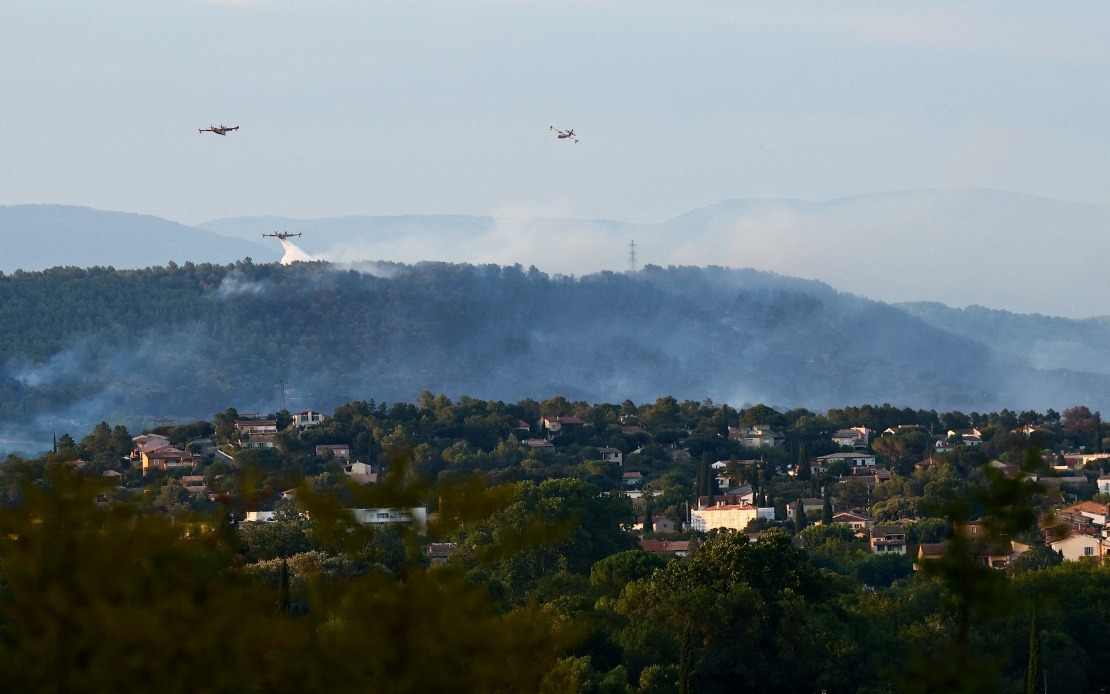
France is confronting an unprecedented environmental catastrophe as wildfires consume vast tracts of forest and vegetation across the country. French Interior Minister Laurent Nunez disclosed on Monday that approximately 40,000 hectares have been destroyed since the beginning of 2026, a figure that dwarfs the previous year's toll and signals an escalating crisis in Europe's third-largest nation by land area.
The scale of destruction underscores the severity of France's situation this year. Nunez emphasised that the current figures represent a dramatic surge compared to historical precedent, with new fires erupting daily across different regions. This relentless pattern suggests that climatic conditions are creating persistent vulnerability to ignition and rapid fire spread, preventing authorities from containing the destruction despite significant resource deployment. The minister's candid assessment reflects official acknowledgment that the country faces conditions beyond typical seasonal expectations.
President Emmanuel Macron characterised the ongoing wildfire season as the worst France has experienced since the conclusion of World War II in 1945. This historical framing carries substantial weight, indicating that contemporary fire activity has surpassed even the devastating seasons of recent decades. Such a declaration from the head of state underscores the political and environmental gravity of the situation, signalling that this crisis ranks among France's most significant natural disasters in modern times.
Unusual meteorological extremes are fuelling the wildfire phenomenon. In late June, France's meteorological service issued unprecedented weather warnings across 72 of the nation's 96 departments—the highest number ever simultaneously alerted in the country's records. These warnings reflected temperatures approaching and exceeding 40 degrees Celsius across multiple regions, with certain areas experiencing even more extreme heat. Such atmospheric conditions create ideal circumstances for fire initiation and propagation, drying vegetation to combustible levels whilst simultaneously enhancing fire intensity and speed of advance.
The climatic context extends beyond simple temperature elevation. Heat waves of this magnitude and persistence alter soil moisture profiles, reduce vegetation resilience, and intensify atmospheric dryness, collectively transforming forested landscapes into tinderboxes. Wind patterns associated with such weather systems can accelerate fire spread dramatically, whilst reduced humidity prevents natural moisture retention that might otherwise inhibit combustion. France's geography, featuring significant forested regions particularly in the south and southwest, becomes especially vulnerable under such conditions.
For Southeast Asian observers, the French crisis offers sobering parallels to regional fire phenomena. Malaysia, Indonesia, and neighbouring countries regularly confront transboundary haze resulting from agricultural fires and land-clearing operations, particularly during dry seasons. Whilst French wildfires stem from natural heat extremes rather than human activity, both scenarios demonstrate how environmental stress can overwhelm firefighting capacity. The French experience illustrates how even wealthy, well-resourced nations with advanced infrastructure can struggle when climatic pressures intensify.
The economic implications of such widespread destruction extend far beyond immediate firefighting costs. Forest loss threatens timber industries, disrupts carbon sequestration capacity, damages ecosystems supporting tourism, and potentially affects agricultural productivity in surrounding areas. Smoke and air quality degradation creates public health consequences affecting respiratory systems and cardiovascular health. Property destruction in wildland-urban interface zones directly impacts communities living adjacent to forested regions.
France's crisis also exemplifies broader European vulnerability to climate-related hazards. Mediterranean nations including Spain, Italy, and Greece have similarly battled intensified wildfire seasons in recent years. The combination of extended heat waves, reduced precipitation, and changing seasonal patterns suggests that wildfire intensity may represent a persistent challenge rather than an anomalous year. This pattern aligns with broader climate modelling suggesting increased fire risk across Southern Europe throughout the coming decades.
The institutional response demonstrates both the mobilisation capacity and limitations of modern firefighting infrastructure. Despite France's sophisticated aerial firefighting capability, advanced coordination systems, and trained personnel, the sheer number of simultaneous fires and rapid progression rates strain resources. This reality carries particular significance for developing nations with more constrained firefighting budgets and fewer technological resources, suggesting that climate-driven fire intensification may overwhelm response capacity in vulnerable regions.
For Malaysian policymakers and environmental managers, the French situation underscores several strategic considerations. Investment in early warning systems, community preparedness education, and cross-border coordination becomes increasingly critical as climate impacts intensify. The French crisis demonstrates that traditional seasonal fire management approaches may prove inadequate when climatic extremes shift beyond historical parameters. Regional cooperation mechanisms addressing transboundary haze and coordinated suppression efforts merit strengthened attention.
Looking forward, France faces substantial recovery challenges alongside immediate firefighting imperatives. Reforestation efforts will require years and significant investment. Ecosystem restoration demands careful planning to rebuild biodiversity and ecological function. Communities affected by evacuation and property loss require substantial support. The long-term forest management implications may necessitate reassessing land use patterns and fire-resistant species selection in vulnerable regions.
The 2026 French wildfire season ultimately reflects a convergence of climatic extremes and geographical vulnerability. Whether this represents a temporary anomaly or the emerging baseline for European fire activity remains an open question. However, the scale of destruction and Macron's explicit historical framing suggest that France and Europe more broadly must fundamentally recalibrate their approach to wildfire risk management in an era of intensifying climate extremes.

