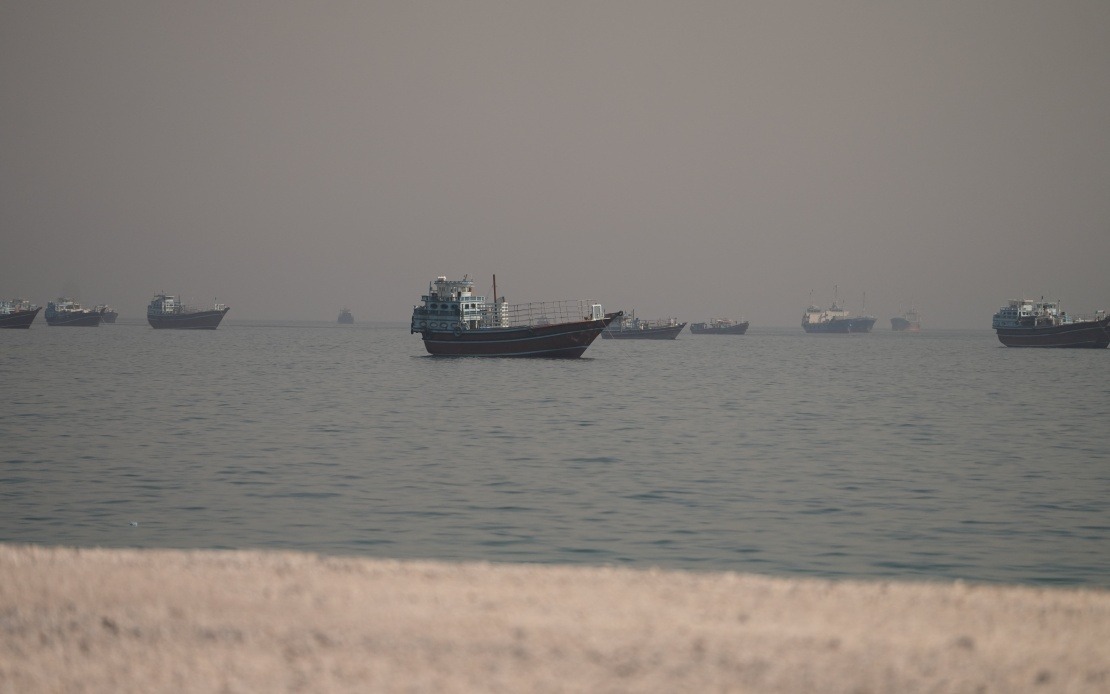
France is actively considering Syria as a potential alternative conduit for oil supplies in response to escalating concerns over disruptions in the Strait of Hormuz. Foreign Minister Jean-Noel Barrot made the revelation during a television interview with TF1 in Berlin on Thursday, underscoring Paris's strategic shift towards energy security diversification. The statement reflects broader European anxiety about over-reliance on a single chokepoint for global energy distribution, particularly given mounting tensions between the United States and Iran in the Persian Gulf region.
Barrot's remarks signal a significant recalibration in French Middle Eastern policy, one that prioritizes establishing multiple pathways for hydrocarbon transport to insulate international markets from geopolitical shocks. The Foreign Minister explained that the concentration of global oil shipments through the Strait of Hormuz creates systemic vulnerability for energy-importing nations. By cultivating alternative routes through Syria, France aims to construct a more resilient architecture for energy supplies that reduces the leverage any single actor holds over global markets.
The timing of Barrot's announcement gains additional significance when considered against the backdrop of recent geopolitical realignments in the Levantine region. Syria's transition following Bashar al-Assad's overthrow approximately eighteen months prior has created an opening for international engagement that earlier seemed impossible. Barrot, who accompanied President Emmanuel Macron to Damascus on Tuesday, framed the visit as a demonstration of France's commitment to supporting Syrian sovereignty and territorial integrity during this delicate period of state reconstruction.
The proposed Syrian energy corridor would represent more than a simple commercial arrangement; it embodies a strategic bet on Syria's capacity to stabilize and emerge as a functional regional actor. Barrot characterized the country as potentially evolving into "a new regional hub," language suggesting French confidence that post-Assad Syria could serve as a dependable partner in international energy networks. This assessment carries implications for how Western powers plan to integrate Syria into broader Middle Eastern infrastructure projects once internal consolidation progresses sufficiently.
From a Malaysian and Southeast Asian perspective, France's pivot towards Syria highlights how supply chain anxieties originating in the Middle East reverberate across global energy markets. For ASEAN economies dependent on stable oil supplies—including Malaysia, which remains both a producer and consumer of petroleum products—disruptions in established shipping routes pose tangible economic threats. The French initiative underscores how major industrialized nations are proactively restructuring their energy sourcing strategies to hedge against concentration risks.
Barrot emphasized that France intends to deepen economic and commercial partnerships with Damascus across multiple sectors, not merely in energy. This comprehensive engagement strategy suggests that Paris views Syria's stabilization as essential not only for immediate energy security concerns but also for longer-term regional equilibrium. The expansion of trade ties and cross-sector cooperation could create commercial opportunities for regional actors, including Malaysian enterprises seeking to participate in Syria's economic reconstruction.
The geopolitical calculus underlying France's Syria strategy reflects broader European anxieties about energy independence in an increasingly fragmented world. Recent years have demonstrated how supply disruptions—whether from OPEC production decisions, regional conflicts, or deliberate blockades—can trigger commodity price spikes with cascading economic consequences. By investing diplomatic and economic capital in alternative corridors, France positions itself as a proactive stakeholder in global energy resilience rather than a passive consumer vulnerable to external shocks.
Syria's geographic position offers inherent advantages for functioning as a transit hub. Located at the intersection of Mediterranean, Middle Eastern, and Anatolian trade networks, the country could theoretically accommodate pipelines and shipping infrastructure connecting regional oil producers to European and other international markets. However, realizing this potential requires not merely political will but substantial reconstruction of Syria's infrastructure, security apparatus, and institutional capacity—challenges that will necessarily unfold over years rather than months.
The French approach also reflects a calculated diplomatic gambit to position Europe as a stabilizing and constructive force in Middle Eastern affairs. By offering economic partnership and political recognition to Syria's post-transition government, France aims to cultivate influence over a strategically located state while simultaneously advancing European energy security interests. This strategy carries inherent risks, including association with an uncertain political transition and potential overestimation of Syria's near-term capacity to function as a reliable infrastructure partner.
For Southeast Asian energy consumers and producers alike, the French initiative carries instructive lessons about supply chain resilience. Malaysia's energy security depends partly on stable global oil markets and predictable shipping routes. As major powers reconfigure their energy relationships, regional economies benefit from understanding these shifting patterns and positioning themselves accordingly within emerging trade networks. The potential emergence of new energy corridors could create opportunities for ports, logistics providers, and trading entities across ASEAN.
Barrot's statements must also be understood within the context of broader European efforts to reduce strategic dependency on major powers. Energy independence ranks among Europe's highest geopolitical priorities, particularly given Russian supply disruptions and the imperative to fund energy transitions away from fossil fuels. Syria, despite its challenges, represents one available option among several that European powers are simultaneously pursuing to strengthen their negotiating position in global energy markets.
The practical implementation of Syrian oil corridors remains uncertain and contingent upon continued political stabilization, security improvements, and massive infrastructure investment. Nevertheless, Barrot's articulation of this strategic possibility indicates that Syria has re-entered the calculations of major Western powers as potentially functional state rather than merely a humanitarian catastrophe. For regional stakeholders and international observers, this represents a subtle but significant shift in how the international community envisions Syria's role in regional and global economic systems moving forward.

