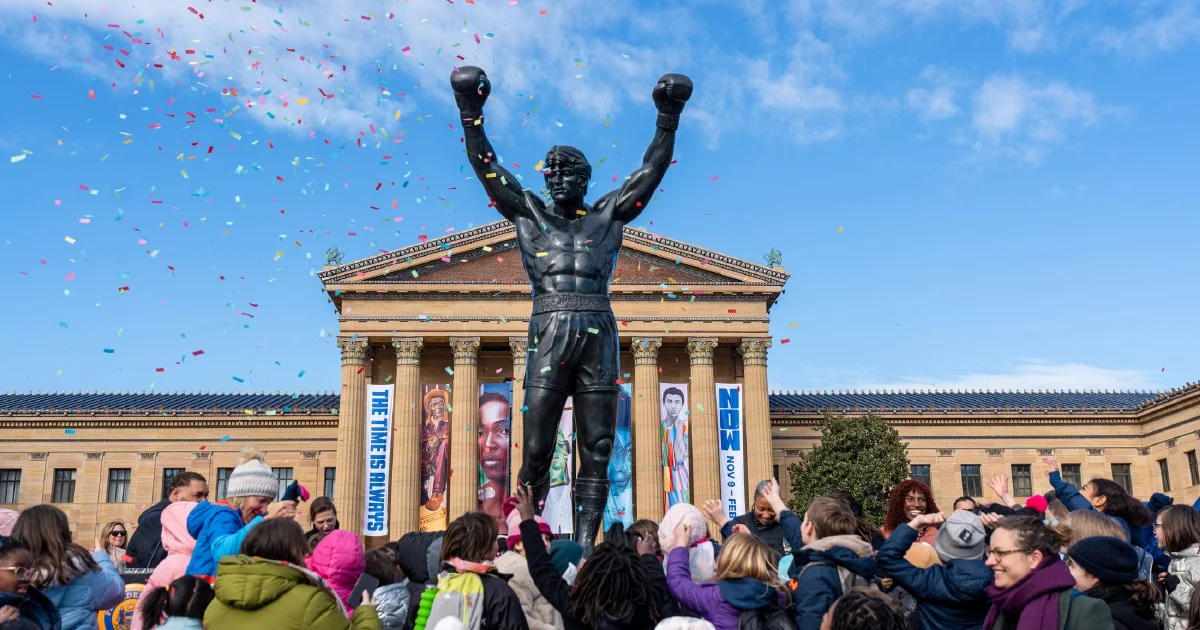
French supporters heading to the World Cup received an unusual advisory over the weekend: steer clear of Philadelphia's famous Rocky Balboa statue. The warning emerged after what locals describe as a troubling pattern of sporting calamities involving teams whose fans have previously adorned the beloved bronze monument with their national colours.
The statue, which stands as a symbol of Philadelphia's cultural heritage and celebrates the fictional boxer's determination, has become an unexpected point of superstition in international sports circles. According to reports circulating among World Cup observers, several national teams experienced unexpected defeats and eliminations shortly after their supporters commemorated their presence by draping the statue in their respective team regalia.
This cautionary tale reflects a broader phenomenon in sports culture where superstition and ritual intersect with genuine competition outcomes. For fans investing emotional energy and resources into international tournaments, the line between rational scepticism and hopeful belief often blurs. The Rocky statue warning demonstrates how locations and objects can acquire symbolic weight in the collective imagination of sports enthusiasts, particularly during high-stakes competitions where margins between victory and defeat remain razor-thin.
The timing of the warning coincides with heightened tensions and focus surrounding France's World Cup campaign. As one of the tournament's dominant footballing nations, France carries expectations of sustained excellence, making their supporters particularly sensitive to any factors—perceived or real—that might influence outcomes. The superstition surrounding the statue represents an attempt to exercise some form of control in a fundamentally unpredictable sporting environment.
Philadelphia's Rocky monument has long held cultural significance beyond its cinematic origins. The statue attracts visitors from around the world and has become integral to the city's identity. However, its prominence also makes it a natural focal point for international visitors, including travelling sports fans seeking meaningful interactions with local landmarks during their time in the United States.
The apparent curse mechanism, according to local accounts, operates through a simple sequence: teams whose fans dress the statue in their colours subsequently encounter sporting failure. While correlation does not establish causation, the frequency with which such anecdotes have circulated suggests that enough teams have experienced poor outcomes following such actions to create a narrative framework that carries warning weight. Whether this reflects genuine misfortune or selective memory remains debatable, but the psychological impact on superstitious fans remains real.
For tournament organisers and local authorities, such warnings present an interesting challenge. They must balance respecting the statue as a protected cultural asset while acknowledging the harmless enthusiasm of international visitors. The ongoing concern suggests that Philadelphia may consider implementing additional protection measures during major sporting events to preserve the monument while managing fan interactions.
The warning also reveals cultural differences in how various nations approach sports superstition. While some supporters embrace ritual and symbolic behaviour as integral to their matchday experience, others dismiss such concerns entirely. French supporters now face an implicit choice between traditional good-luck practices and a specific caveat tied to this particular location—a dilemma that illustrates how local folklore can acquire international dimensions.
Beyond the superstitious angle, the warning serves as a gentle reminder about respecting public monuments, particularly those holding significant cultural value to their host communities. Encouraging fans to admire the Rocky statue while refraining from altering its appearance represents a compromise between international sports enthusiasm and civic responsibility. Philadelphia authorities have essentially appealed to France's supporters' better judgement rather than implementing restrictive barriers.
The phenomenon also highlights how modern sports culture generates its own mythology and folklore. In an era of intensive media coverage and global connectivity, narratives around curses and lucky rituals spread rapidly across digital platforms, sometimes acquiring lives independent of their original factual basis. The Rocky statue curse illustrates this dynamic—whether or not the initial calamities were truly connected to the statue, the narrative itself has become real enough to warrant official caution.
For Malaysian and Southeast Asian sports fans observing from afar, the Rocky statue warning offers an amusing cultural footnote to World Cup proceedings. It underscores how international sporting competitions transcend purely athletic dimensions, intersecting with local history, superstition, and community identity. While Malaysian supporters may maintain their own pre-match rituals and beliefs, the Philadelphia warning demonstrates that such practices operate globally, creating unexpected points of intersection between visiting teams and host communities.
As France continues its World Cup campaign, whether their supporters heed the Rocky statue warning remains to be seen. The statue itself, indifferent to superstition and curse narratives, will continue standing as a testament to determination—the very quality it was commissioned to celebrate. Yet for superstitious fans, the warning provides one more variable to consider in their attempts to influence outcomes through ritual and faith.