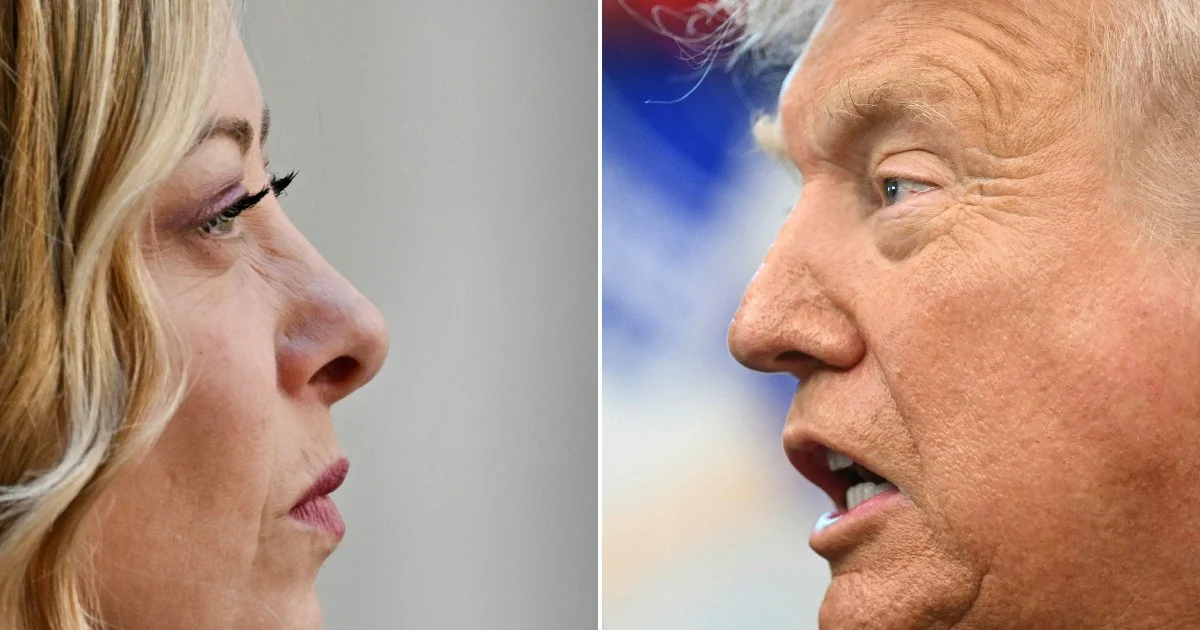
The diplomatic tension between Washington and Rome has deepened as US President Donald Trump publicly escalated his differences with Italian Prime Minister Giorgia Meloni on Saturday, marking a notable shift in transatlantic relations that carries implications for European unity and the broader Western alliance structure. Trump's decision to air grievances publicly rather than manage them through back-channel diplomacy suggests a more confrontational approach to managing disagreements with close allies, a pattern that observers believe could reshape how the West coordinates policy on critical issues.
At the heart of Trump's complaint lies an accusation that Meloni has repeatedly sought photographs with him, a claim that appears to reflect deeper frustrations with the Italian premier's political positioning and public profile. The assertion, whether substantive or symbolic, indicates Trump's sensitivity to how he is portrayed internationally and his willingness to weaponise personal interactions in diplomatic disputes. The focus on photography might seem trivial on its surface, yet it touches on fundamental questions about image management, political standing, and the performative aspects of global diplomacy that increasingly influence geopolitical relationships.
The photo dispute, however, represents merely the visible manifestation of more significant policy disagreements. Trump has explicitly linked his complaint to tensions over Iran and NATO policy—two domains where the United States and Italy frequently diverge on strategic approach. The invocation of these issues suggests that the broader conflict concerns how Italy aligns itself within the Western alliance, particularly regarding commitments to NATO spending, military partnerships, and Middle Eastern policy. For Malaysian observers, these tensions underscore the fragility of Western cohesion and the degree to which personality-driven diplomacy can undermine institutional frameworks.
NATO remains a critical flashpoint in Trump's foreign policy deliberations. The American president has long expressed frustration with European members' defence spending levels and their military readiness, viewing such shortfalls as an unfair burden on American taxpayers. Italy, despite being a significant NATO member, has historically spent less than some peers on defence capabilities, making it a potential target for Trump's spending criticism. The escalation with Meloni may thus reflect broader dissatisfaction with European NATO members' willingness to meet the alliance's expectations and contribute meaningfully to collective security arrangements.
The Iran dimension adds another layer of complexity to this dispute. The Trump administration has pursued an adversarial posture toward Iran, while Italy and several other European nations have sought to maintain diplomatic channels and economic engagement with Tehran. This fundamental difference in approach has created friction, particularly as Trump considers potentially expanding sanctions or taking more aggressive measures against Iranian interests. Meloni's government, balancing its role within the European Union and its strategic partnership with Washington, finds itself caught between competing demands—a position that likely frustrates both sides and contributes to the deteriorating personal and political relationship.
Meloni's position as leader of the Group of Seven, which Italy currently chairs, adds institutional weight to this personal dispute. The G7 platform has traditionally served as a venue where like-minded democracies coordinate on global challenges, yet Trump's willingness to publicly challenge Italy's premier during her tenure as chair suggests he may view these multilateral forums with scepticism or use them as platforms for bilateral score-settling. This approach could undermine the effectiveness of the G7 and signal to other members that their leadership will face public criticism from Washington regardless of their efforts to maintain allied unity.
For Southeast Asian nations and regional organisations like ASEAN, these transatlantic tensions carry important implications. The stability of the Western alliance, particularly American commitment to alliances, affects the regional security architecture that many Southeast Asian countries rely upon. If Western unity fractures over personality conflicts and unresolved policy differences, it creates space for other powers to expand their influence. Malaysia and its neighbours have long sought to maintain balanced relationships with major powers, and escalating divisions within the Western camp may complicate those efforts or create new opportunities for diplomatic manoeuvre.
Trump's public approach to the dispute also reflects a broader pattern of his presidency: an openness to personalising international relationships and conducting diplomacy through media statements rather than formal diplomatic channels. This strategy differs markedly from the traditional playbook, which emphasises discretion and separate public and private communications. While some view this as refreshingly direct, others worry it degrades the diplomatic infrastructure required for managing complex relationships and resolving disputes without triggering broader instability.
Meloni herself has been characterised as a right-wing populist who found common ground with Trump on several policy matters, yet clearly significant daylight now separates them on crucial strategic questions. Her government's position within the European Union further complicates matters, as Italy occasionally pursues independent foreign policy courses that diverge from EU consensus. This independence, which Rome may view as assertive leadership, Trump may interpret as unreliability or insufficient alignment with American preferences.
Looking forward, the trajectory of this dispute remains uncertain. The two leaders may eventually reconcile through back-channel negotiations, or tensions could simmer and periodically erupt. What remains clear is that personality-driven conflicts at this level carry consequences that extend far beyond individual egos, affecting alliance cohesion, policy coordination, and the credibility of Western institutions at a time when their unity is increasingly tested by global challenges ranging from great power competition to regional conflicts.