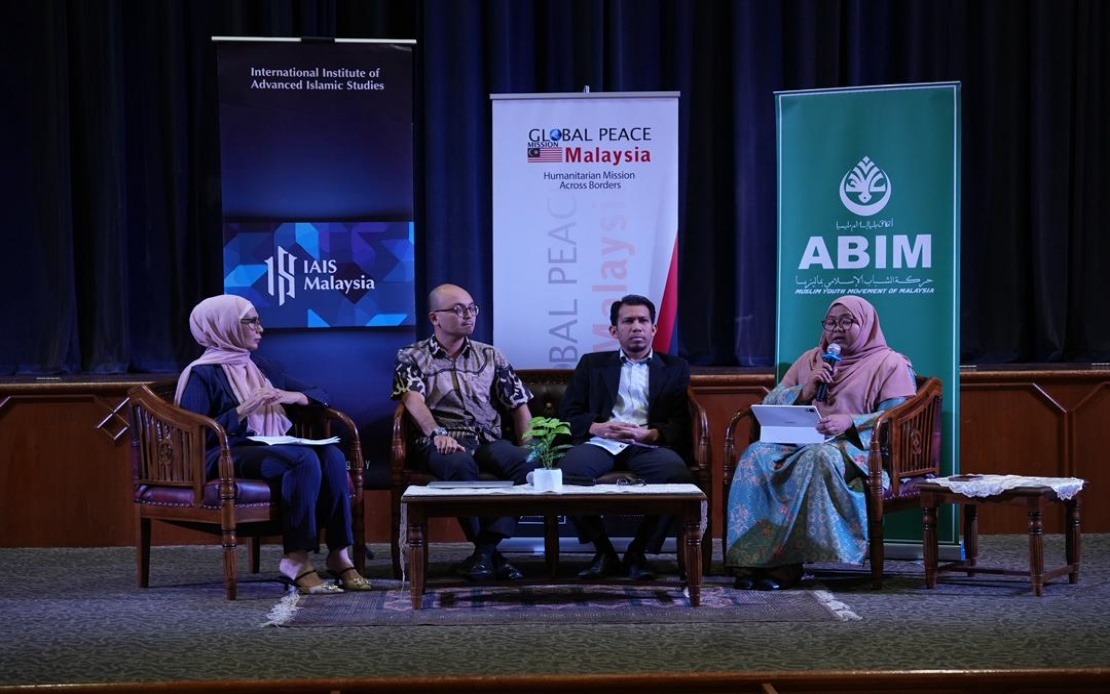
Malaysia's civil society, academic institutions and humanitarian organisations gathered in Kuala Lumpur on June 20 to forge consensus on the country's approach to refugee management, producing a 10-point resolution framework that emphasises both national security concerns and humanitarian obligations. The Kuala Lumpur: Solidarity with Refugees Conference, held at the International Institute of Advanced Islamic Studies (IAIS) Malaysia, brought together representatives from non-governmental organisations, academic bodies, international agencies and community leaders to address a challenge that has grown increasingly polarised in Malaysian public discourse.
The conference coincided with World Refugee Day, an annual observance dedicated to honouring the resilience of displaced persons and the communities that support them. Organisers jointly hosted the event through Global Peace Mission (GPM) Malaysia, Angkatan Belia Islam Malaysia (ABIM) and IAIS Malaysia, reflecting a deliberate effort to anchor refugee advocacy within mainstream Malaysian institutions and values. This institutional backing lends weight to the resolutions adopted, which are now being positioned for engagement with government ministries and parliamentary representatives.
Angkatan Belia Islam Malaysia president Ahmad Fahmi Mohd Samsudin emphasised that the 10 resolutions represent authentic perspectives from NGOs engaged directly with refugee populations on the ground. Rather than imposing external frameworks, he characterised the document as a tool for evidence-based policy development. He announced plans for follow-up discussions with the Home Ministry and the National Security Council (MKN), suggesting that the resolutions may serve as a bridge between civil society advocacy and government decision-making processes.
One of the central tensions the conference sought to address is Malaysia's complex position on refugee matters. Although the country has not signed the 1951 Refugee Convention, Malaysia has accumulated decades of experience managing humanitarian crises involving displaced populations from Vietnam, Syria, Bosnia and Palestine. This history positions Malaysia as a de facto host community despite lacking formal international refugee status agreements. The conference recognised this reality, arguing that Malaysia's refugee management approach should reflect both this historical experience and contemporary humanitarian principles.
A critical focus of the resolutions involves rejecting xenophobia whilst acknowledging legitimate public concerns. The framework explicitly condemns hatred, discrimination and dehumanisation directed at refugees and asylum seekers, yet simultaneously recognises that communities have valid worries regarding security, law enforcement effectiveness and social harmony. This carefully calibrated position reflects an attempt to prevent the refugee issue from becoming a flashpoint for broader social division. Ahmad Fahmi warned that unaddressed anti-refugee sentiment could spread contagion-like to other vulnerable groups, suggesting that refugee rights are integral to Malaysia's broader commitment to social cohesion.
The resolutions call upon the government to collaborate with the United Nations High Commissioner for Refugees (UNHCR) and other partners to enhance data collection, registration and documentation systems. Better information infrastructure could reduce the opacity and speculation that currently characterises public discourse around refugee numbers and demographics in Malaysia. Improved transparency may also strengthen law enforcement capacity by clarifying which individuals require monitoring and which pose no security concern, addressing security anxieties through facts rather than rumour.
A substantial portion of the framework addresses information ecosystem challenges, recognising that misinformation and hate speech on social media platforms are actively undermining public understanding of refugee issues. The resolutions support intensified public education, media literacy initiatives and concerted efforts to counter false narratives and xenophobic messaging. This reflects growing recognition that refugee policy cannot succeed if the information environment remains poisoned by disinformation.
The conference also endorsed establishing protective mechanisms for humanitarian workers and civil society activists who increasingly face attacks, slander and coordinated hate campaigns online. By calling for communication and advocacy safeguards, the resolutions acknowledge that defending refugee rights in Malaysia currently carries personal and professional risks. This addresses a practical obstacle to civil society engagement on refugee matters—the need to protect advocates from hostile online mobs.
Ahmad Fahmi articulated a strategic reframing of Malaysia's refugee conversation, describing an effort to move beyond polarised narratives toward evidence-based discussion. He characterised the current discourse as distorted by misunderstandings, arguing that both government and civil society benefit from repositioning refugee issues as technical policy problems requiring balanced solutions rather than identity battles. This de-escalatory framing appears designed to inoculate refugee policy from the partisan polarisation that has infected other social issues in Malaysia.
For Malaysia and the broader Southeast Asian region, these resolutions carry implications beyond immediate refugee management. The framework demonstrates that civil society and government can collaborate on sensitive issues through structured dialogue, establishing precedent for other contentious policy areas. It also suggests that refugee advocacy in Malaysia will increasingly emphasise empirical evidence, security integration and community harmony rather than rights-based arguments alone, a pragmatic adaptation to Malaysia's particular political context.
The conference outcomes represent neither victory for refugee advocates nor endorsement of restrictive policies, but rather an attempt to stake middle ground in a polarised landscape. Success will depend on whether the 10 resolutions genuinely influence government policy formulation and whether the follow-up discussions with the Home Ministry and National Security Council produce concrete institutional changes. For Malaysian civil society, the resolutions offer both a platform for continued advocacy and a roadmap for engaging government on refugee policy in ways that acknowledge competing legitimate concerns.
%22%2F%3E%3C%2Fpattern%3E%3C%2Fdefs%3E%3Crect%20width%3D%22100%25%22%20height%3D%22100%25%22%20fill%3D%22url(%23ph5iyptg)%22%2F%3E%3Crect%20width%3D%22100%25%22%20height%3D%22100%25%22%20fill%3D%22url(%23ph5iyptp)%22%2F%3E%3Ctext%20x%3D%2250%25%22%20y%3D%2250%25%22%20text-anchor%3D%22middle%22%20dominant-baseline%3D%22central%22%20fill%3D%22rgba(255%2C255%2C255%2C0.95)%22%20font-family%3D%22Georgia%2C%20'Times%20New%20Roman'%2C%20serif%22%20font-weight%3D%22700%22%20font-size%3D%22272%22%20letter-spacing%3D%22-0.02em%22%3EFahmi%3C%2Ftext%3E%3C%2Fsvg%3E)