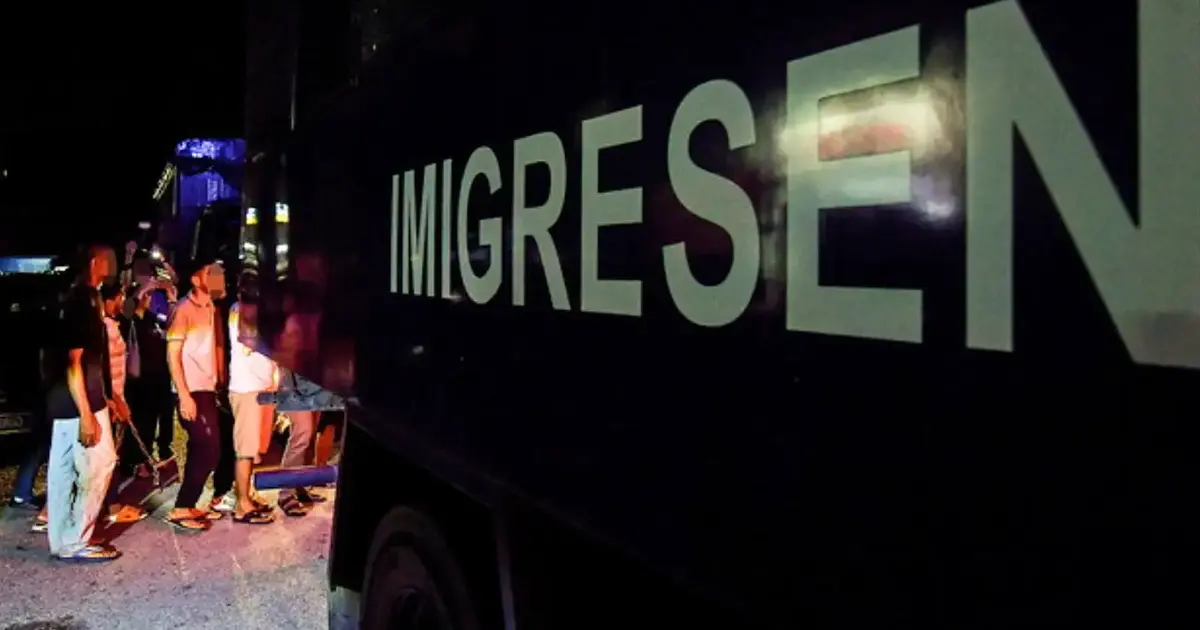
Immigration enforcement personnel conducted a sweeping overnight operation in Kuala Lumpur's Pudu district, resulting in the detention of 186 individuals suspected of violating Malaysia's immigration regulations. The coordinated raid, executed under cover of darkness, represents one of several large-scale enforcement initiatives that authorities have undertaken to address irregular migration patterns across the country's urban centres.
Those apprehended during the operation face preliminary investigation on charges related to overstaying their permitted residence periods and failing to maintain valid travel documentation. Such charges constitute serious breaches of Malaysia's Immigration Act, which establishes strict requirements for foreign nationals to carry and present proper identification and visa credentials at all times. Immigration authorities typically pursue these matters with considerable rigour, particularly when violations involve groups rather than individual transgressors.
The timing of this operation reflects a deliberate enforcement strategy, with midnight raids proving particularly effective at apprehending individuals who would otherwise evade detection during daylight hours. This tactic, commonly deployed by immigration departments across Southeast Asia, capitalises on the element of surprise and typically results in higher apprehension rates than standard daytime operations. The scale of this single operation underscores the significant presence of undocumented migrants within Kuala Lumpur's residential areas, particularly in densely populated districts like Pudu where informal housing and commercial activity converge.
Pudu has long been identified as a locality where migrant communities, both documented and undocumented, establish temporary settlements. The district's concentration of low-cost accommodation, informal businesses, and mixed-use neighbourhoods creates environments where individuals can operate with minimal official oversight. For many undocumented migrants, such areas offer employment opportunities in construction, domestic work, food preparation, and informal commerce—sectors that have historically relied upon migrant labour despite regulatory constraints.
The detention of 186 persons simultaneously highlights the scale of Malaysia's irregular migration challenge. Unlike many developed nations, Malaysia borders several labour-exporting countries and operates as a significant regional destination for migrant workers. While the country maintains formal pathways for temporary workers in designated sectors, enforcement gaps and documentation fraud enable substantial numbers of individuals to work and reside unlawfully. This operation represents an attempt to address the resulting administrative burden and security concerns that irregular migration creates.
Authorities typically process detainees through established legal procedures following such operations. Individuals held on suspicion of immigration violations face interviews, document verification, and administrative determinations regarding their immigration status. Those confirmed as undocumented or in violation of entry conditions may face fines, deportation orders, or in serious cases, prosecution. The timeline for processing 186 individuals simultaneously places considerable strain on immigration detention facilities and administrative resources, a challenge that immigration departments nationwide regularly confront when conducting large operations.
From a Southeast Asian perspective, Malaysia's enforcement activities reflect broader regional patterns regarding irregular migration. Thailand, Indonesia, and other ASEAN members similarly conduct periodic raids and deportation operations, though coordination across borders remains inconsistent. The movement of undocumented persons across the region's porous maritime and land borders continues despite bilateral and multilateral initiatives intended to enhance border security and information sharing. Malaysia's geopolitical position—bordering Thailand and Singapore, with maritime proximity to Indonesia and the Philippines—positions it as a transit and destination country for migrants originating from Bangladesh, Myanmar, Indonesia, Pakistan, and other nations.
For Malaysian employers and industries, the availability of undocumented labour presents a complex calculus. While such workers offer flexibility and lower wage expectations, their irregular status exposes businesses to legal liability and potential enforcement consequences. Recent years have witnessed increased prosecution of employers knowingly hiring undocumented workers, signalling a regulatory shift toward supply-side enforcement. This operation may serve as an indirect message to businesses that labour law compliance carries genuine consequences.
The financial and administrative implications of this operation extend beyond the immediate detainees. Immigration detention facilities must be provisioned, transportation arranged, and personnel allocated to processing and case management. Malaysia's immigration infrastructure, already stretched in managing its substantial migrant population, absorbs considerable resources conducting such operations. Advocates for migrant welfare have periodically questioned whether resources devoted to enforcement might be better directed toward regularisation programmes or development initiatives addressing migration drivers in sending countries.
Looking forward, this operation demonstrates that Malaysia continues prioritising enforcement approaches to irregular migration. However, sustainable solutions likely require complementary strategies including bilateral labour agreements, verification system improvements, and employer accountability mechanisms. The recurring large-scale detention operations suggest that enforcement-only approaches, while necessary, remain insufficient for comprehensively addressing irregular migration flows. As Malaysia's economy continues attracting regional labour migration, balancing enforcement effectiveness with humanitarian and practical considerations will remain a persistent policy challenge for immigration authorities and policymakers.