Thailand's violence-plagued southern borderlands witnessed a deadly double strike on Friday, June 19, when coordinated bomb attacks targeted police operations in two provinces within hours of each other. The dual assaults left 11 uniformed officers wounded and renewed concerns about security in a region long beset by separatist insurgency and criminal violence. The incidents underscore the persistent challenges facing authorities as they attempt to maintain order in provinces that remain flashpoints for both militant activity and organised crime.
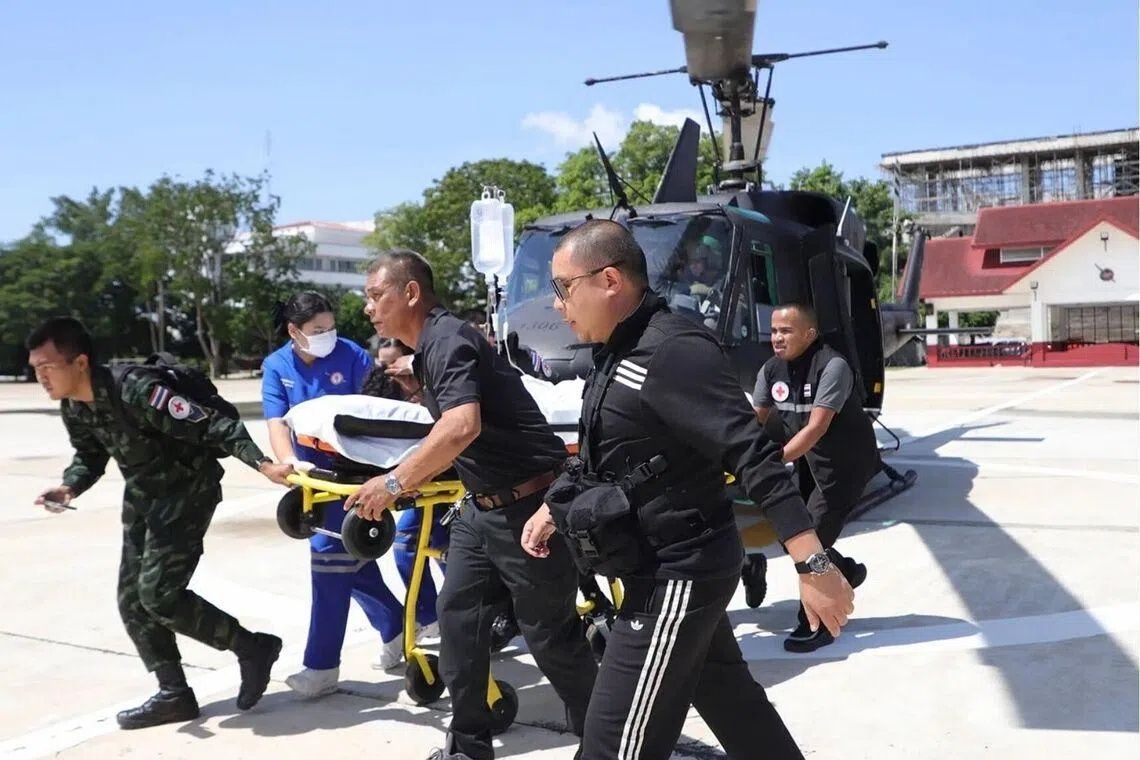
The first explosion occurred at 8.10am in Yala province when assailants detonated an improvised device along the Ban Pulo Saniyae–Ban Sakai road near Ban Rae sub-district in Thanto district. The target was a border patrol police contingent deployed on a teacher protection mission, a vital assignment in a region where schools and educators have historically faced threats. The blast wounded six officers, with two sustaining injuries severe enough to warrant emergency helicopter evacuation. Corporal Kittisak Saksang suffered significant facial trauma from shrapnel fragmentation, while his colleague Corporal Poraphat Wongruaydee sustained chest injuries that left him immobilised despite remaining conscious at the scene.
The condition of Wongruaydee proved particularly grave as medical teams at Yala Regional Hospital determined he required immediate surgery to drain blood that had accumulated in his pleural cavity, the space surrounding the lungs. This type of injury, known clinically as haemothorax, poses a life-threatening risk if left untreated and demands urgent intervention. The hospital subsequently issued an emergency appeal for blood donations of all types to support not only Wongruaydee but also other officers and patients under their care. The incident illustrated how such attacks create cascading public health emergencies that strain resources in provincial medical facilities already stretched by the ongoing conflict.
Parallel to the Yala bombing, a second attack unfolded in Pattani province at 11.30am the same morning, targeting the Pattani Police Special Operations unit stationed in Ban Khuan Yi, Pado sub-district of Mayo district. This bombing coincided with officers returning from establishing a security checkpoint, suggesting attackers possessed intelligence about police movements and schedules. The explosion injured five sergeants: Anuchit, Bunyawat, Wisitphon, Aphisit and Sumit, all of whom reported chest injuries consistent with blast trauma. Mayo Hospital received all five wounded officers for treatment, indicating that while injuries were serious, none appeared to reach the critical threshold of the Yala victims.
The geographic proximity and timing of the two attacks, separated by roughly three hours and situated within the core insurgency zone of Thailand's Deep South, suggested possible coordination among perpetrators. The border region straddling Yala, Pattani, and Narathiwat provinces has endured nearly two decades of separatist conflict following the 2004 seizing of a military arms depot, an event widely regarded as the trigger for sustained militant activity. The attacks targeted security personnel directly engaged in counterinsurgency operations and community protection efforts, reflecting a tactical pattern long employed by militant groups seeking to intimidate authorities and demonstrate their capacity to strike at will.
Response protocols activated swiftly following both incidents. Explosive ordnance disposal teams and forensic specialists deployed to examine blast sites, collecting physical evidence and reconstructing the attack methodology. Police established security cordons around affected areas to preserve evidence integrity and prevent secondary attacks. These immediate measures, while standard procedure, highlighted the routine nature of such violence in the region—that coordinated bombing operations required institutionalised response mechanisms speaks volumes about the normalisation of conflict in Thailand's southernmost reaches. For security personnel, each assignment carries implicit acknowledgment of personal risk.
The targeting of border patrol police and special operations units reflects militant strategy to degrade state capacity in strategic zones. Teachers and schools represent symbols of Thai national authority in the region, making teacher protection details both operationally important and symbolically valuable to separatist groups opposed to Thai state presence. By striking at security forces deployed on such missions, insurgent networks aimed to demonstrate that neither police nor schools operated with genuine security, a psychological objective as significant as inflicting physical casualties. The dual bombings thus functioned as a broader message regarding state legitimacy and protective capacity.
For Malaysia and the broader Southeast Asian region, Thailand's southern violence carries implications beyond its borders. Pattani province sits adjacent to Malaysia's Kelantan state, and decades of cross-border militant activity have periodically drawn Malaysian security forces into preventive operations. Refugee flows and human trafficking networks have historically exploited the instability of the Thai borderlands. Additionally, international jihadist networks have attempted recruitment among local insurgent groups, creating potential nexus points between regional Islamist militancy and global extremist movements. Thai security challenges thus remain regional concerns rather than purely domestic matters.
The incident also reflects broader vulnerabilities affecting police and security personnel across Southeast Asia's counterinsurgency zones. Limited protective equipment, reliance on patrol-based operations that telegraph movements to adversaries, and the challenge of defending dispersed security checkpoints create persistent tactical disadvantages. The teacher protection programme, while socially valuable, necessarily exposes security forces to ambush scenarios in areas where insurgents maintain intelligence networks. These operational dilemmas—balancing community security provision against personnel protection—define the grinding reality of long-running internal conflicts throughout the region.
Authorities vowed to accelerate investigations and pursue perpetrators through legal channels, a commitment voiced after virtually every major attack in the region. Yet the persistent recurrence of such bombings despite ongoing military and police operations suggests tactical innovations by insurgent groups outpacing security adaptation. The recruitment base, financial resources, and ideological commitment sustaining nearly two decades of organised violence in the Deep South remain resilient against conventional counterinsurgency approaches. Whether forthcoming investigations would identify specific networks and perpetrators, or whether the attacks would ultimately remain unsolved alongside countless prior incidents, remained uncertain as security forces mobilised in pursuit of accountability.